

How to Soundproof a Fence with Noise Barrier Membrane
After a hard week at work, nothing beats the seclusion and tranquility of your own garden or outdoor space to relax and unwind.
Whilst you may have made a considerable financial investment in creating your idyllic retreat, there’s still one thing that’s really bothering you – noise coming from adjoining land.
Be it road traffic, passers-by, or noisy neighbours in their gardens, you’re not managing to get the peace you yearn for.
Persistent noise pollution can lead to increased levels of stress and even lead to life threatening health conditions.
If this problem sounds familiar, have you ever considered how to soundproof a fence to reduce the noise pollution?
Let’s discuss this in more detail below.
Table of Contents
1. Types of Noise
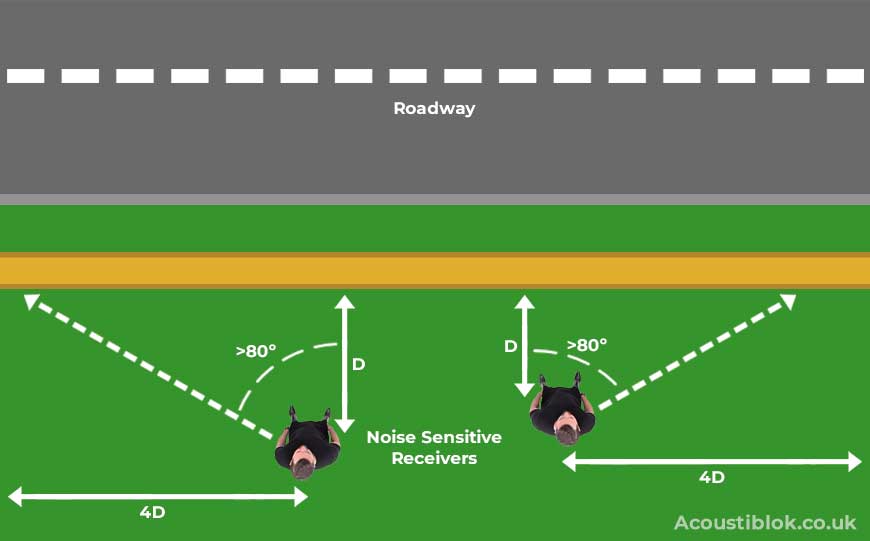
Noise can vary a great deal and it can be especially tricky to deal with if you’re a novice to soundproofing.
Sound waves move in all directions and can be affected by a variety of factors, including atmospheric pressures, and the objects they hit as they travel from the source.
Traffic noise for example can vary greatly in terms of power, frequency and speed.
So you need to take into account these important considerations before choosing the best method to soundproof a fence or perimeter barrier.
These three main approaches are:
Acoustic Deflection
The main concept here is to deflect the unwanted sounds in another direction.
As soundwaves travel towards your boundary, you want the fence to deflect them in an opposite direction, instead of allowing them to make their way into your garden through weak points or non-deflective materials.
For acoustic deflection to work well, it’s important that the fence is of sufficient density and critically as high as possible, surrounding the entire perimeter of the garden.
Acoustic Absorption
Where sound deflection may not be enough to deal with nuisance noise, sound absorption is another suitable consideration.
The boundary in this case will absorb the sound energy, thereby reducing the power and pressure of the soundwaves.
This will in turn reduce sound propagation.
The sounds will become muffled and dampened.
It’s important to take into account the need for a dense barrier, which will be able to mitigate across frequencies both high and low.
Acoustic Energy Conversion
Finally, there is also the opportunity to convert sound into trace heat energy.
When the sound-waves hit the fence, the molecules in the acoustic material will start vibrating, thereby creating friction that is converted into trace heat.
2. Choosing Suitable Noise Barriers
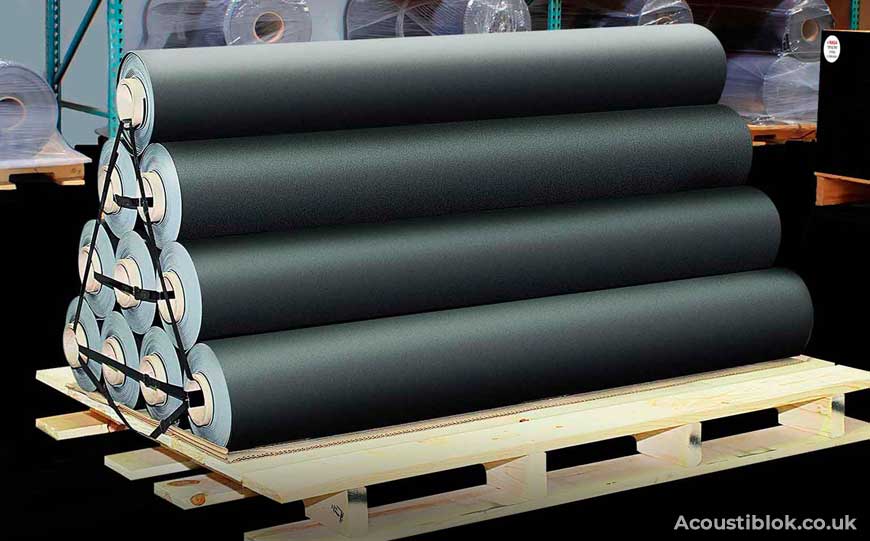
It’s very important that you choose the most suitable noise barriers in relation to the type and level of noise you’re dealing with.
There are also various other factors to consider, namely, the height and length of boundary required, your budget and any potential construction issues.
Needless to say, the higher and thicker the barrier, the more effective it is going to be at blocking or deflecting noise.
The materials used are also of utmost importance.
Some materials are better than others, so it’s best to seek professional advice from an acoustic consultant to establish which materials would work best for your situation.
Bear in mind that even the slightest gaps will allow sound to pass through.
In the case of fences, you will have different options and considerations.
Besides the type of fence in terms of construction, there’s also the material to be used.
The following are some of the main options, and key considerations in relation to each of them.
Brick Wall
A brick wall may be the first option that comes to mind, especially if the noise you’re experiencing is quite problematic.
Needless to say a brick wall is durable, and can be thick and robust.
You will not need to worry about the effect of short term weather erosion, and maintenance is minimal.
One of the main things to consider is the density and the mass of the wall, as well as its height.
Having a high, thick wall is however going to lead to other issues, such as increased costs, as well as the fact that a high wall can make you feel enclosed.
Bear in mind that you are going to have to pay contractors to construct the wall, and the structural footings will need to be properly set.
In some cases, you might need to seek permission from local authorities.
Timber Fence
A fence made from timber is another popular option.
It can work well as a sound barrier and arguably, is not as difficult to erect as a brick wall.
Hence a timber fence can be considered a more feasible and cost effective alternative.
Having said that, it’s important to take into account the fact that a standard timber fence will have several weak points.
These weak points will undoubtedly allow sound to pass through, rendering it only as a very basic sound barrier.
Timber fences also require regular maintenance to prevent a deterioration of structural stability .
It’s recommended that for best results, a timber fence has a suitable noise barrier membrane overlaid to increase its soundproofing qualities.
This is specifically designed to significantly reduce noise, and is easy to install for even basic DIYers.
Alternatively, you can install an acoustic fence, but soundproofing qualities are again mixed.
Metal Fence
Another option is to erect metal fencing.
This is an ideal option in case you want to factor in security, as otherwise a metal fence is not that aesthetically pleasing.
You should avoid metal fences that have several gaps in them.
Chain link fences for example, are useless at soundproofing for obvious reasons!
In case of metal fences, you could opt for a structure onto which an acoustic barrier membrane can be fitted.
Or you could instead purchase and erect specialist all weather soundproof panels, specifically designed for this purpose.
These however tend to be used when dealing with higher power and higher acoustic pressure values.
Acoustic Fence
Acoustic fences are a very effective option to block noise.
These are specifically constructed for this reason, as they are dense and thick.
In most cases, they are designed with a tongue and groove design to ensure an integral joining of materials to eliminate gapping.
The timbers in these fences are interlocked to each other, thus decreasing any potential gaps and increasing the acoustic effectiveness.
Having said that, acoustic fences tend to be rather expensive.
Besides the material itself, such a fence would need to be constructed and erected by a professional.
Acoustic Membrane
In cases where you already have a boundary fence in place, you may wish to keep it and improve its acoustic effectiveness.
In such cases, you can easily overlay a noise barrier membrane onto the existing structure.
This type of specialist acoustic noise barrier membrane will work as an extremely effective barrier against any unwanted noise that’s bothering you.
It can be hung easily, either by attaching it to the fence perimeter, or by affixing it to the support posts.
3. Common Misconceptions

Image source: https://pixabay.com/photos/wooden-bench-bench-seat-sitting-3392273/
The following are some common misconceptions that people have when it comes to blocking or reducing noise pollution.
We’re going to cover these to help you understand why you should avoid the following principle or methods as they may ultimately prove ineffective.
Hedging & Trees
Many people decide to plant hedges or trees as they think that they will help dampen the noise coming from outside.
The main idea is generally more related to keeping it green.
Whilst it’s definitely nice to have trees and hedges all along the perimeter of the garden, it’s important to understand that they are not going to block noise that effectively.
First of all, it’s important for the hedges to be very dense, and this requires a lot of time to grow as well as maintenance to achieve.
With a foliage only option, you cannot realistically hope to block all unwanted sound as there are countless little gaps through which soundwaves can pass.
Water Features
Water features may be beautiful, but they are not going to be an effective solution when it comes to noise.
The theory that the gentle sounds of water can somehow distract from a significant level of nuisance noise and mask the initial source ignition, could be viewed as optimistic.
They will only work well in deflecting your attention possibly as you hear the sound of the water rushing or splashing.
But the nuisance noise, if severe enough in the first place, is still going to make its way into your garden regardless.
Wind Chimes
Much like water features, the same applies to wind chimes.
White noise can only work well to a certain point.
But without actually creating an effective noise barrier to deflect, absorb or convert sound, wind chimes will only act as a minor distraction.
4. Before Installation
Let us discuss some key factors to consider when it comes to installing your acoustic fence.
Acoustic noise barrier membrane usually come in rolls.
To make things easier, it’s highly recommended that prior to installation you unroll the membrane and leave for a short while to give them time to flatten out.
This will help you hang them straighter and reduce bunching.
It’s also a good idea to use some chalk to mark the locations where the screws and washers will be placed.
Many contractors choose to brace the membrane onto the fence with use of thin timber battens, which in effect clamp the materials in place.
Trellis work (crossing battens) are very common and very effective.
They provide even loading with less fixings and also provide a platform onto which to grow foliage such as trailing plants or climbers.
In such a way you can achieve a more even distribution of the membrane across the surface of the fence.
A very important rule is to ensure fixings are a distance of at least 50mm from the edges when you start attaching the membrane.
You should avoid attaching it too close to the edges.
5. Installing Fencing Membrane
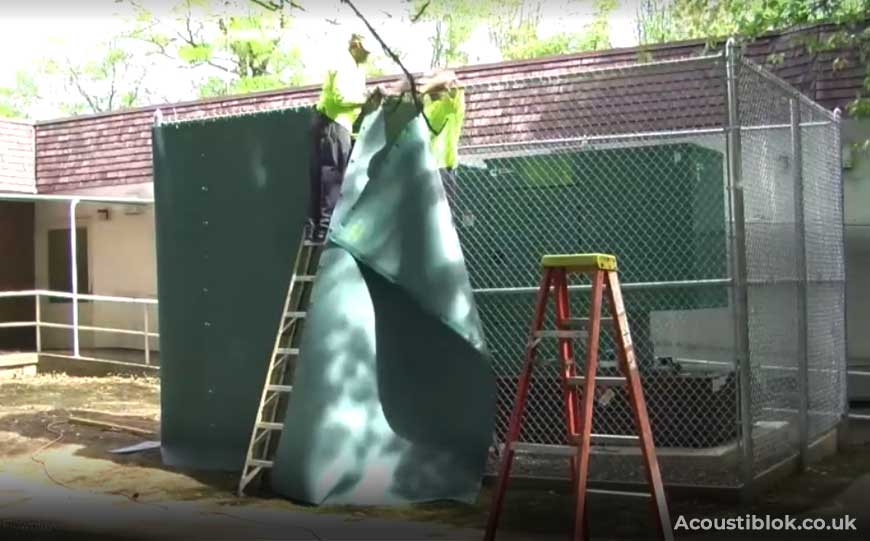
As always, it’s best to have a professional contractor take care of the installation.
But in case you prefer to do this yourself, make sure to follow these steps:
- Mark where the fixings will be secured.
- Re-roll the membrane, and start making your way slowly and carefully by fixing the membrane to the structure.
- The solution always needs to touch the ground and you need to make sure there are no gaps whatsoever anywhere. It’s better if you have someone to help you.
- Start screwing at regular distances to ensure proper weight distribution.
- Overlap the membrane as every new row overlaps the other row.
- At the end of the fence secure well to the fence. Always ensure that the screws are penetrating properly in the membrane.
- Add soil to the bottom to ensure there are no gaps at the base and there is solid contact.
Conclusion
Noise barrier membrane is an effective option which can really help reduce the noise passing through boundary fences.
It is also extremely cost effective and maintenance free.
So if you have an existing fence that is not adequately blocking sound from entering your space, speak to a professional about installing acoustic noise barrier fencing membrane.
Disclaimer
Acoustiblok UK Ltd / Thermablok Aerogel Ltd gives no warranty and accepts no responsibility or liability for the accuracy or the completeness of the information and materials contained in this website, blog or media content. Under no circumstances will Acoustiblok UK Ltd / Thermablok Aerogel Ltd be held responsible or liable in any way for any claims, damages, losses, expenses, costs or liabilities whatsoever (including, without limitation, any direct or indirect damages for loss of profits, business interruption or loss of information) resulting or arising directly or indirectly from your use of or inability to use this website, material, content or any website linked to it, or from your reliance on the information and material on this website, even if Acoustiblok UK Ltd / Thermablok Aerogel Ltd has been advised of the possibility of such damages in advance.