

14 Ways to Soundproof an Office
In the hustle and bustle of office life, working amongst peace and quiet can be a rare commodity.
Whether you’re in a crowded call centre, a communal workspace or a busy boardroom, noise can be a constant unwanted distraction.
Thankfully, there’s several effective ways to turn down the volume and create a peaceful working environment by improving your office soundproofing.
In this article, we’ll explore the science of how to soundproof an office, delving into why it’s essential, areas that need attention, various soundproofing methods and even some tricks for improving sound problems without extensive efforts.
Table of Contents
Why Does an Office Need Soundproofing?
An office serves as the bustling epicentre of countless activities, from focused individual tasks to collaborative brainstorming sessions.
In this dynamic environment, the need for soundproofing becomes paramount.
Excessive noise, whether it’s chatter from colleagues, ringing phones, or the constant hum of office equipment, can have far-reaching effects on both employees and the workplace itself.
Professionalism
A soundproof office significantly contributes to fostering a sense of professionalism within the workplace.
When clients visit, a quiet and composed atmosphere demonstrates that the company values not only its employees’ focus but also the professionalism of its interactions.
It sends a strong message that the organisation is dedicated to providing a conducive environment for meaningful discussions and client meetings, ensuring that business transactions are conducted with the utmost professionalism and attention to detail.
A noise-free environment sets the stage for confident and productive exchanges, enhancing the company’s reputation and reinforcing a culture of professionalism and excellence.
Privacy
Essential for keeping the sensitive information within the confines of the office or board room.
In this day and age of security breaches and leaks it is imperative to ensure that confidential information remains just that.
Distractions
Imagine trying to focus on a crucial report while overhearing a loud conversation from the adjacent cubicle.
Background noises like these create distractions, derailing concentration and impairing productivity.
Employees find it challenging to maintain focus and complete tasks efficiently, ultimately impacting the quality and speed of their work.
Increased Stress
Consistent exposure to high levels of noise can elevate stress levels among employees.
Constant disturbances create an atmosphere of tension, hindering the ability to relax and work with a clear mind.
Over time, this chronic stress can lead to burnout, decreased job satisfaction, and a decline in overall well-being, affecting not only individual employees but also the office as a whole.
Enhanced Concentration
On the flip side, a soundproofed office cultivates an environment where employees can concentrate without interruptions.
By minimising noise distractions, employees can immerse themselves in their tasks, leading to improved focus and heightened productivity.
Additionally, a quieter atmosphere promotes a sense of comfort and ease, allowing employees to work in a more relaxed state, enhancing creativity and problem-solving skills.
Effective Communication
Soundproofing not only blocks external noises but also ensures that internal discussions, meetings, and presentations remain confidential and effective.
Unwanted noise disruptions can hamper crucial communication, leading to misunderstandings and misinterpretations.
A soundproofed environment fosters clear and uninterrupted dialogue, enabling teams to collaborate efficiently and ensuring that important messages are communicated accurately.
Creating a Positive Work Environment
A soundproofed office contributes significantly to the overall ambiance of the workplace.
By providing a quieter, more focused atmosphere, employees are more likely to enjoy coming to work.
A positive work environment not only enhances job satisfaction but also promotes employee retention.
It becomes a space where creativity can flourish, where innovative ideas can be exchanged without interruptions, and where employees feel valued and appreciated.
What Areas of an Office Need Soundproofing?

Open Plan Offices are Noisy Places to Work. Image credit: Unsplash
Meeting Rooms & Board Rooms
Meeting rooms can often echo with discussions and presentations.
Effective soundproofing ensures confidentiality and prevents disturbances, allowing fruitful conversations.
Call Centres
Call centres, where continuous conversations occur, require a serene atmosphere.
Soundproofing reduces background noise, aiding clear communication and improving customer service.
Communal Areas
Communal areas like break out areas, lounges or cafeterias can become noisy hubs.
Soundproofing these spaces creates pockets of tranquillity amid the office buzz.
Reception/Atriums
Entrances and lobbies that must always appear professional and provide a vital workable environment at all times and especially during periods which may have increased traffic.
Ways to Acoustically Treat or Soundproof an Office
1. Acoustic Absorber Wall Panels
 Acoustic panels, designed to absorb sound waves effectively, are pivotal in creating a soundproof office environment.
These panels are crafted with specialised materials that dampen sound vibrations upon impact.
When strategically placed on walls, especially in open office spaces or meeting rooms, they act as sound absorbers, reducing echoes and minimising noise levels.
Acoustic panels come in various designs, sizes and colours making them versatile for different office setups.
By absorbing sound, these panels create a quieter ambiance, enhancing focus and concentration among employees.
They are particularly useful in large conference rooms where discussions can become overwhelmingly loud without proper sound management.
Products like Acoustiblok AcoustiWall Absorber Panels are perfect for these settings.
2. Acoustic Absorber Ceiling Panels
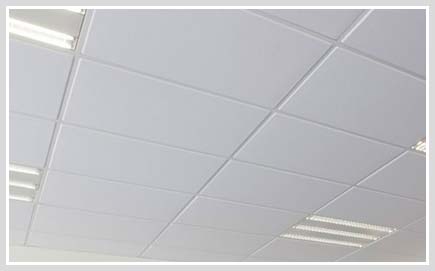 Acoustic ceiling panels and tiles are specially designed to absorb sound, preventing it from reflecting, reverberating and echoing within a room.
These panels or tiles are installed either in contact with the ceiling or suspended from the ceiling, creating an absorptive barrier that absorbs reflection to dampen sound waves.
In busy office spaces, especially those with low ceilings, noise can bounce off surfaces, creating a cacophony of sounds.
Acoustic ceiling panels address this issue by absorbing these sounds, reducing reverberation and creating a more serene atmosphere.
They are commonly used in offices with high-density workstations, meeting rooms, or spaces where multiple conversations occur simultaneously.
They come in various textures and designs, allowing them to blend seamlessly with a corporate image in the office’s aesthetic while serving their soundproofing purpose effectively.
Products like Acoustiblok AcoustiClouds are perfect for these settings.
3. Acoustic Isolation Membrane
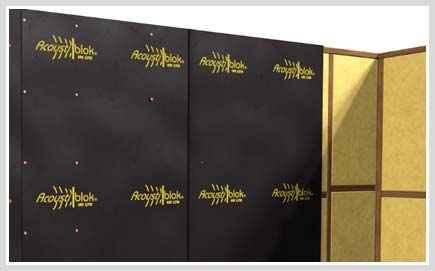 Acoustic isolation membrane is a resilient layer that is placed into existing walls and floors in way of a complete lining material to contain and isolate acoustic breakout from one room to another or from one zone to another.
Acoustiblok 3mm Isolation Membrane stands alone for this application.
This method is particularly useful in all dry lining applications, partition walls or areas with high foot traffic, ensuring that the noise generated does not disrupt the workflow in neighbouring sections.
Effectively it is a material which can be used in all types of installation to arrest and isolate airborne sound such as voices and music through walls / ceilings, or impact sounds, such as footsteps or moving furniture, from travelling through floors for example.
By minimising vibrations and noise transmission, it ensures that sounds are contained within specific areas, preventing them from disturbing adjacent workspaces.
Acoustic isolation membranes are very effective and used extensively within boardrooms and bulkheads / frames, typically above MF drop ceilings and below floating floors to prevent common weaknesses and acoustic breakout.
They can also be used on and around HVAC ducting to reduce flanking transmissions through the natural pathway.
4. Acoustic Baffles

Image credit: Insulation Superstore
Acoustic baffles (also referred to as sound baffles) are suspended sound-absorbing panels, often used in rooms with high ceilings.
These baffles can be all types, sizes, shapes and finishes to be invariably hung vertically like ‘fins’ to disturb, redirect and absorb sound waves from multiple directions.
By strategically placing baffles above workstations or communal areas, they capture and reduce noise levels effectively.
These baffles are especially useful in open-plan offices where noise can easily travel across the vast space.
The baffles trap sound, preventing it from bouncing off the walls and ceilings, thus creating a quieter atmosphere below.
5. Wall Panelling
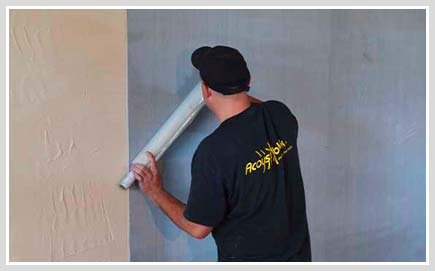 Typically wall panels are a slotted, grooved or perforated surface to diffuse and redirect acoustic energy.
These can be made from varying materials depending on the aesthetic to be achieved.
Commonly a polished timber finish adds for a touch of luxury and helps to blend the wall panelling into its surroundings, making it barely noticeable.
Alternatives are wall coverings which act as an absorber and helps to reduce sounds from bouncing and reverberating around the office space.
Wall panelling tends to be fixed to the wall as opposed to hanging.
6. Acoustic Flooring
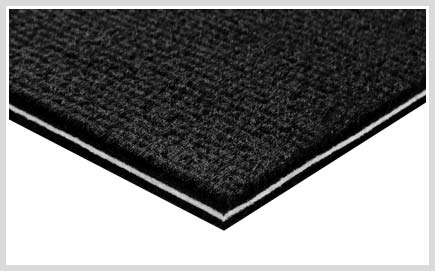 Thicker carpets may well act as natural sound absorbers but are rarely practical in a corporate environment.
However, their dense fibres trap sound waves, helping to reduce noise in an office space.
Carpets with thicker piles can be really effective against impact noises such as footsteps but are rarely a practical approach in the type of environment being discussed.
Where thicker pile carpets are not feasible and thinner harder wearing industrial carpet tiles are preferred, Acoustiblok 3mm or 6mm Isolation Membrane can be applied underneath the finish floor.
This helps to isolate and separate by converting impact noises and minimises vibrations, ensuring that sound doesn’t travel through the floor.
This type of underlay is commonly used in conjunction with AcoustiMat Acoustic Underlay under hardwood or laminate flooring as well.
7. Acoustic Underlay
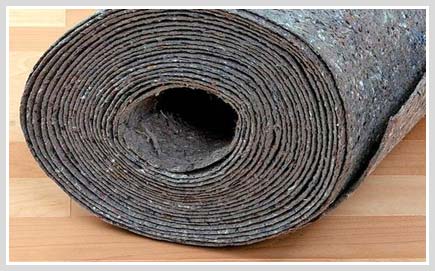 Acoustic underlay placed beneath the main flooring material, provides an additional layer of sound insulation.
AcoustiMat Acoustic Underlay is a natural choice for this. Available in both 3mm and 6mm depths.
It absorbs impact noises and minimises vibrations, ensuring that sound doesn’t travel through the floor.
This type of underlay is commonly used in conjunction with Acoustiblok 3mm or 6mm Isolation Membrane under hardwood or laminate flooring.
It is particularly beneficial in office spaces with heavy foot traffic, ensuring that footsteps are muffled and do not disrupt adjacent work areas.
8. Desk Dividers
 Desk dividers, also known as cubicle partitions, offer privacy and sound reduction for individual workstations.
These dividers are made from sound-absorbing materials and can be customised to different heights.
By installing desk dividers between workstations, conversations and noise are contained within specific areas, minimising distractions for neighbouring employees.
Desk dividers also create a sense of personal space, enhancing concentration and productivity for individual workers.
Desk dividers however do create sense of ‘boxing in’ and can cause some employees to have feelings of claustrophobia.
In such circumstances, businesses need to consider a suitably balanced office workspace arrangement to counteract this effect.
9. Furniture
 Investing in soundproof office furniture, such as soundproofed cabinets or desks, can significantly reduce noise levels.
These specialised pieces of furniture (such as meeting booths and office pods) are designed with Acoustiblok 3mm or 6mm Isolation Membrane and other sound-absorbing materials, creating a barrier against external noise.
Additionally, furniture arrangements can be strategically planned to create natural partitions, helping in noise reduction.
Choosing sofas and chairs that have a softer fabric can also contribute to reducing noise reverberating around the office and communal areas.
10. Furnishings
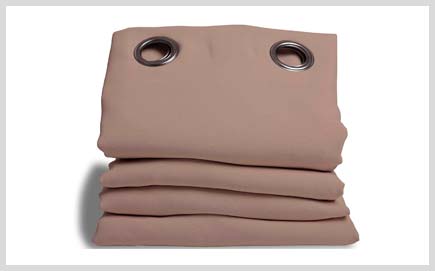 Soft furnishings, cushions, seat pads and drapes can all play a part in increasing acoustic absorption.
This in turn reduces reflections and resonance which would otherwise lead to increased reverberation levels.
A good example of this is acoustic curtains, also sometimes referred to as soundproofing curtains or blackout curtains.
They are commonly used to reduce noise transference when creating as a temporary partition or privacy space, such as office meeting rooms or breakout areas.
When hung strategically, the thick absorbent fabric greatly reduces the distribution and movement of sound waves within the office area which decreases unwanted sounds from travelling from space to space.
They can also act as part of the overall decorative look of the space and help to improve the overall aesthetics, thus softening what is normally a clinical and utilitarian area.
11. Sound Absorbing Paint
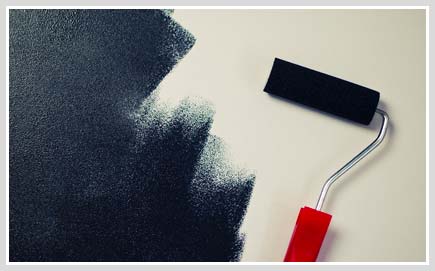 Surprisingly, there are paints available that help to reduce unwanted sound.
Sound dampening paint, sometimes also referred to as sound deadening paint, does is precisely what it says on the can!
It can be applied using a roller or specialist paint sprayer, and contains sound-absorbing additives that dampen sound waves upon impact.
When applied to walls and ceilings, this paint can help to reduce some acoustic reflection levels within the office space.
The golden rule of thumb is, the thicker the paint layer, the better the results.
Spraying will naturally lead to a thinner paint layer, therefore applying using a roller is recommended.
Sound absorbing paint can be used in combination with other specific absorbing strategies within meeting rooms or private offices where confidential discussions occur.
12. Open Cell Absorbing Cavity Insulation
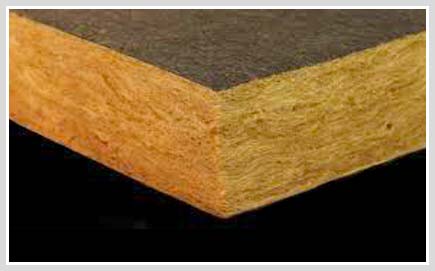 Installing open cell cavity insulation within wall and ceiling cavities provides an absorptive capability to further enhance acoustic performance.
Soundproof insulation materials, such as mineral wool or foam boards, absorb sound waves, preventing them from travelling between rooms.
Acoustiblok’s own QuietFibre is a very high grade product that produces excellent results.
This method effectively reduces both airborne and impact noises, creating a peaceful and quiet work environment.
Soundproof insulation is a long-term solution that offers substantial noise reduction benefits, enhancing the overall office atmosphere.
It also offers the added benefit of insulating walls, thus making your office space more energy efficient, reducing heating bills.
13. Upgraded Windows & Glass Partitioning

Image credit: Residential Acoustics
Upgrading to double or triple-glazed windows will help to significantly reduces external noise ingress.
The multiple layers of glass, along with insulating gas fills, create a barrier that blocks sound waves.
New windows not only provide better soundproofing but also enhance energy efficiency, making them a valuable long-term investment.
Any installation of new windows however is only as good as its weakest points.
Suitably flush fitting along with acoustic caulk, sealant and fillers in all gaps is essential to ensuring sound is not given a route through the path of least resistance.
By installing quality frames that incorporate air or inert gas should significantly reduce unwanted external noises form entering your office environment.
By minimising external disturbances, employees can work in a quieter environment, boosting productivity and focus.
14. Plants, Foliage & Living Walls
 Indoor plants, apart from their aesthetic appeal, may also contribute to soundproofing although typically to a small degree.
Plants with dense foliage, such as rubber plants or fiddle leaf figs, absorb and diffract sound waves.
The recent trend on installing living walls in offices is also a great way to create a sound barrier, whilst improving the overall ambience of the space.
Not only will the natural foliage help reduce unwanted sound reverberations, it will also improve internal air quality and employee wellbeing.
When strategically placed in office corners or near areas with hard surfaces, plants help reduce echoes and minimise noise levels.
Additionally, the presence of greenery creates a calming atmosphere, enhancing the overall well-being of employees.
Plants serve as natural, eco-friendly soundproofing elements, enhancing the office’s acoustic comfort.
Challenges of SoundProofing an Office
Setting up a soundproof office comes with its fair share of challenges, each requiring careful consideration and strategic planning.
Initial Costs
One of the primary challenges in establishing a soundproof office is the initial investment required.
High-quality soundproofing materials, such as acoustic panels, specialised insulation, and soundproofed furniture, often come at a higher price point.
Whatever the strategy, ensure it is fit for purpose and can effectively treat the likely causes of concern.
Businesses need to assess their budgetary constraints and prioritise areas that require immediate soundproofing.
While the initial costs might seem substantial, they are an essential investment in creating a productive and peaceful work environment, ultimately benefiting the organisation in the long run.
Finding the Right Materials
Choosing the appropriate soundproofing materials tailored to the office’s specific needs is crucial.
With a plethora of options available, ranging from acoustic panels to soundproof paints, businesses need to conduct thorough research to identify materials that effectively address their noise-related concerns based upon a working environment, not an empty and unpopulated space.
Factors such as the source of noise nuisance, type of noise (airborne or impact), points of source ignition, how many members of staff, the office layout, and the desired aesthetic appeal all play a role in selecting the right materials.
Consulting with acoustical experts or interior designers can aid in making informed decisions, ensuring that the chosen materials align with the office’s requirements.
Proper Installation
Even the most advanced soundproofing materials may not deliver optimal results if not installed correctly or positioned wisely.
Improper installation of isolation membranes can lead to gaps, seams, or weak points where sound can leak through, negating the intended benefits.
When applying Acoustiblok AcoustiWall Absorber Panels into a given space to provide acoustic calibration it can well be the best approach to spread them evenly to create a balanced effect, whilst being sympathetically positioned within the overall space to please the interior design eye. Obtain a professional opinion on this is required.
Ensuring proper installation involves employing experienced professionals who understand the nuances of soundproofing techniques.
These experts can assess the office space, identify potential weak points, and meticulously install soundproofing materials, to provide maximum effectiveness.
Regular inspections post-installation are also essential to confirm that the soundproofing measures remain intact and functional over time.
Balancing Aesthetics with Functionality
Achieving a soundproof office that is both functional and visually appealing poses another challenge.
Businesses often aim to create an office environment that reflects their brand identity and fosters a positive work atmosphere.
Soundproofing solutions need to seamlessly integrate into the office’s interior design without compromising their functionality.
This requires a careful balance between aesthetics and acoustic effectiveness.
Opting for surface mounted Acoustiblok AcoustiWall Absorber Panels available in various designs, colours, and textures enables businesses to customise their office space while ensuring it remains acoustically balanced and calibrated.
Collaboration between interior designers and acoustics experts is essential to strike the right balance between aesthetics and functionality, creating a soundproof office that is both visually pleasing and efficient.
Ways to Improve Noise Problems without Soundproofing an Office
Sometimes making an office soundproof is not always completely viable.
This could be due to budgetary constraints or the terms of your office leasing agreement.
However, there are alternatives to making an office soundproof that can benefit your work environment.
Noise-Cancelling Headphones
Equipping employees with noise-cancelling headphones where feasible may be a practical solution to combat office noise.
These advanced headphones use active noise control technology to detect ambient sounds and generate sound waves that cancel out the unwanted noise.
By providing noise-cancelling headphones, employees can create their quiet oasis amidst the bustling office environment, enhancing their focus and productivity even in noisy surroundings.
Quiet Spaces
Designating specific areas within the office as quiet spaces provides employees with retreats where they can work without interruptions.
These designated zones are carefully designed to minimise noise infiltration, offering employees a peaceful environment for focused work.
Quiet spaces can be furnished with comfortable seating, adequate lighting, and soundproofing elements, ensuring that employees have a serene space to concentrate on tasks that require deep focus and concentration.
Change the Layout
Rearranging the office layout strategically can significantly reduce noise flow.
By placing noisy equipment or communal areas away from workstations, businesses can minimise disruptions for employees.
A well thought out office layout takes into account the flow of noise, ensuring that quieter zones are shielded from the hustle and bustle of high-traffic areas.
Increasing Cubicle Distance
Increasing the distance between cubicles is a simple yet effective way to minimise direct sound transmission.
By spacing workstations further apart, the sound waves have a longer distance to travel, reducing their impact on neighbouring workstations.
Increasing Cubicle Height
Taller cubicle walls act as natural sound barriers, impeding the travel of sound waves between workstations.
By raising the height of cubicle dividers, businesses create a physical barrier that absorbs and deflects sound.
This height increase not only provides visual privacy but also serves as a formidable defence against noise pollution.
Conclusion
Creating a soundproof office is an investment in productivity and employee well-being.
By understanding the specific needs of your workspace and implementing the right soundproofing solutions, you can transform a noisy office into an enjoyable work environment, ensuring that employees can work with focus, creativity, and peace of mind.
Even if a fully soundproofed office isn’t immediately feasible, employing smaller solutions can still significantly improve the work environment, fostering a more harmonious atmosphere for everyone.
If you’re planning to soundproof your office space or even in the process of moving to a new office, contact our acoustical consultants who can help you achieve the very best results, for a serene and productive working environment.
Disclaimer
Acoustiblok UK Ltd / Thermablok Aerogel Ltd gives no warranty and accepts no responsibility or liability for the accuracy or the completeness of the information and materials contained in this website, blog or media content. Under no circumstances will Acoustiblok UK Ltd / Thermablok Aerogel Ltd be held responsible or liable in any way for any claims, damages, losses, expenses, costs or liabilities whatsoever (including, without limitation, any direct or indirect damages for loss of profits, business interruption or loss of information) resulting or arising directly or indirectly from your use of or inability to use this website, material, content or any website linked to it, or from your reliance on the information and material on this website, even if Acoustiblok UK Ltd / Thermablok Aerogel Ltd has been advised of the possibility of such damages in advance.