

What is Sound Isolation?
In a world filled with noise, finding peace and quiet can be a challenge.
Whether it’s the sound of traffic outside your window, neighbours in a bustling apartment building, or the constant hum of activity in the office, unwanted noise can be more than just a distraction – it can affect your mood, productivity, and even your health.
This is where sound isolation material comes in.
By creating barriers that prevent noise from traveling between spaces, sound isolation offers a practical solution to maintaining quiet and privacy in any environment.
In this article, we’ll explore what sound isolation is, how it works, and why it’s essential in both residential and commercial settings.
Whether you’re a homeowner looking to create a peaceful sanctuary or a professional aiming to isolate or improve acoustics, understanding sound isolation can help you achieve your goals.
Table of Contents
What is Sound Isolation?
Sound isolation refers to the process of preventing sound from traveling from one space to another.
Unlike sound absorption, which deals with reducing reverberation, resonance, echo and noise within a room, sound isolation aims to prevent sound transmission entirely.
Be that ingress or leakage.
This is typically achieved by employing standard principles and specialised construction techniques to create partitions that stop sound waves from passing through walls, floors, ceilings, and doors.
Sound Isolation vs Sound Absorbtion
Though they are often confused, sound isolation and sound absorption serve different purposes in controlling acoustic energy.
Sound isolation is all about preventing sound from escaping (leaving) or ingress (entering) a space.
This is crucial when dealing with so many different types of noise in everyday life.
Examples may include noisy neighbours, home studios, room to room in dwellings, offices, board rooms, treatment rooms, recording studios – or any situation where external noise ingress or internal sound leaking is a concern.
The goal is to create a partition or barrier that prevents movement from A to B or B to A depending on your situation.
But what do you build that partition or barrier with?
Our previous articles highlight the key principles that may be considered depending on the construction method.
Varying approaches are adopted which may include:
- density and mass (deflection)
- framing systems (decoupling)
- open cell material (absorption)
- acoustic isolation materials (thermal conversion)
By contrast, acoustic calibration or balancing of internal acoustics by way of surface sound absorption, focuses on improving the acoustics within a space to ensure accuracy of acoustic performance, reflection and resonance.
This principle works by absorbing excess sound energy inside a room, reducing echo and reverberation.
Absorptive materials within a space help control noise levels, making a room sound clearer and less noisy.
These spaces may already include carpets, sofas, curtains and cushions and where further specific solutions are required Acoustic Wall Absorber Panels, or Acoustic Ceiling Absorber Panels, foam panels, baffles, diffusers.
But to be clear – these methods do not prevent sound from escaping or entering.
Sound Isolation vs Sound Cancellation
It’s also important not to confuse sound isolation with sound cancellation.
While sound isolation prevents soundwaves by whatever means from traveling between spaces, sound cancellation involves actively counteracting sound waves.
This is most commonly used in noise-canceling headphones, which emit a sound wave that cancels out external noise.
Sound cancellation is an active technology, requiring electrical components, while sound isolation is passive, relying on structural changes and materials.
Benefits of Sound Isolation
The benefits of sound isolation are numerous, especially in environments where controlling noise is crucial.
Some key advantages include:
Improved Privacy
Whether in a home or office, sound isolation ensures conversations and activities remain private by preventing sound leakage.
Noise Reduction
In urban environments, isolating sound can significantly reduce the intrusion of outside noise, making homes quieter and more comfortable.
Enhanced Productivity
By blocking distracting sounds, isolated spaces like home offices or studios allow for better concentration and focus.
Better Sound Quality
For musicians or anyone creating audio content, sound isolation helps ensure external noises don’t interfere with recordings, delivering clearer, more professional results.
How Sound Isolation Works in Walls
Walls are one of the primary barriers for sound isolation, but standard drywall often fails to block sound effectively.
Decoupling

To isolate sound in walls, the most common approach is to construct a thin framed partition from timber or steel stud of varying thicknesses to best fit the specific requirements of depth, tolerance and acoustic performance.
Framing or decoupling separates the surfaces on either side of a wall so sound waves cannot travel directly through them.
This is often achieved with a single stud or in some scenarios double-stud walls, sometimes with or without resilient channels which offer an additional principle of decoupling.
Open Cell Cavity Insulation

Filling the studded wall cavity with sound-dampening insulation like Acoustiblok QuietFibre can reduce sound transmission by absorbing sound energy within the open space.
This principle is essential to not only absorb but crucially to also prevent resonance and regeneration of acoustic energy that would otherwise likely occur in open cavities.
Thermal Conversion of Acoustic Energy

Applying Acoustiblok 3mm isolation membrane onto the framing system will greatly improve acoustic isolation and reduce flanking transmissions.
Acoustiblok Isolation Membrane is unique in application, is flexible and versatile and will increase acoustic performance whilst reducing the depth of the build by outperforming other materials millimetre for millimetre.
This thin material offers so much effect by thermally converting the acoustic energy via vibrations, thereby transfering a more problematic acoustic energy into a far less troublesome trace heat energy.
It gives significant improvements in acoustic isolation within minimum wall depths to retain precious space and gross internal areas.
Adding Mass & Density
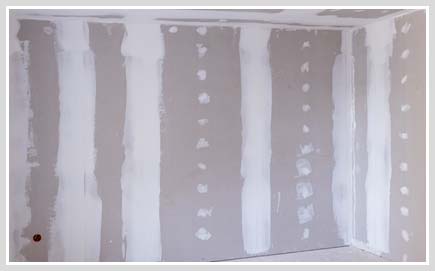
The denser the material, the better it will block sound.
Adding extra layers of drywall or plasterboard can assist as further mass and density is achieved.
However, it can rarely achieve the acoustic values to isolate, as the material’s own rigidity can result in flanking transmissions still being evident.
Materials like Acoustiblok Acoustical Sound Sealant can be applied between layers of finishing board to further absorb sound vibrations from one to another.
How Sound Isolation Works in Floors
Floor sound isolation is especially important in buildings with multiple floor levels.
Sound can travel not only through airborne noise but also via impact noise, such as footsteps.
To effectively isolate sound in floors, a combination of materials and techniques is typically used.
Which strategy to employ is usually determined by a number of factors.
These can include:
- the type of existing structure and the performance it provides
- the structure helps or hinders the movement of sound
- if the dwelling is for residential, commercial or industrial use
- the choice and type of floor desired
- the type and levels of noise to be isolated
- the desired acoustic levels to be achieved
- the overall assembly depth of the proposed buildup to available tolerances
Depths of solutions can range greatly.
The simple rule of thumb is, try using thicker solutions to evaluate what works and what doesn’t..
Where the thinnest assemblies are required whilst achieving increased and meaningful acoustic levels, more advanced solutions need to specified such as Acoustiblok 6mm Isolation Membrane or Acoustiblok 3mm Isolation Membrane.
These may be installed in tandem with varying materials and types of sub floor and Acoustic Underlays followed by the choice of finishing floor.
Open Cell Cavity Insulation
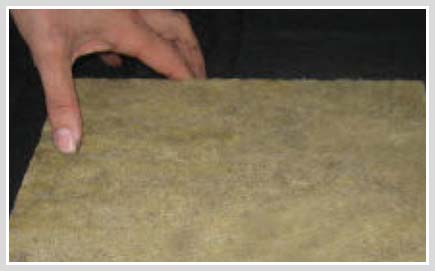
With a framed floor of joists such as timber, the cavities can be filled or part filled with acoustic quilt or open cell wool slabs.
Filling the floor cavity with sound-dampening insulation like Acoustiblok QuietFibre can reduce sound transmission by absorbing sound energy within the open space.
This principle is essential not only for absorbing acoustic energy but also for preventing resonance and the regeneration of sound, which would otherwise occur in open cavities.
Dense Materials
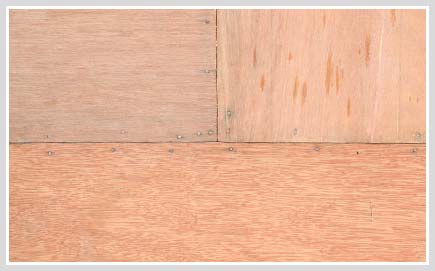
Applying additional layers of increased dense materials like plywood or OSB board can add mass to the assembly and may improve results.
This is typically required at some point in most assemblies in way of a subfloor, but experience tells us that this alone can still result in flanking transmissions and a knock-on effect via the materials’ own rigidity.
Floating Floors
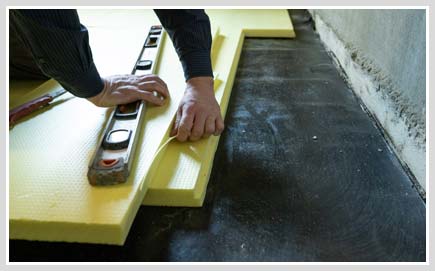
A floating floor system involves laying flooring on top of a rubber or foam underlay, decoupling it from the subfloor and reducing the amount of impact noise that travels between rooms.
Acoustic Cradles

Where a much increased depth of solution can be tolerated and a higher acoustic level is required, specialist Acoustic Cradles can be installed onto a concrete slab for example.
These ‘cradles’ or ‘towers’ are made from recycled rubber crumb materials and are arranged in a specific pattern on the floor to support a suspended timber batten system, minimising direct contact.
This framing system decouples the floating floor from the structural floor, though it does significantly increase the overall finished height.
Carpeting and Rugs to Floor Surfaces

Adding soft, thick materials to the surface of the floor, such as carpets and rugs, can help absorb some of the impact noise.
But it is unlikely to achieve an acoustic level, rather just prevent direct impact of footfall for example.
How Sound Isolation Works in Ceilings
Ceilings are another common source of sound transmission, especially in multi-storey buildings.
Just like with flooring, it’s important to assess the type of in-situ assembly, such as solid concrete, block and beam, or timber joists, and select materials that align with the appropriate design strategies.
Open Cell Cavity Insulation
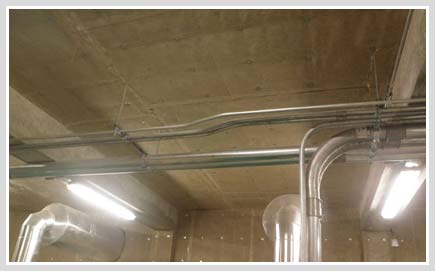
With a framed floor of joists such as timber, the cavities can be filled or part filled with acoustic quilt or open cell wool slabs.
Filling the wall cavity with sound-dampening insulation like Acoustiblok QuietFibre can reduce sound transmission by absorbing sound energy within the open space.
This principle is essential to not only absorb, but crucially, to also prevent resonance and regeneration of acoustic energy that would otherwise likely occur in open cavities.
Isolating sound with solid types of construction may involve techniques like suspended or drop ceilings which hang from the structure above.
Isolation Clips and Hangers

These decouple the ceiling from the joists above, reducing the amount of vibration that can pass through.
Unique Material for Thermal Conversion of Acoustic Energy

Similar to walls and as referenced above, adding more advanced solutions namely Acoustiblok 3mm Isolation Membrane into the ceiling buildup will greatly increase the levels of acoustic attenuation via thermal conversion.
Dense Materials

Applying additional layers of dense materials like acoustic plasterboard or even plywood can add mass, but always evaluate the additional weight that the structure can support.
Adhesives & Silicone Compounds
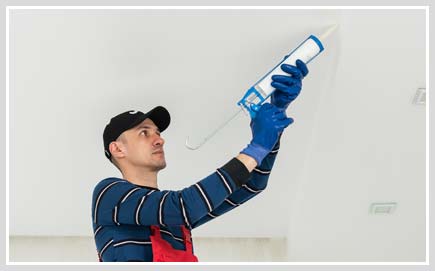
Using adhesives and silicone compounds between extra layers of plasterboard or drywall helps minimise the transmission of natural resonant frequencies from one solid surface to another.
How Sound Isolation Works in Doors
Doors are one of the weakest points to achieving sound isolation because they often have gaps and are made of lightweight materials.
To enhance sound isolation in doors, several strategies can be employed:
Solid-Core Doors
Replacing hollow-core doors with solid-core doors increases mass, making it harder for sound to pass through.
Sealing Gaps
The gaps around doors can allow sound to leak through.
Installing door sweeps, weatherstripping, and acoustic seals can block these gaps effectively.
Door Stops
Increasing the size and width of the beading on the door frame can increase the surface area of contact when the door is closed onto the door stop.
This can have a great effect in closing down the gaps that would otherwise be present and allow acoustic energy to leak through.
Acoustic Panels
In some cases, attaching soundproofing panels directly to the door can further reduce sound transmission by softening the surface and absorbing energy.
Conclusion
Sound isolation is a vital process for anyone looking to block unwanted noise from entering or leaving a space.
Whether you’re creating a quiet home, soundproofing a music studio, or simply looking to improve privacy, sound isolation can make a significant difference.
By employing techniques such as adding mass, decoupling surfaces, applying advanced Acoustiblok 3mm Isolation Membrane, adding absorbing materials and sealing gaps, you can effectively block sound transmission through walls, floors, ceilings, and doors.
When combined with other noise control measures, sound isolation can help create a more comfortable, peaceful, and productive environment.
If you’re unsure about how to start a sound isolation project, then speak to a soundproofing expert for help and advice.
In essence, sound isolation is about preventing sound from travelling between spaces using physical barriers, and it’s distinct from sound absorption and sound cancellation.
It provides numerous benefits, from improving privacy to enhancing the quality of recorded audio, making it an essential aspect of modern noise control.
Disclaimer
Acoustiblok UK Ltd / Thermablok Aerogel Ltd gives no warranty and accepts no responsibility or liability for the accuracy or the completeness of the information and materials contained in this website, blog or media content. Under no circumstances will Acoustiblok UK Ltd / Thermablok Aerogel Ltd be held responsible or liable in any way for any claims, damages, losses, expenses, costs or liabilities whatsoever (including, without limitation, any direct or indirect damages for loss of profits, business interruption or loss of information) resulting or arising directly or indirectly from your use of or inability to use this website, material, content or any website linked to it, or from your reliance on the information and material on this website, even if Acoustiblok UK Ltd / Thermablok Aerogel Ltd has been advised of the possibility of such damages in advance.