

Best Acoustic Insulation Applications for Soundproofing
If you’re experiencing problems relating to noise at home or the office, you may wish to consider investing in acoustic or sound insulation.
This can help to reduce the intensity of the sound that’s being heard in your property, and prevent sound transmission occurring between rooms within the same building.
In this article, we’ll be discussing how you can use differing acoustic insulation materials and strategies to ensure the best effectiveness against nuisance noise.
Table of Contents
What is Acoustic Insulation?
Soundproofing is the term that tends to be used more often than acoustic insulation.
However, it’s important to avoid using them interchangeably.
Soundproofing solutions may include the use of acoustic insulation to block and prevent passage of sound waves and noise.
This may include varying materials and construction methods.
The purpose of this article is to primarily focus on acoustic insulation and principles.
This may include the addition of acoustic insulation materials which use mass or density with associated weight to stop noise from passing through a structure.
Other materials would be open cell to absorb airborne sounds and reduce sound reverberation.
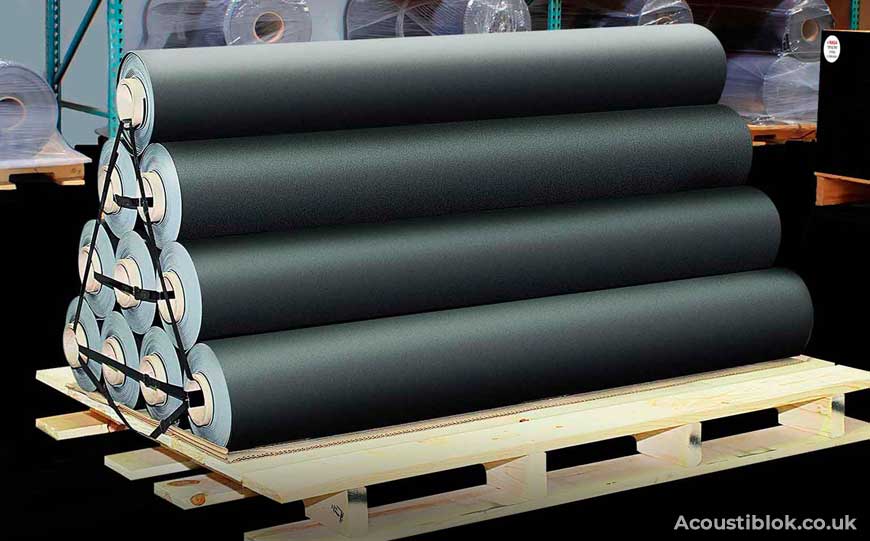
In addition there’s the specialist material, Acoustiblok Sound Insulation Membrane which uses a highly advanced and technical solution in dealing with sound energy, through thermal conversion to convert acoustic energy into trace heat.
More about the various types of acoustic insulation materials will be discussed in further detail below.
How Does Acoustic Insulation Work?

Image source: Amrita
This can very much depend on the approach taken and the materials used.
Adding more mass to a structure may effectively hinder sound transmission as the increased density and depth creates more of a barrier that any sound waves now have to travel through.
However, it would also be correct to consider that the rigidity of any mass, dense materials can also vibrate, especially within certain frequencies leading to possible flanking transmissions.
For best results, adding mass alone may not be enough.
Effective soundproofing solutions comprise the use of different types of materials, as some may be more effective than others to block the particular types of sounds.
It’s also important to note that sound travels as vibrations.
Therefore, it’s also necessary to prevent such sound vibrations by way of dampening, thereby preventing them from being able to travel through a structure’s weak points.
To do this, the principles of decoupling and dampening come into play.
By means of acoustic insulation, these vibrations are absorbed, dispersed, deflected or blocked.
The ultimate goal is to maintain the sound intensity at a lower level, or a more manageable or acceptable one, as the case may be.
Why is Acoustic Insulation Important?

Image credit: Pixabay
Acoustic insulation is a necessity if you’ve reached a point where noise pollution is affecting you negatively, or where proactively seeking to prevent a noise source from becoming such.
Examples may be physical or mental health concerns.
Unfortunately, the modern world has helped to normalise day-to-day life in noisy environments.
Yet this is considered extremely bad for our health, and in many cases has been proven to be so.
Thus, sound insulation can help us to live a better quality of life and be properly protected from exposure to noise related problems, whilst increasing comfort and privacy levels.
In commercial settings, sound insulation can be very helpful to improve productivity levels.
If your business premises is located on a busy road, or there’s noisy machines in close proximity, it’s a good idea to invest in acoustic insulation.
This will provide a much quieter working environment for yourself and your employees.
As a consequence, staff morale and productivity will improve.
Another point worth mentioning is sound insulation also has some energy efficiency advantages.
Due to thermal properties, you may be able to note a reduction in heating and cooling costs.
So there’s an added bonus.
Why Do You Need Acoustic Insulation?

Image credit: PIxabay
Acoustic insulation can offer various advantages and improve one’s situation in different ways.
Noise Pollution
You may be amazed to learn that noise complaints rose dramatically in the UK over recent years.
There were over 500,000 in the year 2017, and these massively increased in subsequent years.
Indeed, one third of UK homeowners feel that they have an issue with noisy neighbours.
There are also millions who live within close proximity to noisy surroundings such as busy roads, airports, railways, factories and construction sites.
Noise pollution is a big problem and it’s leading to a significant negative impact on people’s health.
Physical Health
It is scientifically proven that quieter buildings and environments are conducive to a better standard of living and improved wellbeing.
To put this into perspective, it’s estimated that noise pollution in Europe costs around €30.8 billion in healthcare treatment.
Add to that many close related consequences such as lost working days, reduced productivity levels and impaired learning.
If one feels tired due to lack of sleep, there is also a higher possibility of being prone to minor accidents due to lack of concentration and focus.
Mental Health
Living next door to noisy neighbours is never easy.
Imagine trying to get a good night’s sleep whilst hearing your neighbours talking, shouting, watching TV or listening to music at high volume.
With every passing day this will start to take its toll on your mental health.
You’re simply unable to live in a peaceful, quiet environment in the comfort of your own home where you are supposed to feel most at ease.
Besides noisy neighbours, there’s also the issue of living on a busy road or within close proximity to an airport.
Unfortunately, such people are statistically proven to resort to taking sleeping pills, and for many, seeking psychiatric treatment in such circumstances.
People who live in these environments are 35% more likely to suffer from depression and headaches.
Reducing undesirable sounds or the level of noise you have had to live with can greatly decrease your stress levels.
Sleep & Wellbeing
Acoustic insulation can prevent noise pollution problems and help you to live a more comfortable life, including getting undisturbed sleep and plenty of rest.
It’s a known fact that sleepless nights or disrupted sleep patterns end up taking their toll on physical health and wellbeing.
If you’re not able to sleep well night after night, you’ll feel constantly tired and lacking in energy, with potential increases in levels of anxiety being experienced.
This will have a negative impact on productivity and concentration, and ultimately on your general wellbeing.
What is Sound Isolation or Soundproofing?
The most common type of soundproofing is based on blocking sound waves.
This is essentially sound isolation as the idea is to block the sound waves from transmitting from one place to another.
In this case the sound waves bounce off hard materials or reflective materials that are used for sound insulation.
As we will be outlining hereunder, there are various types of materials that can be used for this purpose.
Types of Acoustic Insulation
The following are some of the most effective acoustic insulation materials.
The level of effectiveness depends on the particular case one is tackling, both in terms of the type and level of noise pollution, as well as the materials and structure involved.
Therefore it’s best to consider different options, and to consult an acoustic consultant with regards to the most suitable options to obtain the best possible noise control.
Acoustic Membrane
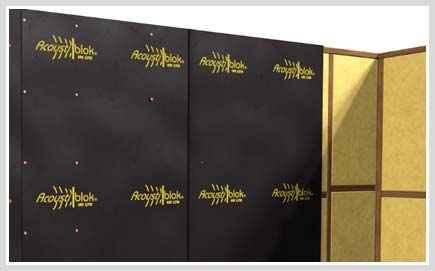
Acoustic membrane is a commonly used material for acoustic insulation.
There are various types of acoustic membrane available in different dB reduction levels, weights and thicknesses.
A great example is Acoustiblok Sound Isolation Membrane – 3mm or 6mm versions.
This world class soundproofing material converts soundwaves into trace heat energy.
When soundwaves impact against the material, the molecules within begin to vibrate and create friction energy, which is then converted into trace heat.
Acoustic Mineral Wool Cavity Insulation
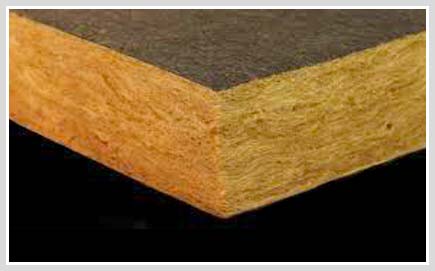
Acoustic mineral wool ‘open cell’ cavity insulation is installed within cavities in such a way that it can absorb sound.
By being within the cavity space, it can also reduce or prevent resonance within what would otherwise be empty.
This can be made from stone wool or mineral wool, which are all designed to fit snugly into wall cavities and reduce the transmission of sound.
An example is Acoustiblok QuietFibre, which is made from open cell insulation materials that absorb acoustic energy very effectively.
This type of insulation is commonly used in cavities found in stud walls or floor joists, and it is used both in residential as well as commercial settings.
It also provides a reasonable thermal value.
While the material looks rigid, it’s easy to cut to size.
So it’s used for soundproofing walls and ceilings, as well as making acoustic panels.
Fibreglass
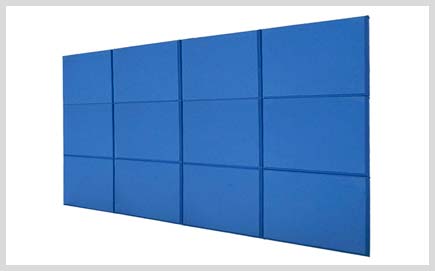
Soundproof fibreglass is another effective option.
This material is available in boards or slabs.
Fibreglass is used in domestic as well as commercial buildings.
It’s also used to make acoustic panels for theatres, recording studios and home studios to name a few.
Besides being a very effective soundproofing material, it is also ideal to improve internal acoustics.
Fibreglass is available in various thicknesses and densities and is easy to cut.
Soundproof Drywall (Plasterboard)
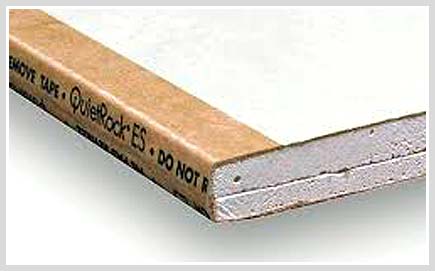
Soundproof drywall or plasterboard comes in various thicknesses.
Thanks to the higher density and mass, it is great for soundproofing.
While any type of drywall can work relatively well for soundproofing, this is a more specialised variety which comprises numerous layers of gypsum boards and steel.
It is often used with other soundproofing materials like sealants and caulks to further block sound waves.
Dense Board (OSB, Plywood, Particle Board, Fire Board)

Another example is dense boards like OSB (Oriented Strand Board), fireboard and particle board.
These acoustic insulation materials help to increase the mass and density of a structure, and thereby reduce sound transmission.
Soundproof Floor Underlay
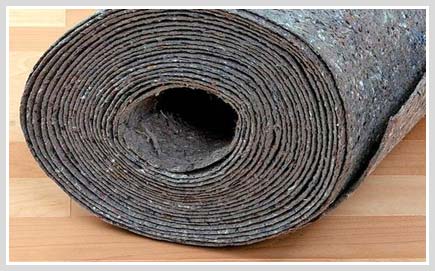
Sound transmission often passes through floors, so soundproof floor underlay is a good way to reduce this.
There are various kinds of soundproof floor underlayment, and the choice may vary depending on the type of floor it will be installed under.
Acoustiblok AcoustiWool Acoustic Underlay and Acoustiblok AcoustiMat Acoustic Underlay are two very effective options.
They are available in rolls and are easy to install combined with Acoustiblok 3mm or 6mm Sound Isolation Membrane.
The material works well with both wood and engineered floors.
Soundproof Floor Matting
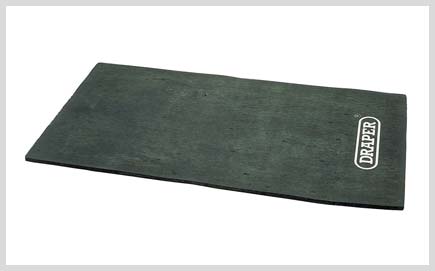
Soundproof floor matting is a good way to reduce vibrations and impact sounds.
This matting offers a good level of acoustic absorption, and is often used underneath or behind appliances and machines.
Acoustic Plaster
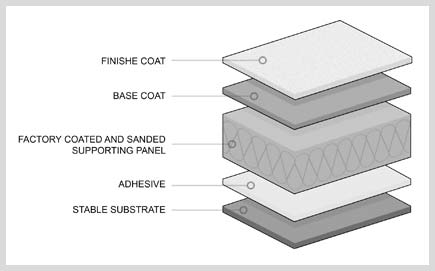
Acoustic plaster is made from various compounds, and it comes in varying weights and flexibilities.
The main aim is to reduce surface reflections and equalise internal acoustics.
Soundproof Paint
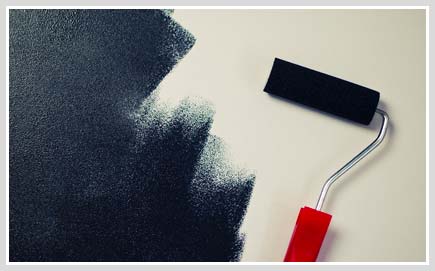
Sound deadening paint can help with soundproofing.
It can be sprayed or applied by a roller.
The thicker the layer, the better the soundproofing results.
This type of paint contains latex and thus reduces sound reflections and transmissions.
Soundproof Wallpaper
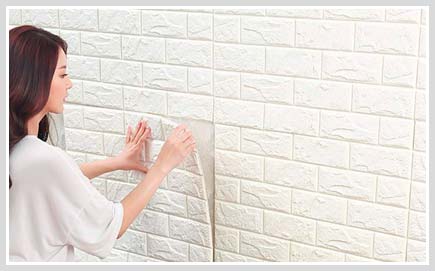
Soundproof wallpaper is generally made from closed-cell polyethylene foam which has good sound absorption properties.
Having said that, since it is not so dense, it is best used in conjunction with another soundproofing option for better results.
However, it is definitely a good option if you want something that’s aesthetically pleasing.
Acoustic Wall Covering
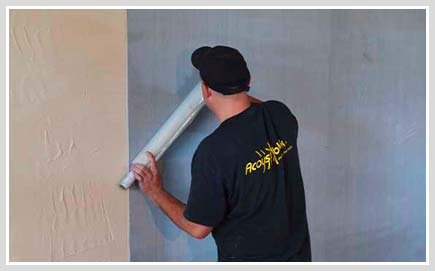
Acoustic wall covering is a flexible hybrid composite.
This sheet material helps with acoustic isolation and calibration.
It is often used in residential and commercial settings as it’s easy to apply, but durable and quite effective.
Soundproof Windows & Frames

Acoustically rated windows are ideal for soundproofing.
Such windows are designed in a way that they comprise thick frames and multiple layers of glass.
Some soundproof windows also include air or inert gas between the glazing panels too.
While being a bit expensive, they are an effective way to reduce noise pollution from outside.
Soundproof Doors & Frames
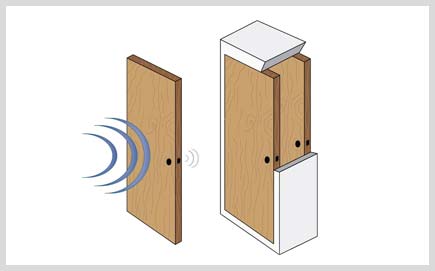
Soundproof doors are typically thicker than standard doors.
Thanks to their sturdy construction, they manage to block sound waves more effectively.
Good examples of such doors are solid core doors, fire doors, and rigid steel doors, which have considerable mass and weight, and with no openings anywhere.
Door Seals, Sweeps & Gaskets
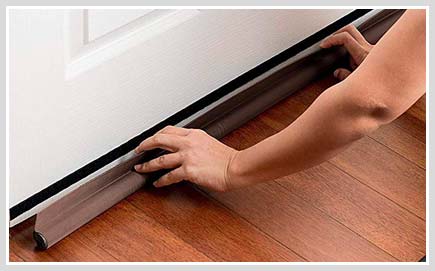
Doors seals, sweeps and gaskets are also important for soundproofing purposes.
A door or window needs to be complemented in this manner to ensure a tight fit and no openings whatsoever.
These seal any gaps well and thanks to a tight seal, there will be no room for sound waves to pass through.
Acoustic Foam
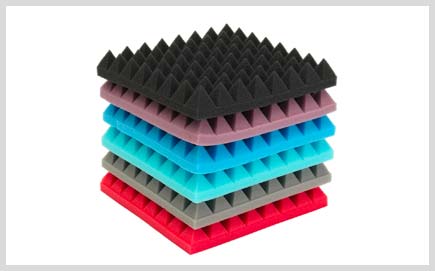
Acoustic foam comes in various thickness, sizes and colours.
It is ideal to improve sound quality in a room, and is thus used for home theatres, recording studios and music rooms, aside from soundproofing purposes.
This is an open-cell foam that creates a sound barrier and leads to an ideal way to decrease the levels of sound waves entering a room or area.
Sound Absorber Panels

Sound absorber panels come in a variety of styles and colours.
They are mounted to ceilings and walls in order to reduce acoustic reflections and reverberations.
Acoustiblok Quiet-Cloud is an example of sound absorber panels that are both aesthetically pleasing, as well as effective for soundproofing purposes.
Acoustic Ceiling Tiles
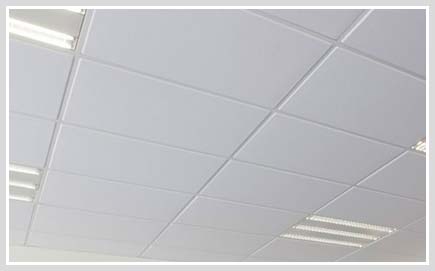
Similar to acoustic panels, acoustic ceiling systems and tiles are effective to soundproof a room or area, while also improving its acoustical qualities.
Such systems are available in various designs, sizes and materials.
Soundproof Curtains
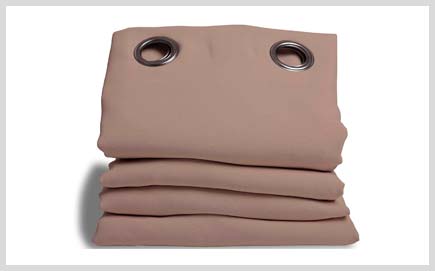
Acoustic fabric is a type of fabric that is ideal to block sound from either leaving or entering a room or area.
Such fabric is used to make soundproof curtains.
They are sometimes referred to as blackout or acoustic curtains, and are great for noise reduction.
The thick fabric that such curtains are made from reduces the movement of the sound waves travelling in that space.
Soundproof Blankets
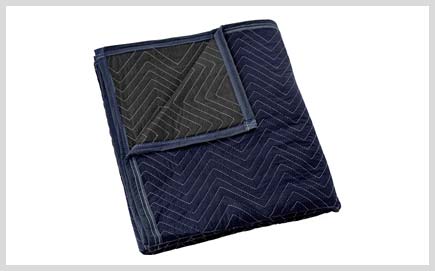
Soundproof blankets are good for sound absorption.
They are made from thick, dense fabric that prevents acoustic transference and absorbs sound.
Conclusion
Different types of acoustic insulation materials have different levels of effectiveness.
They are designed in diverse ways and often used in conjunction with other materials to find the best possible acoustic insulation solution for a room or area.
The location, noise frequencies and the preferences one might have for noise reduction will also play a role on what type of acoustic insulation materials one chooses to install.
It is also worth noting that the costs vary too.
So one may also wish to consider additional features and benefits such as fire resilience, thermal properties, ease of installation, and durability.
If you’re considering a soundproofing project or need to apply the very best acoustic insulation methods to reduce your noise, speak to an acoustic consultant for further help.
Disclaimer
Acoustiblok UK Ltd / Thermablok Aerogel Ltd gives no warranty and accepts no responsibility or liability for the accuracy or the completeness of the information and materials contained in this website, blog or media content. Under no circumstances will Acoustiblok UK Ltd / Thermablok Aerogel Ltd be held responsible or liable in any way for any claims, damages, losses, expenses, costs or liabilities whatsoever (including, without limitation, any direct or indirect damages for loss of profits, business interruption or loss of information) resulting or arising directly or indirectly from your use of or inability to use this website, material, content or any website linked to it, or from your reliance on the information and material on this website, even if Acoustiblok UK Ltd / Thermablok Aerogel Ltd has been advised of the possibility of such damages in advance.