Blog

What is Sound Isolation
Blog

What is Sound Isolation?

In a world filled with noise, finding peace and quiet can be a challenge.

Whether it’s the sound of traffic outside your window, neighbours in a bustling apartment building, or the constant hum of activity in the office, unwanted noise can be more than just a distraction – it can affect your mood, productivity, and even your health.

This is where sound isolation material comes in.

By creating barriers that prevent noise from traveling between spaces, sound isolation offers a practical solution to maintaining quiet and privacy in any environment.

In this article, we’ll explore what sound isolation is, how it works, and why it’s essential in both residential and commercial settings.

Whether you’re a homeowner looking to create a peaceful sanctuary or a professional aiming to isolate or improve acoustics, understanding sound isolation can help you achieve your goals.

What is Sound Isolation?

Sound isolation refers to the process of preventing sound from traveling from one space to another.

Unlike sound absorption, which deals with reducing reverberation, resonance, echo and noise within a room, sound isolation aims to prevent sound transmission entirely.

Be that ingress or leakage.

This is typically achieved by employing standard principles and specialised construction techniques to create partitions that stop sound waves from passing through walls, floors, ceilings, and doors.

Sound Isolation vs Sound Absorbtion

Though they are often confused, sound isolation and sound absorption serve different purposes in controlling acoustic energy.

Sound isolation is all about preventing sound from escaping (leaving) or ingress (entering) a space.

This is crucial when dealing with so many different types of noise in everyday life.

Examples may include noisy neighbours, home studios, room to room in dwellings, offices, board rooms, treatment rooms, recording studios – or any situation where external noise ingress or internal sound leaking is a concern.

The goal is to create a partition or barrier that prevents movement from A to B or B to A depending on your situation.

But what do you build that partition or barrier with?

Our previous articles highlight the key principles that may be considered depending on the construction method.

Varying approaches are adopted which may include:

  • density and mass (deflection)
  • framing systems (decoupling)
  • open cell material (absorption)
  • acoustic isolation materials (thermal conversion)

By contrast, acoustic calibration or balancing of internal acoustics by way of surface sound absorption, focuses on improving the acoustics within a space to ensure accuracy of acoustic performance, reflection and resonance.

This principle works by absorbing excess sound energy inside a room, reducing echo and reverberation. 

Absorptive materials within a space help control noise levels, making a room sound clearer and less noisy.

These spaces may already include carpets, sofas, curtains and cushions and where further specific solutions are required Acoustic Wall Absorber Panels, or Acoustic Ceiling Absorber Panels, foam panels, baffles, diffusers.

But to be clear – these methods do not prevent sound from escaping or entering.

Sound Isolation vs Sound Cancellation

It’s also important not to confuse sound isolation with sound cancellation.

While sound isolation prevents soundwaves by whatever means from traveling between spaces, sound cancellation involves actively counteracting sound waves.

This is most commonly used in noise-canceling headphones, which emit a sound wave that cancels out external noise.

Sound cancellation is an active technology, requiring electrical components, while sound isolation is passive, relying on structural changes and materials.

Benefits of Sound Isolation

The benefits of sound isolation are numerous, especially in environments where controlling noise is crucial.

Some key advantages include:

Improved Privacy

Whether in a home or office, sound isolation ensures conversations and activities remain private by preventing sound leakage.

Noise Reduction

In urban environments, isolating sound can significantly reduce the intrusion of outside noise, making homes quieter and more comfortable.

Enhanced Productivity

By blocking distracting sounds, isolated spaces like home offices or studios allow for better concentration and focus.

Better Sound Quality

For musicians or anyone creating audio content, sound isolation helps ensure external noises don’t interfere with recordings, delivering clearer, more professional results.

How Sound Isolation Works in Walls

Walls are one of the primary barriers for sound isolation, but standard drywall often fails to block sound effectively.

Decoupling

To isolate sound in walls, the most common approach is to construct a thin framed partition from timber or steel stud of varying thicknesses to best fit the specific requirements of depth, tolerance and acoustic performance. 

Framing or decoupling separates the surfaces on either side of a wall so sound waves cannot travel directly through them.

This is often achieved with a single stud or in some scenarios double-stud walls, sometimes with or without resilient channels which offer an additional principle of decoupling.

Open Cell Cavity Insulation

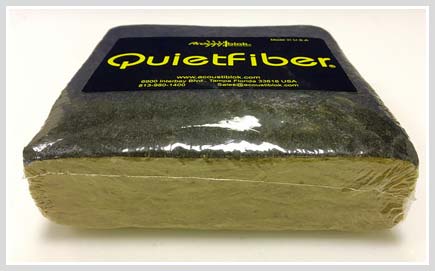
Filling the studded wall cavity with sound-dampening insulation like Acoustiblok QuietFibre can reduce sound transmission by absorbing sound energy within the open space.

This principle is essential to not only absorb but crucially to also prevent resonance and regeneration of acoustic energy that would otherwise likely occur in open cavities.

Thermal Conversion of Acoustic Energy

Acoustic Isolation Membrane

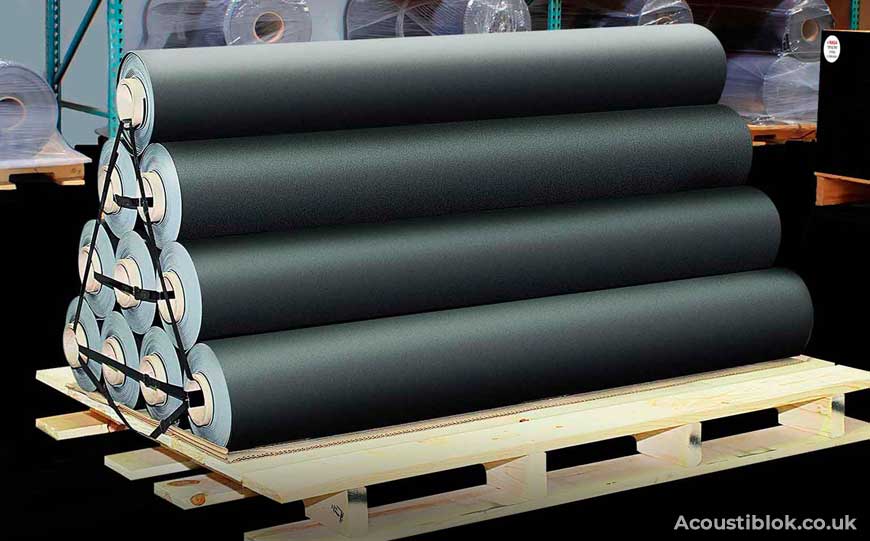
Applying Acoustiblok 3mm isolation membrane onto the framing system will greatly improve acoustic isolation and reduce flanking transmissions.

Acoustiblok Isolation Membrane is unique in application, is flexible and versatile and will increase acoustic performance whilst reducing the depth of the build by outperforming other materials millimetre for millimetre.

This thin material offers so much effect by thermally converting the acoustic energy via vibrations, thereby transfering a more problematic acoustic energy into a far less troublesome trace heat energy. 

It gives significant improvements in acoustic isolation within minimum wall depths to retain precious space and gross internal areas.

Adding Mass & Density

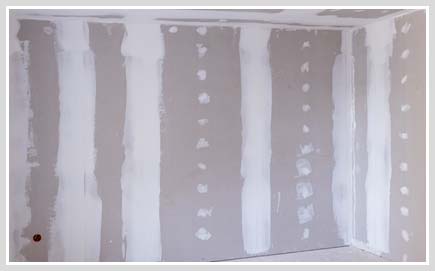
Plasterboarded Walls

The denser the material, the better it will block sound.

Adding extra layers of drywall or plasterboard can assist as further mass and density is achieved.

However, it can rarely achieve the acoustic values to isolate, as the material’s own rigidity can result in flanking transmissions still being evident.

Materials like Acoustiblok Acoustical Sound Sealant can be applied between layers of finishing board to further absorb sound vibrations from one to another.

How Sound Isolation Works in Floors

Floor sound isolation is especially important in buildings with multiple floor levels.

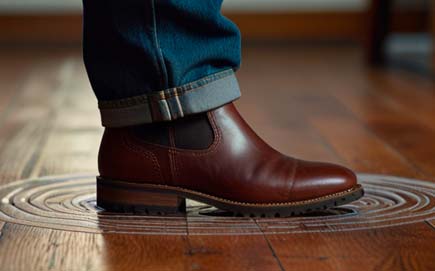
Sound can travel not only through airborne noise but also via impact noise, such as footsteps. 

To effectively isolate sound in floors, a combination of materials and techniques is typically used. 

Which strategy to employ is usually determined by a number of factors. 

These can include:

  • the type of existing structure and the performance it provides
  • the structure helps or hinders the movement of sound
  • if the dwelling is for residential, commercial or industrial use
  • the choice and type of  floor desired
  • the type and levels of noise to be isolated
  • the desired acoustic levels to be achieved
  • the overall assembly depth of the proposed buildup to available tolerances

Depths of solutions can range greatly.

The simple rule of thumb is, try using thicker solutions to evaluate what works and what doesn’t..

Where the thinnest assemblies are required whilst achieving increased and meaningful acoustic levels, more advanced solutions need to specified such as Acoustiblok 6mm Isolation Membrane or Acoustiblok 3mm Isolation Membrane.

These may be installed in tandem with varying materials and types of sub floor and Acoustic Underlays followed by the choice of finishing floor.

Open Cell Cavity Insulation

Open Cell Floor Insulation

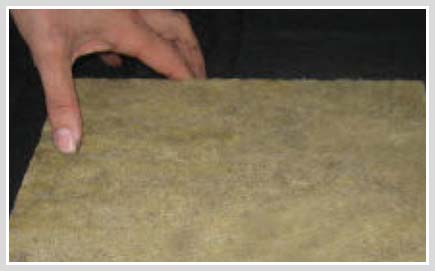
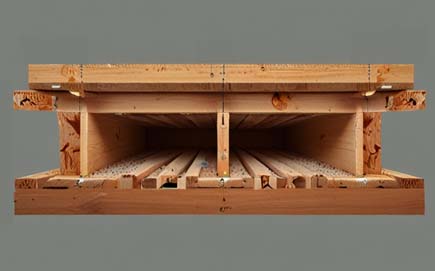
With a framed floor of joists such as timber, the cavities can be filled or part filled with acoustic quilt or open cell wool slabs.

Filling the floor cavity with sound-dampening insulation like Acoustiblok QuietFibre can reduce sound transmission by absorbing sound energy within the open space.

This principle is essential not only for absorbing acoustic energy but also for preventing resonance and the regeneration of sound, which would otherwise occur in open cavities.

Dense Materials

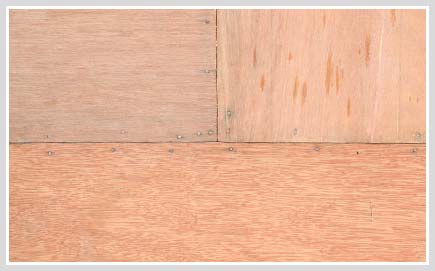
Plywood Floor

Applying additional layers of increased dense materials like plywood or OSB board can add mass to the assembly and may improve results.

This is typically required at some point in most assemblies in way of a subfloor, but experience tells us that this alone can still result in flanking transmissions and a knock-on effect via the materials’ own rigidity.

Floating Floors

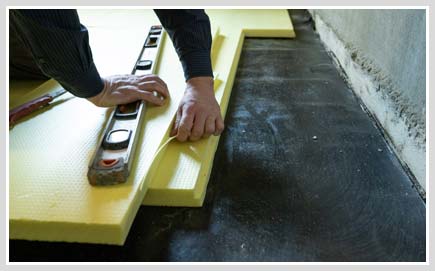
Foam Floor Underlay

A floating floor system involves laying flooring on top of a rubber or foam underlay, decoupling it from the subfloor and reducing the amount of impact noise that travels between rooms.

Acoustic Cradles

Acoustic Cradle

Where a much increased depth of solution can be tolerated and a higher acoustic level is required, specialist Acoustic Cradles can be installed onto a concrete slab for example. 

These ‘cradles’ or ‘towers’ are made from recycled rubber crumb materials and are arranged in a specific pattern on the floor to support a suspended timber batten system, minimising direct contact.

This framing system decouples the floating floor from the structural floor, though it does significantly increase the overall finished height.

Carpeting and Rugs to Floor Surfaces

Soundproof Rug

Adding soft, thick materials to the surface of the floor, such as carpets and rugs, can help absorb some of the impact noise.

But it is unlikely to achieve an acoustic level, rather just prevent direct impact of footfall for example.

How Sound Isolation Works in Ceilings

Ceilings are another common source of sound transmission, especially in multi-storey buildings.

Just like with flooring, it’s important to assess the type of in-situ assembly, such as solid concrete, block and beam, or timber joists, and select materials that align with the appropriate design strategies.

Open Cell Cavity Insulation

Open Cell Ceiling Insulation

With a framed floor of joists such as timber, the cavities can be filled or part filled with acoustic quilt or open cell wool slabs.

Filling the wall cavity with sound-dampening insulation like Acoustiblok QuietFibre can reduce sound transmission by absorbing sound energy within the open space.

This principle is essential to not only absorb, but crucially, to also prevent resonance and regeneration of acoustic energy that would otherwise likely occur in open cavities.

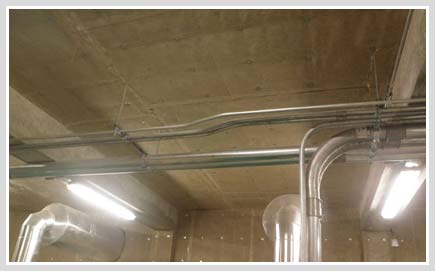
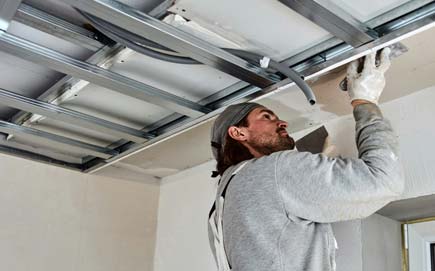
Isolating sound with solid types of construction may involve techniques like suspended or drop ceilings which hang from the structure above. 

Isolation Clips and Hangers

Ceiling Isolation Clips

These decouple the ceiling from the joists above, reducing the amount of vibration that can pass through.

Unique Material for Thermal Conversion of Acoustic Energy

Acoustic Ceiling Membrane

Similar to walls and as referenced above, adding more advanced solutions namely Acoustiblok 3mm Isolation Membrane into the ceiling buildup will greatly increase the levels of acoustic attenuation via thermal conversion.

Dense Materials

Drywall Ceiling

Applying additional layers of dense materials like acoustic plasterboard or even plywood can add mass, but always evaluate the additional weight that the structure can support.

Adhesives & Silicone Compounds

Acoustic Ceiling Sealant

Using adhesives and silicone compounds between extra layers of plasterboard or drywall helps minimise the transmission of natural resonant frequencies from one solid surface to another.

How Sound Isolation Works in Doors

Doors are one of the weakest points to achieving sound isolation because they often have gaps and are made of lightweight materials.

To enhance sound isolation in doors, several strategies can be employed:

Solid-Core Doors

Replacing hollow-core doors with solid-core doors increases mass, making it harder for sound to pass through.

Sealing Gaps

The gaps around doors can allow sound to leak through.

Installing door sweeps, weatherstripping, and acoustic seals can block these gaps effectively.

Door Stops

Increasing the size and width of the beading on the door frame can increase the surface area of contact when the door is closed onto the door stop.

This can have a great effect in closing down the gaps that would otherwise be present and allow acoustic energy to leak through.

Acoustic Panels

In some cases, attaching soundproofing panels directly to the door can further reduce sound transmission by softening the surface and absorbing energy. 

Conclusion

Sound isolation is a vital process for anyone looking to block unwanted noise from entering or leaving a space.

Whether you’re creating a quiet home, soundproofing a music studio, or simply looking to improve privacy, sound isolation can make a significant difference.

By employing techniques such as adding mass, decoupling surfaces, applying advanced Acoustiblok 3mm Isolation Membrane, adding absorbing materials and sealing gaps, you can effectively block sound transmission through walls, floors, ceilings, and doors.

When combined with other noise control measures, sound isolation can help create a more comfortable, peaceful, and productive environment.

If you’re unsure about how to start a sound isolation project, then speak to a soundproofing expert for help and advice.

In essence, sound isolation is about preventing sound from travelling between spaces using physical barriers, and it’s distinct from sound absorption and sound cancellation.

It provides numerous benefits, from improving privacy to enhancing the quality of recorded audio, making it an essential aspect of modern noise control.

Blog

30 Types of Soundproofing Materials Explained

Soundproofing is a specialism that revolves around effectively controlling unwanted noise, with various soundproofing materials used to mitigate the effects of noise.

Anything from people who want a quieter home and tranquility from noisy next door neighbours, to businesses who need to reduce the noise impact that they make on surrounding areas, soundproofing comes with a long list of causes and solutions.

In fact, there are a myriad of soundproofing materials that one can choose from to apply to different uses.

Some are more suitable or effective than others, which greatly depends on the type of noise created, the source of the noise, the structure of the building, wall construction, and various other key factors.

To understand soundproofing materials and how they perform, it is important to mention that sound is a form of energy.

Sound travels from a source, and during the distance that it travels it causes vibrations whenever it hits air and any objects in its path.

These sound waves then reach the recipient’s ears and stimulate the brain.

Soundproofing materials work to reduce the sound pressure created from the source to the receptor.

In this in-depth article, we’ll explore the 30 best known soundproofing materials in more detail, how they perform and where they are best used.

Soundproofing vs Sound Absorption

Before exploring soundproofing materials, it is advised to firstly understand the key differences between sound absorption and soundproofing.

It’s a common misconception to think that sound absorption is the same as soundproofing.

In reality they are not one and the same.

Sound absorption is in actual fact one element of sound proofing and is used in two ways:

Firstly, as part of a soundproofing system, as a material which is invariably added within a structure such as between the voids created in a stud wall, which can reverberate sound, adding sound absorption can prevent this.

Secondly, when sound absorbing materials are added to the surface of a wall or ceiling, it absorbs sound waves and reduces resonance and regeneration of the sound back into the room.

In doing so, improves the acoustics of a room which is called acoustic calibration.

For example, a noisy restaurant with hard surfaces typical of industrial influenced design of today’s trendy eateries, can result in a cacophony of sound from clattering cutlery and chattering diners.

This noise can be softened with panels of sound absorbing materials which equalize and balance the internal acoustics of a room which is acoustic calibration.

Hopefully this explanation is reasonably clear, but in a nutshell, sound ‘absorbing’ materials reduce the resonance and reverberation of sound waves within a space or room.

Sound ‘proofing’ materials prevent sound waves from passing in or out of the room.

Key Principles of Soundproofing

Soundproofing is acoustic isolation – the prevention of sound waves passing in or out of a room.

In order to understand soundproofing or acoustic isolation, it is best to start by highlighting the key principles, namely:

Deflection

Deflection of sound is achieved by adding mass and density to any structure such as a wall, floor or ceiling.

All solid materials which have a thick consistency and are dense or somewhat heavy, can help to block sound.

By adding mass and dense materials between the source of the sound and the receiving point will offer additional bulk that the sound wave will have to pass through and in doing so will reduce its energy.

Increased mass and density of a wall ‘s construction can be achieved with concrete for example, or dense finishing boards such as ply, OSB, drywall or plasterboard.

Deflection with mass and density proves more effective with airborne sounds such as voices or music, and not so effective with impact noise such as foot fall, which is usually associated with stronger power, pressure and therefore vibration.

As sound waves strike the mass and dense materials, vibration will occur and in doing so will pass the energy from one side to the other through the materials’ own rigidity.

This is the principle of flanking transmission noise – a common problem with all structural scenarios.

Absorption

Open cell woven types of material such as QuietFibre Stone Wool Cavity Insulation, which provides a soaking up or absorption of the acoustic energy entering it.

These are available in differing thicknesses and densities for an increasing effect and are usually installed in open cavities where the depth of material can be tolerated.

Not only do these types of absorptive materials offer absorption, but it is also important to know that by filling a cavity they can also prevent the potential of additional resonance, reverberation or amplification of sound waves that could be created if the cavity were to be left completely empty.

Decoupling

The principle of decoupling is to reduce the area of direct mechanical linkage between the substrate or structure, say for example of a wall, and the finishing materials.

This process is a way of interrupting sound vibrations or flanking transmissions that travel through the structures’ own connectivity or rigidity from one side to the other.

This may well be by a complete decoupling of an internal structure such as what is commonly called a ‘room within a room’ or a ‘cell within a cell’ or may simply be a decoupling by counter battening or resilient channels.

A good example is the use of acoustic brackets, acoustic hangers or resilient channels, which will help to decouple drywall from the rest of the building’s structure.

As a result, the strength of the acoustic vibrations are reduced, thus slowing their potential passage through the wall.

Decoupling is best done during the construction phase of a building.

Thermal Conversion

Acoustiblok Isolation Membrane is a material which works by converting sound energy into trace heat energy.

When sound waves come into contact with the membrane, it vibrates the molecules of the materials which in turn creates friction which is cleverly converted to a trace heat energy.

Thus the material works by converting a more problematic acoustic energy into a less problematic heat energy which is simply transferred through the material sideways to reduce flanking transmissions.

In any serious or advanced strategy to isolate sound, this is an absolute must to work in tandem with the other principles.

At only 3mm thick, the depth of the material is hardly noticeable in the grand scheme of things, but the benefits to uplift acoustic performance are immense.

The material has an optimum balance of mass and flexibility, however it does not rely only on its mass for acoustic performance, making it a unique and standalone sound proofing material.

Constrained Layer Damping

Constrained layer damping is a principle of using specific materials in particular ratios to reduce the natural resonant frequencies of the structure, thus reducing the resulting flanking transmissions through from one side of the structure to the other.

Damping compounds are effective when applied between two rigid panels, such as drywall or plasterboard for example.

As a result, when the sound hits it, shearing forces between the panels creates friction in the damping layer and the sound ceases as it is converted to heat, in essence thermal conversion occurs.

This solution is ideal for low-frequency noises.

Key Takeaway

These essential principles of soundproofing outlined above work independently of each other, but can also complement one another.

Often, combining different methods by using two, three, four or more of these principles offers the best results.

Types of Soundproofing Materials

There’s an extensive list of soundproofing materials that you can choose from, for various applications.

Each of these materials has different best use scenarios, and they work by means of one or more of the soundproofing principles outlined above.

Let’s go over them in more detail to highlight key aspects of the material and how and when they are best used:

Acoustic Isolation Membrane

There are quite a few ‘acoustic membranes’ on the marketplace, with some being better than others.

The most advanced membrane in this category is the unique Acoustiblok Isolation Membrane which is the thinnest and highest performing material available, mm for mm.

It is considerably lighter and enables a higher thermal conversion of energy from an acoustic energy into a less problematic heat energy and transfer through itself.

This material which is available in 3mm and 6mm thicknesses, is commonly installed within walls, ceilings and floors to mitigate airborne and impact sound.

Remarkably, it helps to block sound transfer more effectively than a sheet of lead and is ideal for sound insulation.

It is polymer-based and thus very flexible, adaptable and easy to install.

It offers effective acoustic insulation without increasing the thickness of walls or ceiling, or loading with excessive weight for example.

Some other materials are known as Mass Loaded Vinyl (MLV) which are simply a rubber compound impregnated to increase mass and density. These are much heavier materials and rely heavily on a deflective principle.

Open Cell Cavity Insulation

This material is typically installed into cavities, and tends to be made from rock wool,stone wool, mineral wool or fibreglass. QuietFibre is an example of a stone wool.

They are designed to fit snugly between wall studs, ceilings and floors and uses the principle of sound absorption.

By doing so they will effectively pack out the airspace usually found in these areas, and so the transmission of sounds are impeded or considerably reduced by their presence.

Decoupling Products

Based on the principle of decoupling materials through which sound is transmitted.

  • Resilient Channels – there are varying types from simple timber battens to aluminium metal rails that are specially designed to lay over soundproofing insulation once they are mounted across wall studs or ceiling joists.
  • Acoustic Hangers – which are isolation mounts which mechanically fix to the main structure and act as a gasket between the structure and the resilient channel / cross batten.

Acoustic Flooring

The principle of decoupling comes into play here.

This material is used to decouple the main floor surface from the subfloor, and thus reduce noise transmission.

Common materials for acoustic flooring include Acoustiblok, rubber based crumb, cork and felt for example.

Soundproof Windows

Specialist types of soundproof windows use the principle of decoupling to reduce the sound that enters or leaves a room where installed.
These windows typically have thick glass panes and a layer of air trapped in between each layer.

Soundproof Doors

This is another type of architectural soundproofing solution.

Much like soundproof windows, soundproof doors are designed to use the principle of increased depth and mass as well as decoupling to reduce sound transmission.

Acoustic Panels

These panels are another type of sound absorption board, commonly referred to as AcoustiCloud Panels and AcoustiWall Absorber Panels and are installed invariably on the surface or near the surface of ceilings and walls.

Again these are used more so for controlling internal acoustics to equalise and calibrate.

They are reasonably effective when positioned correctly and cover sufficient volume and surface area as well as being aesthetically pleasing on the eye.

Acoustic panels are seen as a decorative alternative to acoustic foam and come in a range of colours, shapes and designs.

Acoustic Fabrics

Typically used for theatre curtains, blackout curtains and studio blankets, acoustic fabrics are a very thick type of fabric which are effective when it comes to dealing with acoustics in large rooms or halls.

They are also used as a wall lining to increase acoustic equalisation within rooms such as cinemas.

Acoustic Foam

Acoustic foam, also commonly known as Studio Foam, is wall mounted foam panels that can be flat, chamfered, convoluted, wedged or have pyramidal shapes protruding from them.

They mostly help to improve audio quality in studios and music rooms.

Acoustic foam works on the principle of sound absorption and re-calibration of internal acoustics, and so they are not as effective as other materials when it comes to blocking sound.

They should make a noticeable difference to internal acoustics and the audible values, but if you are looking for a sound blocking solution, there are far better materials you should consider.

It’s important to note that the thickness and densities of these foams vary, which in conjunction with correct positioning, plays a significant part in their effectiveness and performance.

You should also take into account the type and amount of surface area to be covered.

30 Best Soundproofing Materials

Soundproofing materials come in all forms and kinds, as we have already outlined.

However, it is important to be aware of how and where they should be applied for best results.

Needless to say, it’s also important to consider the quality of the particular soundproofing material you intend to use to achieve the very best possible results.

Here’s a rundown of the 30 best soundproofing materials available on the marketplace and how best to use them:

1. Acoustic Membrane
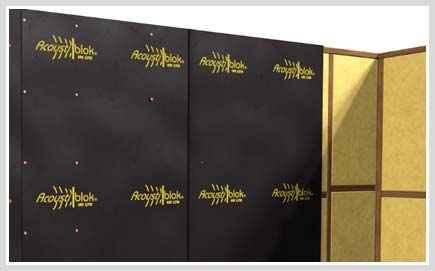
Acoustic MembraneThere are different types of acoustic membrane on the market, some much heavier than others and some higher performing than others.

These will be rated by different dB reduction levels across differing Hz frequencies and are available in different thicknesses.

The thicknesses and weight will affect their application and effectiveness, so it’s important to choose well.

  • Uses: ideal as a sound insulation membrane as it works well when it comes to reducing sound transference.
  • Pros: minimal depth to existing structures such as walls and ceiling, easy to install, long lasting.
  • Cons: some are rather heavy with increased mass which in turn provides a contra effect. Some brands are more expensive but as the saying goes, you get what you pay for.

2. Acoustic Mineral Wool Cavity Insulation
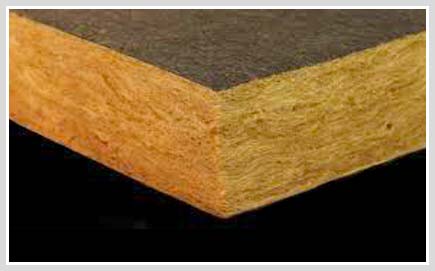
Acoustic Mineral WoolMineral, rock or stone wool insulation, such as Acoustiblok QuietFibre, are essentially open cell insulation materials which work very well at absorbing acoustic and thermal energies.

Invariably used in cavities such as stud walls, this rather rigid material comes in different thicknesses and densities and is used in both households and commercial projects as it is quite affordable.

Not only good at acoustic and thermal energy absorption but almost as important if not more so, it is very useful for filling cavities. This prevents the cavity from being an open and resonant ‘cave’ like hole which can lead to an amplification of acoustic energy.

Despite being quite rigid, it is easy to cut.

  • Uses: to soundproof walls and ceilings, make acoustic panels and bass traps, and as soundproofing insulation in various places, from residential to commercial spaces.
  • Pros: affordable, natural material, fire and moisture resistant.
  • Cons: need a lot of depth of the material to be effective by itself. Protective breathing gear must be worn as cutting causes slivers which lodge in the skin, or may be inhaled and irritate the lungs.

3. Fibreglass
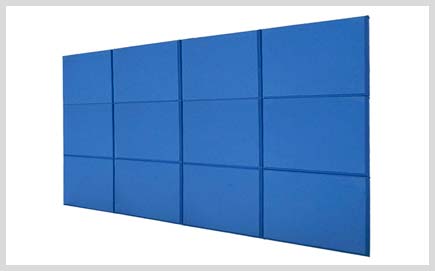
FibreglassSoundproof fibreglass comes in boards / slabs rather than rolls and can be used in various places and applications including to make acoustic panels in home studios, theatres and commercial buildings.

This soundproofing material is very effective in diminishing noise that enters or leaves a room, and also improves internal acoustics.

There are different types which you can choose from with differing thicknesses, densities and strengths.

For example 703 boards are best for reducing high frequency noises whilst 705 boards are more suited to low frequency bass noises.

  • Uses: in recording studios, home cinemas, theatres and anywhere where soundproofing is needed, extremely versatile.
  • Pros: suitable for various frequency ranges, come in different thicknesses, easy to cut.
  • Cons: known to be an irritant so protective gear must be worn when handling.

4. Resilient Channels

Resilient ChannelsResilient sound channels are the main way of decoupling drywall from internal structures of buildings.

This system can also be installed with acoustic hangers or gaskets which further reduce the vibration.

Resilient sound channels are strips of metal or timber that are installed to the walls so that the soundproof insulation within the walls can be kept firmly in place, whilst providing a platform onto which all finishing systems can be attached.

This eliminates the direct contact that there would otherwise be through the layers of structure – walls, ceiling, floors.

Screws can pass through several holes or gaps found in these channels to ensure easier screwing, making them easy to install.

Any sounds that pass through will basically keep vibrating against the resilient sound channels, and so they are isolated from the room.

  • Uses: generally used during construction as they help to achieve very good soundproofing in a building due to decoupling principles.
  • Pros: relatively easy to install, come with practical gaps/holes
  • Cons: low cost, will take considerable time to install if there’s a large surface area to cover.

5. Acoustic Hangers (Mounts)
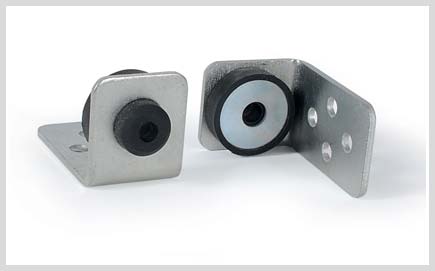
Acoustic HangersSound isolation clips are designed to allow a decoupling separation between the walls and ceiling from the underlying framing studs and joists.

These moulded rubber and steel isolation clips are used to control sound and are designed to reduce vibration through a structure.

  • Uses: in wall, ceiling and floor applications for treating both airborne and impact noise.

6. Soundproof Drywall (Plasterboard)
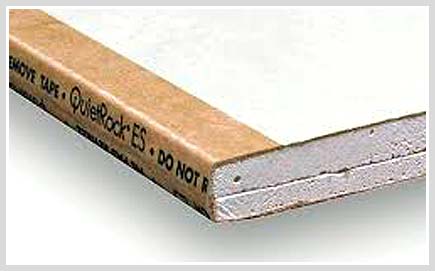
Soundproof DrywallApart from the common varieties of drywall which can be purchased at most DIY stores, there is also a more specialised form of drywall, namely soundproof drywall.

This comes in different thicknesses, and promotes having an increased sound transmission class than the other types of common drywall used in everyday construction, due to its increased density and mass.

Soundproof drywall typically combines several layers of gypsum boards, along with steel, with the main aim being to increase its density and mass so as to block sound effectively.

Having said that, any type of drywall can work well for soundproofing as long as decoupling is at the back of one’s mind.

To achieve good results in terms of soundproofing, it is important to choose thick drywall in conjunction with some other soundproofing methods, such as Acoustiblok 3mm Isolation Membrane, sealants, tapes and caulks for example.

  • Uses: can be used in any building or room
  • Pros: quite effective
  • Cons: increased weight over effect, expensive option, requires professional installation

7. Dense Board (OSB, Plywood, Particle Board, Fire Board)

Oriented Strand BoardOSB or Oriented Strand Board is a versatile and durable building board.

An alternative, plywood can be used as the construction is similar with multiple layers of opposing-oriented wood fibres that creates rigidity and strength with increased mass and density.


8. Soundproof Floor Underlay
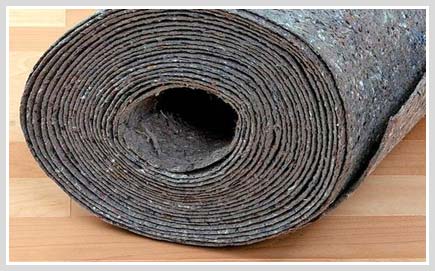
Soundproof Floor UnderlayFloor underlayments are a great way to reduce sound transmission that naturally occurs between engineered floors and hardwoods.

There are different kinds of soundproof floor underlayment but felt underlayment is among the most popular options for floors of various kinds, including laminate floors, hardwood and engineered wood.

They are typically made from fibres which are compressed and treated with heat, so as to form a dense sound absorbing material.

A great example of this is Acoustiblok AcoustiWool Acoustic Underlay, which comes available in rolls and works best if installed in conjunction with Acoustiblok Isolation Membranes.

  • Uses: ideal for most kinds of wood or engineered floors in both residential and commercial premises.
  • Pros: quite affordable, easy to install, hardwearing and effective at absorbing sound as well as moisture.
  • Cons: simply an acoustic underlay and will only offer a moderate level of acoustic performance.

9. Anti-Vibration Soundproof Floor Mats
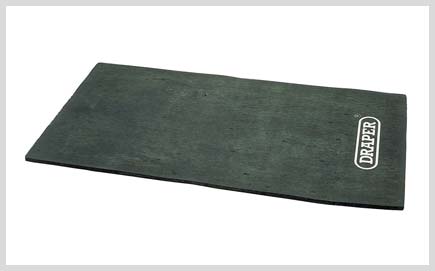
Soundproof Floor MatsSoundproof floor mats are another interesting option to arrest impact sound and vibration leading to structural airborne noise.

It is a known fact that certain appliances and machines create a lot of vibration and noise.

Anti-vibration soundproof mats help to kill annoying humming sounds and vibrations.

These types of mats are effective at reducing noise, and since they eliminate vibration they are also ideal for installation beneath and inside machinery and appliances, as well as to soundproof cars.

They can also offer a level of acoustic absorption on a surface or within a room to help reduce unwanted regeneration/resonance and enhance high-end audio performance.

  • Uses: beneath or behind appliances or machines, to reduce the transmission of noise and vibrations.
  • Pros: simple and effective soundproofing solution when the source of the noise is from machines or appliances.
  • Cons: ideally used in conjunction with other soundproofing methods for best results.

10. Acoustic Sealants
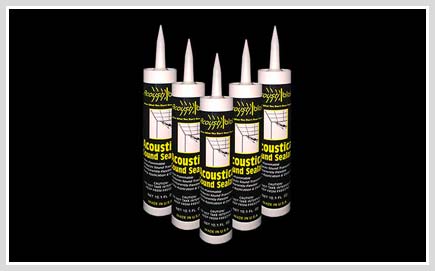
Acoustic SealantsAcoustiblok Acoustical Sound Sealant is one of a number of well-known brands on the marketplace that is most renowned as a reliable soundproofing compound which works on the principle of decoupling..

It comes in dispensing tubes like sealant products, and so is very easy to apply.

This product is meant to be used as a sound dampening method that maintains Sound Transmission Class (STC) in applications where required, yet remains permanently flexible.

It is mostly used during the construction of walls that require soundproofing as it can be applied directly between layers of differing materials, Acoustiblok Isolation Membrane, drywall or plasterboard.

It works to dissipate sound vibrations that would otherwise manage to pass through walls.

Essentially this is a form of sealant that reduces leakage considerably and can be used on countersinking the heads of mechanical fixings.

  • Uses: used on walls and ceilings as well as any gaps or open spaces such as seams, seal holes and screw holes.
  • Pros: a product that is easy to apply, affordable and quite effective, eco-friendly
  • Cons: a complementary soundproofing option and will not soundproof a room in isolation

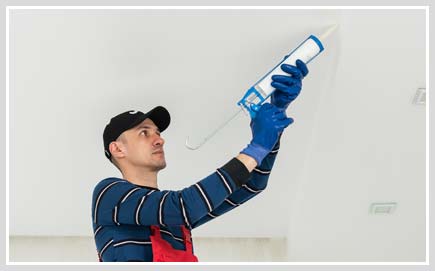
11. Acoustic Caulk
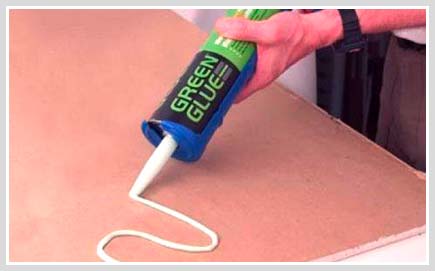
Acoustic CaulkA complementary soundproofing solution which is intended to seal overlaps of materials, fill small gaps, cracks, or spaces in a room.

Sound can travel through even the smallest areas, and so it is important to seal off a room completely for the best possible results.

Acoustic caulk is a must where plasterboard or drywall is installed to reduce possible weakness but should not be relied upon to achieve acoustic levels by themselves.

Areas like corners between walls, lines where walls and ceilings meet, and doors and windows must be completely sealed.

  • Uses: to fill any gaps easily to ensure best soundproofing results
  • Pros: inexpensive, easy to apply
  • Cons: a complementary soundproofing option and will not soundproof a room in isolation

12. Acoustic Putty

Acoustic PuttyFlexible acoustic and intumescent putty is designed to maintain a building separation and wall partitions structural integrity and acoustic properties.

AcoustiPutty pads are designed to maintain the integrity and acoustic properties of flexible wall assemblies.

  • Uses: suitable for most flexible wall partitions constructed from timber and steel studs with all types of finishing board. For acoustic, fire and insulation resistance.
  • Pro: quick and easy to apply, fire resistant
  • Cons: a complementary soundproofing material and will not soundproof a room in isolation

13. Acoustic Plaster
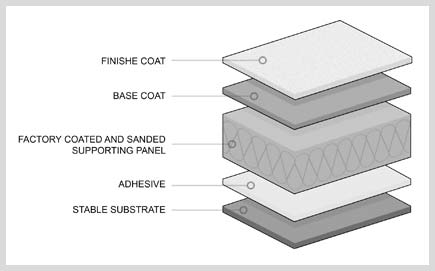
Acoustic PlasterLike acoustic plasterboard, acoustic plaster finishes have been around for years.

Varying ingredients, compounds and systems can increase or decrease weight and flexibility to further reduce surface reflections and in doing so help with equalisation of the internal acoustics.

  • Uses: shopping centres and theatres, universities, restaurants, office spaces, entrance halls, museums, libraries, dining areas as well as some very exclusive private residences.
  • Pros: can further help to reduce surface reflection and resonance.
  • Cons: although increased depth and weight can add to deflection of sound waves, these are invariably used for increased acoustic calibration.

14. Soundproof Spray
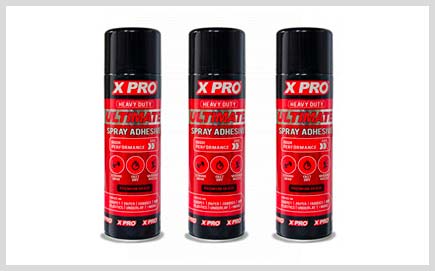
Soundproof SpraySoundproof or sound deadening spray is used mainly for spot treatments.

Floor mats for example, may have been installed to reduce unwanted noise yet microscopic gaps between the matt and the adjoining surface can still allow vibrations to occur.

Using a sound deadening spray will minimise those gaps and as such one would expect some improvement on overall acoustic performance, – the saying, ‘every little counts’ could be applied here.

  • Uses: used mostly in doors, car boots and compartments
  • Pros: easy to apply, quite effective
  • Cons: a complementary product only to improve soundproofing performance

15. Soundproof Paint
Soundproof Paint
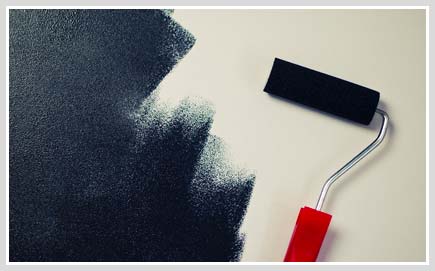
Soundproof paint, sometimes also referred to as sound deadening paint, is exactly what it says on the tin!

As a paint it can be applied either by means of a roller or sprayed on.

The concept is that the thicker the layer of paint, the better the result.

Spraying will naturally lead to a thicker coating and so it is generally the recommended method of application for soundproof paint.

Having said that, soundproof paint is not the most effective soundproofing method and won’t produce significant results.

Due to its lack of mass once applied, the resulting soundproofing effects can be mixed.

Since it contains latex, similar to rubber, it is definitely better to apply rather than regular paint where breathability of the wall is not a concern.

Latex has a tendency to settle into cracks, just like silicone caulk, so will perform better than standard water-based paints, although again is non breathable.

  • Uses: applied to walls to reduce sound transmission
  • Pros: simple and affordable option
  • Cons: not the most effective of methods as it does not rely either on the principle of mass nor decoupling.

16. Soundproof Wallpaper
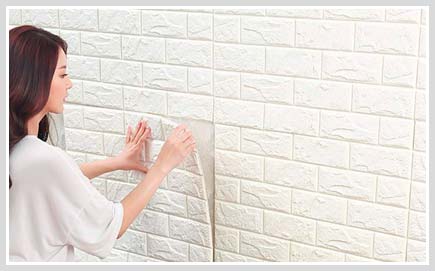
Soundproof WallpaperLike soundproof paint, it is highly debatable whether soundproof wallpaper can effectively soundproof a room, especially when used in isolation.

Mass is one of the main principles of soundproofing, so it is difficult to have a thickness considered adequate by using just wallpaper.

Soundproof wallpaper is generally made from closed-cell polyethylene foam.

This has very good sound absorbing properties, so soundproof wallpaper can and should act like an acoustic absorbing layer but as it is so thin the effects are minimal at best but again the saying, ‘every little counts’ could be applied.

Since soundproof wallpaper comes in an assortment of designs, it is obviously more aesthetically pleasing that acoustic foam, and much easier and less invasive to install.

  • Uses: can be used in any setting, both residential and commercial
  • Pros: easy to apply, comes in rolls, works reasonably well for soundproofing purposes, aesthetically pleasing.
  • Cons: actual efficacy is questionable so consider using alongside other soundproofing methods to improve results.

17. Acoustic Wall Covering
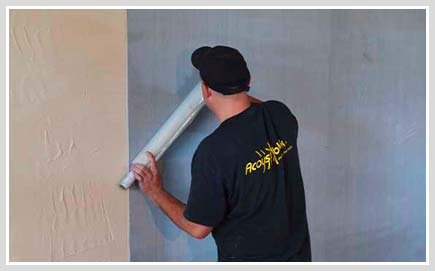
Acoustic Wall CoveringAcoustic wall covering is a sheet material made from composite fabric layers.

A flexible hybrid composite that is strong, yet highly compressible and soft at the same time.

It is installed onto the internal surface of a wall to offer great results in acoustic calibration (softening) and acoustic isolation (conversion).

  • Uses: can be used in residential and commercial spaces, including engine rooms and any heavy industrial facilities where there’s a lot of noise
  • Pros: innovative material that is flexible but durable, easy to apply, effective option
  • Cons: rather expensive

18. Acoustic Glass (Soundproof Windows & Frames)

Acoustic GlassWorth mentioning that whatever approach one undertakes, it is only as effective as its weakest point.

Acoustically rated windows are specially designed windows that are ideal for soundproofing purposes.

Since these windows are constructed to include multiple layers of glass, with each being quite thick, the amount of sound that enters or leaves a room is minimal.

For improved results, such windows would incorporate air or inert gas, that is trapped in between each glazing panel to further effect movement of acoustic waves.

Soundproof windows are effective and they can even be installed right over the top of existing windows as necessary.

  • Uses: ideal for those who experience a lot of external noise, such as traffic and city noise
  • Pros: effective soundproofing option
  • Cons: relatively expensive

19. Soundproof Doors / Frames
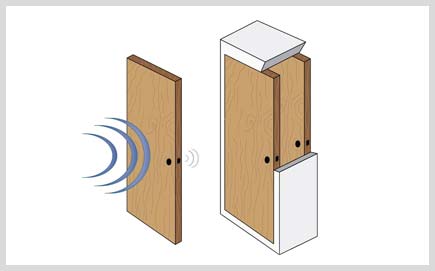
Soundproof DoorsOnce again it is worth mentioning that whatever approach one undertakes, it is only as effective as its weakest point.

Soundproof doors are of increased thickness, sturdy construction, designed to effectively block sound from entering or leaving a room.

Double door principles can also be a realistic method should the increased acoustic values and space be available to do so.

Well-fitting doors and frames with effective use of gaskets will of course be an important part to any success.

Such sound-blocking doors include rigid steel doors, solid-core doors, and other materials where mass is high, and their subsequent weight.

In such doors you will not find any openings like mail flaps or pet doors, because the emphasis on soundproofing cannot be minimised by making way for any gaps whatsoever.

Fire doors are a good example of soundproof doors.

  • Uses: ideal for houses or premises which are situated on busy roads to minimise the amount of noise pollution entering the building
  • Pros: effective soundproofing option, sturdy
  • Cons: costly

20. Door Seals, Sweeps & Gaskets
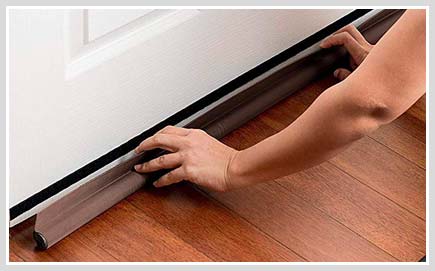
Door SealsWeatherstripping tape, door seals and sweeps are available in all sizes and are usually made from rubber and act as gaskets, similar to many draft stoppers.

These are attached to the door frame or bottom section of doors, in order to seal gaps between the door and door stop or frame, or door and the floor.

Rubber seals include hollow rubber weather-stripping tapes which compress whenever a door or window is shut, thus forming a tight seal.

Rubber sweeps tend to scrape against the floor whenever a door is open or closed and there are also sweeps which come in the form of a very dense brush.

Also a useful approach on an internal door can be to increase the size and thickness of the door stop or beading around the perimeter.

This increases the surface area of the door closing onto the door stop and can also increase the width of draft gasket that can be used.

  • Uses: mainly used in door frames, to complement improved sound absorption in conjunction with other soundproofing methods.
  • Pros: inexpensive, quite effective
  • Cons: intended as a minor solution to soundproofing, other methods of soundproofing will need to be used for increased results.

21. Acoustic Foam
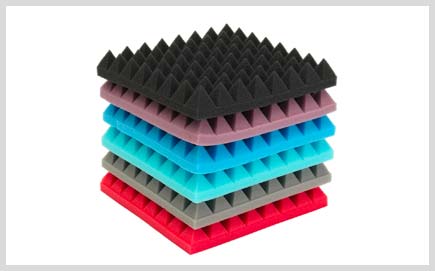
Acoustic FoamIdeal for sound absorption, acoustic foam is available in a wide range of thicknesses as well as sizes and colours.

There are many brands names that sell acoustic foam.

Some even offer this material in appealing colours as some customers look for the aesthetic appeal of this product aside from its practical value.

  • Uses: to improve audio quality in a room. As a result, acoustic foam is used for this purpose as well as to reduce sound leakage. Often found in games rooms, home theatres, music rooms and recording studios.
  • Pros: ideal for improving sound quality in a room, helps to reduce noise pollution, can improve the design appeal of a room or space.
  • Cons: doesn’t perform well at preventing sound transference from room to room, some foams can be flammable

22. Sound Absorber Panels

Sound Absorber PanelsSound absorbers are available in many styles and types, most of which come in appealing colours.

When installed, they can also make a room or space look more visually appealing.

These types of Absorber Panel such as Acoustiblok Quiet-Cloud, AcoustiWall can be mounted to ceilings and to walls as it helps to cut down on acoustic reflections and sound reverberations.

That is why it is called sound ‘absorber’ as it works on the principle of sound absorption.

  • Uses: ideal for recording studios, cinemas, theatres, classrooms, games rooms, gymnasiums and entertainment areas.
  • Pros: quite effective and affordable method if your main intention is sound absorption and improving acoustics in one room and aesthetically pleasing.
  • Cons: can be expensive, needs calculating and installing correctly for maximum calibration and limited performance for sound isolation.

23. Acoustic Ceiling Systems & Tiles
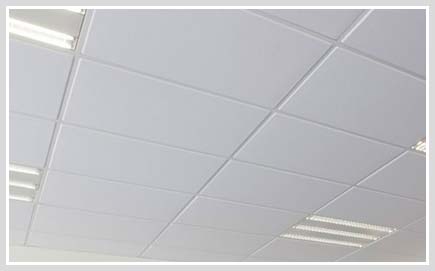
Acoustic CeilingsDirectly fitted to a ceiling or used as a structural drop ceiling to create a grid system, acoustic ceiling tiles are similar to acoustic panels to provide effective acoustic control.

Available in a wide variety of materials, sizes, depths and designs.

Acoustic ceiling tiles are an easy solution for improving the acoustical qualities of any space.

  • Uses: in soundproofing ceiling spaces to create a finished ceiling with a void above in which to house services, HVAC ducting etc.
  • Pros: allows a large surface area of acoustic absorption and creates a finished ceiling.
  • Cons: structural framing system sometimes on wire or steel drop rods to the above structure to create a grid work for the tiles to lay which needs professional installation.

24. Soundproof Curtains
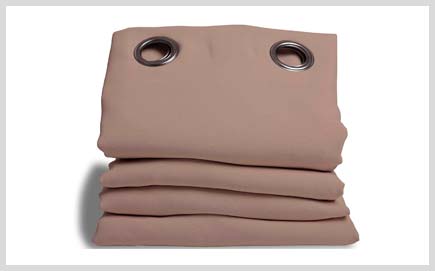
Soundproof CurtainsSoundproof curtains, sometimes referred to as blackout curtains or acoustic curtains, are widely used to reduce noise passage as a temporary partition or privacy material, such as backstage at a theatre.

When hung in strategic positions the thick fabric greatly reduces the spread and movement of sound waves within an area which reduces unwanted sound from travelling from space to space.

  • Uses: in theatres, nurseries, bedrooms and home theatres.
  • Pros: high quality material that is long lasting, helps to block sound as well as improve acoustics in a room.
  • Cons: most fabrics are costly due to their thickness and the fact they need to be made to measure.

25. Soundproof Blankets
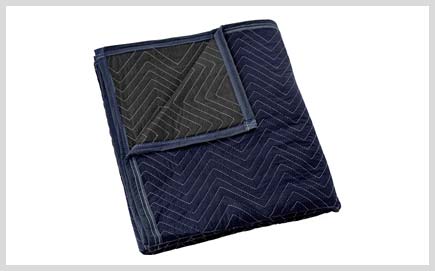
Soundproof BlanketsSoundproof blankets are used in various cases where sound absorption needs to be attained and offer a low-cost alternative to relatively expensive soundproofing solutions.

In fact, soundproof blankets are probably the most practical option for someone on a tight budget who wants a temporary and moveable solution.

They are made from thick, plush fabric which is designed to absorb sound and prevent acoustic transference.

  • Uses: these blankets can be hung to walls or over doors and windows.
  • Pros: relatively affordable, easy to install.
  • Cons: are a localised solution but certainly not as effective as full and complete coverage of an area with more advanced soundproofing methods

26. Furniture & Finishings

Furniture & FinishingsUnsurprisingly, furniture and other household items can play an important role in soundproofing.

In some rooms, you might experience more sound reverberation than others.

This can be a nuisance yet funnily enough, can sometimes be resolved by simply moving your furniture to better sound dampening positions.

You could also try adding lining to walls, such as tapestries or fabrics, as well as make use of sofas and large soft cushions.

If specific walls are thin, it’s recommended you place heavy pieces of furniture against them, such as a wardrobe or a wooden bookcase full of books to dampen the sound.

  • Uses: a basic means of reducing sound reverberations or low-level noise travelling between thin walls
  • Pros: quick and easy fix, inexpensive
  • Cons: limited results can only be expected

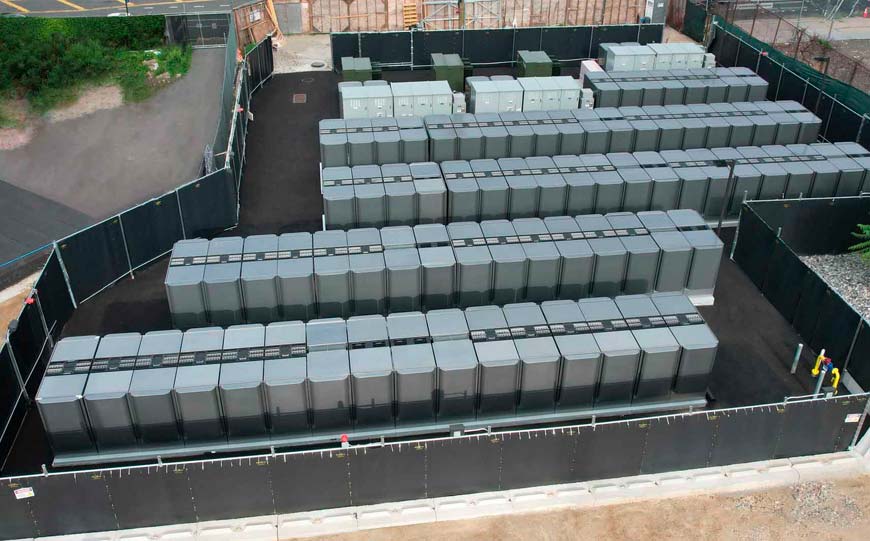
27. Acoustic Fencing (External)
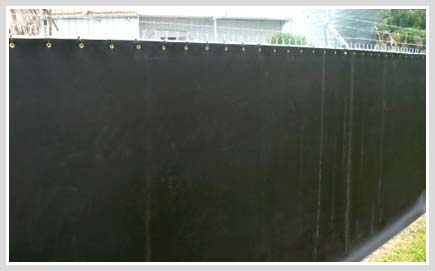
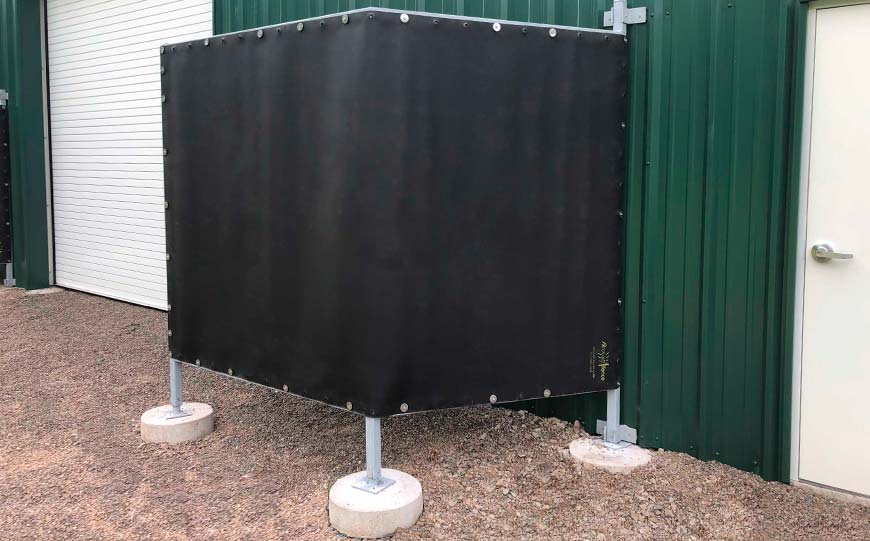
Acoustic FencingAcoustic fencing is essentially an acoustic barrier or noise insulator for outside spaces.

It’s ideal for those who want an effective solution to block external sounds and noises.

Establishing correct height and length of fence is essential to create the necessary angles of incidence for maximum effect.

Acoustic fencing can tackle noise from road traffic, trains and railway tracks, and any noise from neighbouring plots.

Some fencing solutions will be as expected, constructed from thick, dense materials to work principally on mass and density to block line of sight.

These types of fence are great where a new structure has to be built although quite time consuming and expensive due to the amount of material and labour involved in their erection.

However, where a fence structure is already in evidence but not performing quite as well as one would like, there is also a material known as AcoustiFence.

This flexible membrane is designed to attach to an existing fence structure such as a post and rail or even chain link to increase performance.

Available in rolls of material and very easy to install with minimal labour offering a further saving on cost.

The material is essentially a membrane, and it can be hung or secured in place to post and rail, to lattice or attached to a timber frame, depending on the individual case.

Installation of soundproof fencing is fairly quick, easy and effortless.

  • Uses: can be installed to perimeter fences, chainlink, hoardings to block sounds entering from adjoining plots
  • Pros: very effective soundproofing option in areas of high noise pollution such as busy cities, noisy neighbours, and any other exterior environment which is causing noise pollution
  • Cons: Typical rigid construction, quite costly due to materials and labour.

28. Acoustic Absorber Panels (External)

Acoustic Absorber PanelsAs almost all regular absorber panels are compressible and work on the factor of absorption, they tend to also absorb and accumulate moisture which can create an issue when trying to use them externally.

Some materials though are hydrophobic.

An alternative to these is external acoustic absorbers which are a rigid, durable panel made from recycled glass beads with an appearance of a lightweight granite / stone.

Offering good resistance, they produce a sound absorbing, impact resistant panel solution which is not affected by liquid or moisture.

Also noncombustible, chemically inert and non-fibrous.

  • Uses: external where unwanted noise reverberates from buildings although can be internal especially where an element of increased impact resistance is required.
  • Pros: good impact resistance and not affected by rain, moisture.
  • Cons: relatively expensive but will perform in areas where other solutions struggle.

29. Industrial Acoustic Soundproof Panels
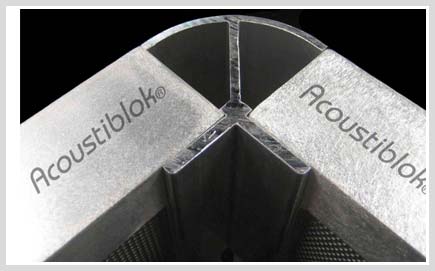
Acoustic PanelsThese acoustic panels are invariably manufactured from more industrial materials such as steel and aluminium to be employed to mitigate noise sources with higher power and pressure output.

Specifically designed to withstand outdoor exposure in full sunlight, extreme weather conditions, and harsh industrial environments (NRC of 1.0 is the highest sound absorption rating possible).

Examples like Acoustiblok All Weather Soundproof Panels are a triple core approach to include a perforated facia for diffusion, an internal layer of U.L. classified Acoustiblok 3mm Sound Isolation Membrane material for acoustic conversion plus a specifically engineered 50mm Acoustiblok QuietFibre hydrophobic/weather-proof, open cell, core sound absorbing material.

  • Pros: very effective soundproofing option in areas of high dB, sound and power noise pollution such as plant, generators, HVAC and any other external environment.
  • Cons: typical rigid construction, quite costly due to materials and labour.

30. Acoustic Louvres
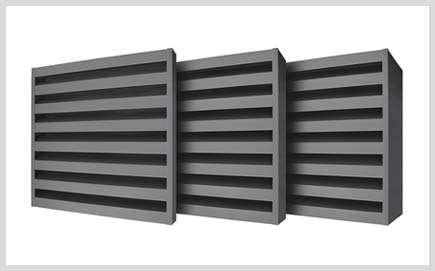
Acoustic LouvresTypically, acoustic louvres are used in building openings permitting air to flow, whilst shielding the environment from unwanted noise.

As an open shutter with horizontal, curved or linear blades/slats that are angled to admit light and air, but to keep out rain and direct sunshine.

The angle of the slats may be adjustable

  • Uses: multi-purpose as acoustic screens around mechanical plants where equipment requires airflow.
  • Pros: effective at reducing acoustic energy whilst allowing direct flow of air where required.
  • Cons: allows for a weakness and a break in any acoustic isolation strategy but essential where needed.

Conclusion

Through this article we’ve explained in great detail what soundproofing is, the various types of soundproofing methods and products available on the market.

We have also explained which products work best in different scenarios, according to one or more core soundproofing principles.

After this thorough overview, we hope that you have achieved a much clearer idea of this detailed subject.

If you are currently considering soundproofing your home, business premises, or perhaps a particular room such as a recording studio, home theatre or workshop, hopefully you can now make a well-informed decision on the best soundproofing method and materials to use.

Acoustic Enclosure
Blog, News

What is an Acoustic Enclosure?

In today’s world, airborne noise pollution is a growing concern, particularly in industrial and commercial environments.

To meet local health and safety standards, businesses must take proactive measures to minimise excessive noise and its harmful effects.

One highly effective solution is the use of acoustic enclosures, which are designed to isolate and reduce noise at its source.

These enclosures are commonly used in settings where machinery or equipment generates significant noise.

In this article, we will explore what acoustic enclosures are, the different types available, and the various benefits they offer in reducing noise pollution.

What in an Acoustic Enclosure?

Acoustiblok Acoustic Enclosure

An acoustic enclosure is a soundproof chamber designed to contain or block certain types of noise, either by keeping it inside the enclosure or preventing external noise from entering.

These enclosures come in various sizes, from small, portable units to large structures that can cover entire buildings.

They can be constructed from all sorts of differing materials depending on the environments in which they are to be used or the acoustic values / levels to be achieved / applied.

Materials are chosen for their ability to effectively decouple, absorb, deflect and thermally convert to isolate noise, ensuring that sound from machinery or other sources is contained within the enclosure. 

Why Get an Acoustic Enclosure?

Noise Decibel Levels Before and After Acoustic Enclosure

Acoustic enclosures are highly effective if you need to:

  • Block or significantly reduce noise, especially at frequencies that could cause disruptions or interference.
  • Isolate noise, preventing it from escaping the enclosed area and affecting surrounding spaces.
  • Shield the interior from external noise, ensuring that sound from outside doesn’t penetrate the enclosure.

How Do Acoustic Enclosures Work?

Custom Acoustic Enclosure Illustration

To understand how acoustic enclosures function, it’s essential to first grasp the basics of soundproofing.

Soundproofing is the process of blocking noise from entering or leaving a space.

While it may not always be possible to completely eliminate noise, especially if it’s substantial, effective soundproofing materials can greatly reduce it.

At its core, sound is a form of energy created by vibrations.

When noise is generated, these vibrations cause the surrounding air to move, carrying sound energy to nearby areas.

This is a physical process.

However, when we perceive sound, such as hearing conversations or music, our ears and brain work together in a physiological process to interpret these vibrations as sound.

For sound to travel, it needs a medium – like air.

In a vacuum, sound cannot move.

Therefore, to effectively soundproof a space, the goal is to block sound at its source and prevent it from moving through the air.

This is a challenging task that requires choosing the right soundproofing materials and methods based on the space and type of noise involved.

The key materials in soundproofing must be able to both isolate and absorb sound and vibrations.

By doing this, they can prevent noise from escaping or entering an area.

Acoustic enclosures are specifically designed to ‘wrap around’ the noise source, containing the sound and preventing it from spreading outward.

To achieve this, the exterior of an acoustic enclosure is typically made from dense, solid materials like galvanised steel.

Inside, the enclosure is lined with sound-absorbing materials such as acoustic wool usually in conjunction with  high-performance acoustic membranes like Acoustiblok 3mm, which utilises advanced thermal conversion technology to absorb sound.

These sound-absorbing materials often have a protective outer layer, such as perforated foil, vinyl, or sheet metal, to enhance durability.

In more specialised acoustic enclosures, vibration isolation technology is incorporated, which can include components like air cushions, rubber mounts, cork, mats, and fibreglass inserts to further minimise noise by dampening vibrations.

To maintain soundproofing, any openings – such as doors, windows, or ventilation systems, are kept to a minimum and equipped with silencers on air inlets and outlets.

Common Applications for Acoustic Enclosures

Acoustic enclosures are utilised in both indoor and outdoor settings to reduce noise pollution.

In outdoor applications, acoustic panels designed for noise reduction or cancellation are commonly used. 

Industrial and commercial settings with high noise levels often require these enclosures to comply with local and national noise regulations.

Additionally, they help create quieter work environments, protecting employees from prolonged exposure to loud machinery and equipment.

Some common applications of acoustic enclosures in industrial settings include:

  • Outdoor generator enclosures
  • Transformer enclosures, compressor rooms, and industrial control rooms
  • Air Handling, HVAC, Chillers
  • Ventilation equipment used in commercial complexes, warehouses, and large facilities

Acoustic enclosures also safeguard workers in outdoor environments.

Construction workers, engineers, and field agents often operate in areas with constant noise from generators, ventilation fans, and other heavy machinery.

Outdoor sound barriers are particularly useful in reducing noise levels in such settings.

For indoor applications, acoustic enclosures are used to create quiet spaces, shielding occupants from external noise sources like traffic, equipment, or HVAC systems.

Types of Acoustic Enclosures

Acoustic enclosures come in various forms, tailored to different applications and noise reduction needs.

The type of enclosure chosen depends on factors such as the noise source, the desired level of noise reduction, and the environment in which it will be installed.

Here are the most common types of acoustic enclosures:

1. Soundproofing Enclosures

Soundproofing Enclosure

These enclosures feature thick walls with specialised acoustic seals to ensure sound containment.

Soundproofing enclosures are designed to completely isolate noise, preventing it from escaping into surrounding areas.

Common applications include recording studios and medical facilities, where sound leakage must be eliminated.

2. Noise Absorption Enclosures

Noise Absorption Enclosure

As the name suggests, noise absorption enclosures focus on absorbing sound rather than blocking it entirely.

Acoustic insulation materials are applied to the walls to minimise the noise that escapes from the enclosed area.

These enclosures are often used in spaces like classrooms and offices, where the goal is to reduce noise levels without requiring complete isolation.

3. Sound Attenuation Enclosures

Sound Attenuation Enclosure

Sound attenuation enclosures aim to reduce the noise generated by machinery or equipment, isolating it from the surrounding environment.

Acoustic baffles and sound-dampening materials are employed to lower the noise levels.

These enclosures are commonly used in industrial settings such as printing plants and machine shops.

4. Machine Enclosures

Machine Enclosure

Machine enclosures are designed for situations where machinery produces high levels of noise. 

They are commonly found in assembly lines and manufacturing plants, where prolonged exposure to loud machines can be hazardous for workers.

These enclosures often include safety features like emergency stop buttons and interlocking doors to protect workers.

5. Acoustic Barriers

Acoustic Barrier

Acoustic barriers work by either absorbing or reflecting noise, preventing it from reaching the opposite side.

These barriers are often constructed using specialised sound-absorbing panels and are frequently used in factories and other noisy environments.

Benefits of Acoustic Enclosures

Acoustic enclosures offer several key advantages, particularly in environments with high noise levels:

1. Worker Protection

Acoustic enclosures significantly reduce noise levels, protecting workers from prolonged exposure to harmful sounds.

Noise levels above 85 decibels can cause serious health issues, including headaches, hearing loss, insomnia, and even stress-related conditions.

By blocking or dampening acoustic energy across the range of frequencies, acoustic enclosures ensure only safe, manageable sound levels are present within a work environment.

2. Improved Productivity

A quieter work environment is more conducive to higher productivity.

Constant or increased exposure levels to loud, monotonous sounds from machinery, generators, or compressors can lead to fatigue and reduced focus.

Acoustic enclosures help create a more comfortable and less distracting atmosphere, allowing workers to stay alert and focused.

3. Protection of Sensitive Equipment

In some settings, excessive noise can interfere with the operation of sensitive equipment such as metrology tools or semiconductor devices.

Acoustic enclosures help shield these devices from disruptive sound waves, ensuring accurate measurements and reliable performance.

4. Compliance with Noise Regulations

Acoustic enclosures are often essential for complying with local noise ordinances.

These regulations are in place to limit noise pollution in surrounding communities, and failure to comply can lead to penalties or legal action.

By controlling noise emissions, acoustic enclosures help businesses meet regulatory requirements.

Conclusion 

Acoustic enclosures are highly effective solutions for controlling excessive noise, making them essential in environments where sound reduction is critical.

Prolonged exposure to high noise levels can lead to serious health issues, workplace disruptions, and reduced productivity.

By implementing an acoustic enclosure, you can mitigate these challenges and create a healthier, more efficient environment.

For the best results, it’s important to consult with a professional soundproofing company.

They can recommend the most suitable materials and design an acoustic enclosure tailored to your specific noise control needs and application.

Soundproof an Apartment
Blog

How to Soundproof an Apartment Like a Pro

Living in an apartment often comes with the challenge of unwanted noise. 

Unlike living in a detached home, where noise is generally limited to the occupants and the immediate surroundings, apartment living means sharing walls, floors, and ceilings with neighbours. 

This shared living space can result in a variety of noise-related issues, such as hearing footsteps from the apartment above, loud music or conversations from next door, or even the constant hum of traffic and street noise from outside.

These noises can be more than just a minor annoyance.

They can disrupt your sleep, concentration, and overall quality of life. 

For many, the solution lies in being able to soundproof an apartment. 

This article is designed to help you soundproof your apartment like a pro. 

Whether you’re dealing with thin walls or noisy regenerative ceiling voids, we’ll cover the most effective methods to tackle these problems. 

Why Soundproof an Apartment?

Overlooking Noisy City from Apartment Window

Soundproofing an apartment is essential for creating a peaceful and comfortable living environment. 

Reduce Noise Pollution

Living in an apartment means you’re often exposed to various sources of noise pollution, like footsteps from upstairs, loud music from next door, or traffic outside. 

Soundproofing helps block out these distractions, creating a quieter and more peaceful living space. 

This can significantly improve your quality of life, making your home a more relaxing place.

Increase Privacy

Soundproofing isn’t just about keeping noise out; it’s also about keeping your sounds in. 

Whether you’re having a private conversation, playing music, or watching a movie, soundproofing ensures that your activities remain private. 

This is especially important in apartment buildings where walls can be thin where sound can easily travel between units or even as a thick and dense structure where increased flanking transmissions leads to sound penetration.

Improve Sleep and Concentration

Noise can disrupt sleep and make it difficult to concentrate, especially if you’re working from home. 

By soundproofing your apartment, you can create a quieter environment that promotes better sleep and helps you focus more effectively during work or study. 

This leads to improved productivity and overall well-being.

Enhance Property Value

Investing in soundproofing can also increase the value of your apartment. 

Potential buyers or renters may see a soundproofed space as a significant advantage, making your property more appealing in a competitive market.

What Types of Apartment Noise Does Soundproofing Help With?

Adjoining Apartment Noise

Soundproofing helps with three different types of noise:

Airborne Noise

Airborne sound or noise refers to sounds that travel through the air, like music, conversations, or TV sounds. 

When these sound waves hit a solid surface, such as a wall, they cause vibrations that pass through the structure and enter the adjacent room. 

Soundproofing helps block these sound waves, reducing the amount of noise that travels between rooms or apartments. 

This is especially useful in preventing disturbances from loud neighbours or external noises like traffic.

Structure-Borne Noise

Structure-borne noise occurs when sound is transmitted through the building’s structure. 

This type of noise is created by an impact or vibration on a surface, such as footsteps on a floor. 

The vibrations travel through the walls, floors, and ceilings, causing noise in nearby areas. 

Impact Noise

Impact noise is a specific type of structure-borne noise that results from objects striking surfaces, such as dropping something on the floor or moving furniture. 

This impact causes vibrations that travel through the structure and generate noise in other areas. 

What are the Different Types of Soundproofing Methods?

There are 4 different types of soundproofing methods, each with its own advantages: 

Deflection

Deflection involves using dense, heavy materials to block sound from passing through walls, floors, or ceilings. 

By increasing the mass and density of a surface, sound waves are reflected back, reducing the amount of noise that can penetrate the structure. 

Common materials include thick drywall, heavy flooring, or specialised thicker soundproofing boards. 

However, while effective, these materials can also transmit some vibrations, causing sound to travel through the structure in what are commonly known as flanking transmissions. 

This is a basic soundproofing technique and often used in conjunction with other methods.

Absorption

Absorption focuses on reducing sound by trapping sound waves in soft, open-cell materials. 

These materials, like stone wool, mineral fibre, foam panels or insulation, work on sound absorbing principles to absorb the energy of the sound waves, reducing the overall noise level. 

This method is particularly effective in treating echoes and reducing high-frequency sounds. 

Absorption materials are often placed inside walls, ceilings, or floors, filling any cavities to prevent sound from bouncing around, thus reducing both passage and possible resonance and regeneration. 

While effective, thicker materials are needed to absorb lower-frequency sounds.

This is a basic soundproofing technique and often used in conjunction with other methods.

Conversion

Conversion transforms sound energy into a less problematic form, such as heat. 

When sound waves hit the special membrane Acoustiblok 3mm or 6mm Insulation Membrane, the material vibrates, creating friction that converts the sound energy into trace amounts of heat. 

This process reduces the sound that passes through, making it an essential technique in serious soundproofing projects. 

Acoustiblok 3mm or 6mm Insulation Membranes are extremely thin but provide significant acoustic benefits.

Decoupling

Decoupling separates one part of a structure from another to prevent sound vibrations from travelling through. 

This method involves using studs, battens, resilient channels, or isolation clips to disconnect layers of walls, floors, or ceilings. 

By reducing the physical connection between surfaces, decoupling minimises sound transmission and flanking noise. 

This technique is particularly useful in preventing impact noise, like footsteps, from travelling through a building.

How to Soundproof an Apartment Wall Like a Pro

Apartment Stud Walls

Understanding the Wall Structure

Before you start soundproofing, it’s important to understand the type of wall you’re dealing with. 

If your apartment has masonry walls (made of brick, concrete, or block), you’re starting with a solid base, as these materials already provide some level of soundproofing due to their density. 

However, stud walls, which are lighter and often used for interior partitions, typically allow more sound to pass through. 

Knowing your wall type will help you choose the right materials and techniques.

Building a Soundproofing Frame

For effective soundproofing, you’ll need to create a frame in front of the existing wall. 

This frame acts as a structure into and onto which the aforementioned principles / materials can be added to create the barrier which reduces sound transmission. 

You have two options: attach the frame directly to the wall or build a freestanding structure. 

If you attach it to the wall, you can use a thinner frame (around 25mm deep), as the wall itself will provide support. 

If you choose a freestanding frame, it needs to be thicker and sturdy enough to support itself and attached to the floor and ceiling.

Adding Soundproofing Materials

Installing Wool Cavity Insulation

The next step is to fill or part fill as appropriate the space between the frame and the wall with sound-absorbing material. 

Open-cell insulation, such as Acoustiblok QuietFibre, stone wool or mineral fibre is ideal for this purpose. 

These materials absorb sound waves, preventing them from bouncing back into the room. 

After applying open cell Acoustiblok QuietFibre mineral into the cavity of the frame, apply Acoustiblok 3mm Insulation Membrane to the front of the frame. 

This membrane converts sound energy into trace heat energy proving superior noise reduction and is also super thin which saves space / depth.

Saving space and maximising the gross internal area is always an advantage especially in apartments where space is invariably and typically a big concern and consideration.

Installing the Finishing Board

Once the soundproofing materials are in place, you can attach a dense finishing board of choice, such as drywall, to the frame. 

For added soundproofing, you can install a second layer of drywall, staggering the seams to block more noise. 

However, keep in mind that adding too many layers of the thicker finishing board can increase the wall’s thickness and reduce the usable internal space further.

Sealing Gaps and Cracks

To ensure your wall is fully soundproofed, it’s essential to pay attention to detail in the first instance.

Installation of materials should be precise, cut well and fit well into the space. Gaps should always be kept to a minimum. Seal any resulting small gaps or cracks where sound could leak through. 

Use acoustic sealant around the edges of the drywall, and apply jointing tape over the seams. 

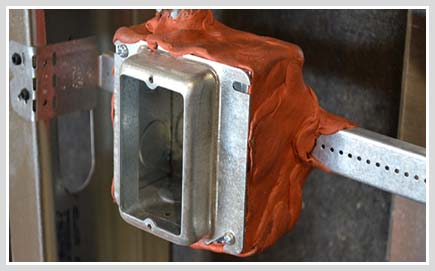
For added protection, you can use Acoustic Putty Pads to seal around electrical outlets and other openings in the wall.

Final Touches

Don’t forget about doors and windows, as they can be weak points in your soundproofing efforts. The old adage: you are only as strong as your weakest point applies.

Consider adding acoustic panels, weather stripping, door sweeps, or acoustic curtains to block sound from entering through these areas. 

With careful planning and the right materials, you can soundproof your apartment walls like a pro, creating a quieter, more comfortable living space.

How to Soundproof an Apartment Ceiling Like a Pro

Apartment Ceiling Battens

Understanding Your Ceiling Structure

When soundproofing an apartment ceiling, it’s essential to first understand the existing structure. 

Most ceilings consist of timber joists or block and beam construction, creating a cavity that can be effectively used to absorb sound. 

The goal is to fill / part fill this cavity, as appropriate, with sound-absorbing material and create a barrier to prevent noise from passing through.

Filling the Cavity

If your ceiling has a cavity, such as in a timber joist construction, it’s crucial to fill or part fill as appropriate this space with open-cell material like mineral wool or fibre material insulation. 

This step not only absorbs sound but also prevents the cavity from acting like a drum, amplifying noise. 

Filling the cavity won’t add extra depth to your ceiling, making it an efficient way to enhance soundproofing.

Installing an Isolation Membrane

Acoustic Membrane

After filling the cavity, the next step is to install Acoustiblok 3mm Isolation Membrane, to convert acoustic energy to further assist in mitigation and dampening. 

If and where the existing ceiling board can be removed, the membrane can be attached directly to the joists. 

If not, you’ll need to create a new framework beneath the existing ceiling to attach the membrane.

Similar to the vertical approach as referenced earlier but now in a horizontal plane.

This flexible layer helps to convert and dissipate sound energy, making it a crucial component in effective soundproofing.

Adding a Finishing Layer

To complete the soundproofing process, you need to add a finishing layer to the ceiling. There are two main options:

Direct Fixing

Attach a dense finishing board, like acoustic plasterboard, directly to the joists or the new framework. 

This method adds mass and density and therefore a deflective principle to help block sound.

Decouple the Ceiling

For better results, install cross battens or resilient channels beneath the membrane to create a decoupling principle to the ceiling. This will also assist in holding materials in place.

This further decouples the structure creating a framework into which to attach the finishing board without penetrating directly all the way through to the joist structure further reducing the transmission of impact noise.

Mechanically anchor the finishing board to these channels / cross battens / resilient bars.

Final Touches

To maximise the effectiveness of your soundproofed ceiling, it’s essential to seal all gaps and edges. 

Use acoustic sealant to fill any cracks or spaces around the perimeter of the ceiling. 

Additionally, consider using Acoustiblok Acoustic Sealant / Calks, AcoustiGrip Jointing Tape, and Acoustiblok Acoustic Putty Pads to seal penetrations such as light fixtures or vents.

How to Soundproof an Apartment Floor Like a Pro

Apartment Floor Joists

Understanding the Floor Structure

Before you begin, it’s crucial to understand your apartment’s floor structure. 

Most floors consist of timber joists or block and beam construction, creating a cavity that can be effectively used to absorb sound. 

The goal is to fill / part fill this cavity, as appropriate, between floor and ceiling with sound-absorbing material and create a barrier to prevent noise from passing through.

Filling the Cavity

If your floor has a cavity, such as in timber joist construction, it’s crucial to apply some element of open-cell material, mineral wool or fibre material insulation into this space. 

This step not only absorbs sound but also prevents the cavity from acting like a drum, amplifying noise. 

Filling the cavity won’t add extra depth to your ceiling, making it an efficient way to enhance soundproofing.

Obviously this process tends to require the subfloor to be removed to gain access to fit slab materials, although there are techniques to blow insulation under pressure into the cavity via small drill holes.

Installing a Soundproofing Membrane (Over the Joist Structure)

Fitting Membrane onto Floor

Where the subfloor such as floorboards, ply, T&G is removed, not only can the cavity be filled but a choice can be made at this point to apply an acoustic membrane, typically Acoustiblok 6mm Insulation Membrane over the joists and cavity fill prior to installing or reinstating the subfloor.

Most apartment floors consist of a subfloor (often made of plywood) attached to joists, with a finish layer like hardwood, tile, or carpet on top. 

Sound can travel through this structure, so addressing the floor properly is essential for effective soundproofing.

Installing a Soundproofing Membrane (over the top of existing subfloor)

Installing a soundproofing membrane over the top of the subfloor is key, if not already installed, to address issues referenced above. In some cases an application over and under is specified for increased levels of acoustic mitigation.

A flexible layer of Acoustiblok 3mm or 6mm Insulation Membrane provides a super thin layer to minimise buildup whilst offering the principle of thermal conversion of the acoustic energy and dampen sound vibrations. 

The membrane would preferably be installed over the top of an acoustic underlayment. However it can be installed directly on top of the subfloor where needed and tolerances dictate.

Adding a Soundproofing Underlayment

Where applying materials directly on to the top of the existing subfloor, the first step in soundproofing your floor is typically to add both an acoustic underlayment, followed by Acoustiblok 3mm or 6mm Insulation Membrane.

These materials are installed directly onto the subfloor to level between the subfloor and the finished floor to absorb sound and reduce noise transmission. 

There are many types made of materials like rubber, cork, or foam and therefore they all offer differing levels of performance and effectiveness at dampening sound. 

They should cover the entire floor surface, with seams tightly butted together to prevent sound leaks. 

For best results, use a high-density material such as Acoustiblok AcoustiMat Acoustic Underlayment designed specifically for soundproofing and works in tandem with Acoustiblok 3mm or 6mm Insulation Membrane installed in the following principle.

Secure the underlayment followed by the membrane with adhesive or staples where needed, ensuring it’s smooth and free of wrinkles. 

Be sure to tightly abutt the seams and seal them with acoustic tape to create a continuous sound barrier.

Choosing the Right Flooring Material

The type of flooring material you choose can significantly impact the effectiveness of your soundproofing efforts. 

Carpets, for example, are naturally better at absorbing sound than hard surfaces like wood, engineered flooring or tile. 

If possible, opt for thicker carpets or rugs with dense carpet underlay for comfort and even wear, as well as obviously reducing to some degree the levels of direct impact to the structure.

Many people in today’s world prefer hard flooring either for ease of cleaning or sanitation.

If this is your preferred floor finish, it obviously becomes even more critical to improve acoustic performance as previously explained.

It is also worth considering engineered wood or luxury vinyl planks with built-in soundproofing properties. 

These materials can help reduce noise while maintaining the aesthetic you want.

Floating the Floor

Another effective technique for soundproofing is to create a floating floor. 

This method involves installing the finished floor on top of a resilient layer, such as AcoustiCradles or rubber / foam pads, without directly attaching it to the subfloor. 

The floating floor reduces the transmission of impact noise, like footsteps, by decoupling the subfloor and finish flooring from the structure below.  

As you might imagine, these systems will greatly increase the depth of the buildup and therefore the overall level of the finish floor.

Great if there is the space to play with and where this level of isolation / mitigation is required.

This technique creates a framing system which sits on or in an isolation cradle, onto which the subfloor is then mechanically anchored and works well in conjunction with acoustic underlayment and acoustic membranes, creating a comprehensive soundproofing system.

Sealing Gaps and Edges

After installing the soundproofing layers and flooring, it’s essential to seal any gaps or edges where sound could escape. 

Use flexible acoustic sealant to fill the small gaps / expansion gaps around the perimeter of the room where the floor meets the walls.

This step prevents sound from travelling through small openings and ensures the effectiveness of your soundproofing efforts.

A further application of sealant underneath the skirting board can also be really beneficial.

Final Touches

To maximise soundproofing, consider adding rugs or thick carpets to further reduce noise. 

Not only will they reduce direct impact or foot fall, but also help absorb acoustic energy and reduce the potential for increased resonance and amplification of sound within the space.

By carefully selecting materials and following these steps, you can significantly minimise noise transfer through your apartment floor, creating a quieter and more comfortable living space.

What are the Drawbacks to Soundproofing?

While soundproofing can help bring several improvements to your home life such as increased privacy and better sleep, there are some downsides to consider: 

Cost

One of the main drawbacks of soundproofing is the cost.

High-quality soundproofing materials and installation can be expensive. 

Depending on the methods and materials used, the price can add up quickly. 

For many people, the cost of soundproofing may be prohibitive, especially if they are renting or only planning to stay in the apartment for a short time.

Space Reduction

Soundproofing often requires adding additional layers of material to walls, floors, or ceilings. 

This can reduce the overall living space slightly and in smaller apartments, even a few inches of lost space can make a noticeable difference, making rooms feel more cramped.

But remember there are the thinner materials and systems with higher performance levels mm for mm – Acoustiblok 3mm or 6mm Insulation Membrane

Aesthetic Impact

Soundproofing materials can sometimes impact the appearance of a room. 

While some options, like acoustic panels, can be visually appealing, others might not blend in as well with the existing decor. 

This could lead to a less aesthetically pleasing environment if not planned carefully.

Limited Effectiveness

Soundproofing can reduce noise, but it may not eliminate it entirely. 

Some noises, particularly low-frequency sounds like heavy footsteps or bass from music, can be difficult to block completely. 

This limitation means that even after investing in soundproofing, you might still experience some noise disturbances.

Complex Installation

Installing soundproofing can be complex, particularly for thicker options with multiple processes.

This often requires professional help, adding to the overall cost and time commitment. 

For those unfamiliar with construction, DIY soundproofing may lead to suboptimal results, reducing the effectiveness of the effort.

Conclusion

Soundproofing an apartment like a pro involves several steps, including soundproofing walls, ceilings, and floors ideally to create the ‘cell within a cell’.

It offers many advantages, such as improved comfort, privacy, and property value. 

However, it also comes with downsides like cost and some loss of gross internal area but keep an open mind to realistic results with realistic loss of space.

By carefully planning and choosing the right materials, you can create a quieter, more peaceful living space. 

Whether you’re looking to block out external noise or prevent your own noise from disturbing others, soundproofing is a valuable investment in your home’s quality and your overall well-being.

Soundproof Dog Cage
Blog

How to Soundproof a Dog Cage or Kennel

Many dog owners would do practically anything for their beloved furry friend.

Let’s face it, dogs are so endearing and lovable, and they become a part of your family.

However, as owners of nervous, anxious or aggressive dogs know full well, you may face the problem of persistent barking which can become a nuisance, especially to neighbours.

Training of the hound is the easiest way to remedy this although can be seen as being quite difficult by many.

One of the ways to reduce the likelihood of barking or loud whimpering becoming a nuisance or problem is to consider soundproofing where your dog cage or kennel is located.

For obvious reasons, you cannot soundproof the dog cage itself since it is essentially an open structure with several gaps through which air can pass.

However there are practical ways you can use a wide variety of soundproofing materials which we shall be discussing in more detail below.

Why Soundproof a Dog Cage or Kennel?

Relaxed Golden Retriever in a Kennel

Stop Barking Noise from Escaping

Constant barking and whining can be very tedious, and neighbours can start to complain.

By soundproofing where the dog cage or kennel is situated, you will be able to reduce or possibly even stop the barking noise from escaping to neighbouring residences, as well as your own home.

Hence, you will be able to benefit from a quieter environment at home too, because even if you love your dog dearly, too much barking can drive anyone crazy eventually.

In the case of dog daycare facilities and veterinary surgeries, soundproofing dog kennels and crates is very important.

The productivity of the business will improve if the sound level of barking from several dogs is reduced.

The volume level produced by several dogs barking can exceed as much as 100 decibels, so it can be very bothersome.

Reduces Stress & Anxiety to Dogs

Besides reducing unwanted nuisance noise, it may not have occurred to you that there are benefits for your dog as well as yourself.

If you soundproof the dog cage or kennel, you will also be creating a more peaceful environment from external noise for the dog itself.

Too much noise is not good for dogs, and even their own barking can end up being too much for them to handle, thereby leading to stress and anxiety.

Physiological responses are common to distress.

Common examples include a suppressed immune system and intestinal issues.

By soundproofing, you will actually help the dog to relax and alleviate their stress as it will not feel overstimulated by constant barking, resulting in less barking as a consequence.

In reality, dogs are sensitive to sound and reducing it can be very beneficial to them.

Prevents Hearing Damage to Dogs

Dogs have a similar auditory system to those of humans, despite the fact that they have a sharper sense and wider audible range.

Consequently dogs can easily experience hearing damage if they are frequently exposed to very loud noise levels.

Hearing damage is thus common if dogs are being exposed to around 90dB for several hours a day.

A prime example is a dog daycare facility, where there are several dogs barking simultaneously.

Even a single dog can reach 100dB when barking, so just imagine the noise levels produced by several dogs all barking at once!

Things to Consider

Homeowner Assessing Kennel

The following are some points to take into consideration when soundproofing a dog kennel.

The materials that you will be using are critical to ensuring the kennel can be kept clean while also being able to reduce noise levels as much as possible.

Water & Mildew Resistance

The materials should be water resistant to prevent problems relating to mould and mildew.

Easy to Clean

It is crucial that the material is easy to clean.

The materials used should thus be wipeable as you will need to clean and sanitise the kennel or crate on a daily basis to prevent the spread of disease and nasty odours.

Ideally the materials that you opt for should be cleanable using a high pressure hose.

With the mess that dogs create when defecating and with hair shedding, you really need to opt for a material that is both water resistant as well as strong enough to handle jet cleaning.

Durable

Needless to say you will need to take into account the durability of the materials used.

A dog is messy as well as rather demanding if it chews or scratches the material of the kennel.

By way of the fact that the materials are easy to clean and durable it invariably means that they will be highly reflective which can also create a load of new problems – more about this in a moment.

Things to Avoid

Acoustic Foam

Avoid Acoustic Foam

Acoustic foam is not recommended for soundproofing a kennel because it is not dense enough to block the loud sounds of barking effectively.

Acoustic foam is merely a sound absorption material, and so it will only absorb reverberations.

Moreover, the foam can be hazardous if a dog starts to chew on it.

Foam is also absorbent, so will deteriorate and degrade when it gets wet.

Heavy Blankets and Absorbent Materials

Avoid Heavy Blankets

Weighted blankets are not such a great idea at all when it comes to soundproofing dog kennels.

While they have more density than acoustic foam, heavy blankets are not going to block sound well enough.

They will also get very smelly, dirty and moldy if used outside exposed to the elements.

Soundproofing a Dog Cage or Kennel

Soundproof the Surrounding Room or Space

Soundproofing Exterior FramingThe initial and main points to bear in mind when considering soundproofing dog kennels or dog runs are the importance of acoustic isolation and acoustic calibration.

These principles are very different and both will need to be implemented if effective results are to be achieved.

So what are the basic differences?

In basic terms, Acoustic isolation is the need to prevent the leakage (outward) or even ingress (inward) movement of sound-waves through the structure.

In the case of kennels this usually means a breakout of noise which if allowed, would lead to propagation away from the source.

Acoustic calibration on the other hand is the need to reduce resonance, regeneration, echoes and reverberations within the space as much as possible.

In the case of kennels this usually means controlling the initial source as much as possible, such as the dog’s barking from bouncing around the internal space, leading to amplification and an increased cacophony of noise.

You can never eliminate the noise completely, but you will be able to soften soundwaves to make the area considerably more tolerable, and by doing so, reduce the sound power and pressures of the original source.

When soundwaves hit against hard surfaces such as floors or walls, they will reflect back and bounce around until they ultimately dissipate.

These are called reverberations, and there is a reverberation time until the sound energy eventually fades.

Hence your goal should be to reduce reverberations as much as you can internally.

Easier said than done in such an environment as a kennels, but possible with the use of high end soundproofing materials

To achieve this goal you will need to opt for materials that will reduce some of the soundwaves from reflecting back and forth and instead being diffused, absorbed and in some cases converted.

There are various kinds of sound absorbing principles that you can use.

Whilst constructing a solid flat structure of mass and density will always help toward the practicality of such an environment and also for blocking and reducing breakout, it will also undoubtedly deflect sound back into the room creating the increased resonance that we don’t want.

Adding soft and absorbent materials to the surface of the structure may well add to the absorption of soundwaves, but are not really very practical in the given environment for durability, wear and tear and of course the functionality for cleaning and hygiene.

So what’s the answer?

As for the differing types of mitigation – isolation and calibration, there are differing approaches and solutions with a little bit of cross over.

Of course it is also very dependent on the type of construction and structure one is starting with.

A masonry or block construction will already provide a good level of mass and density.

However, it may be a timber frame which will obviously be nowhere near as good a starting point.

If the latter or incorporating a framing system to the internal face of a masonry wall, this will start to bring into play a principle of decoupling by way of frame, absorption by way of cavity fill, thermal conversion by way of an advanced material Acoustiblok Sound Insulation membrane.

A finishing board of choice, potentially lined to provide the durable, hygienic finish will also be required.

Acoustic Membrane on Interior Walls

Acoustic Membrane

It is crucial to choose the right internal materials for the kennel’s walls and ceilings.

Acoustiblok’s own 3mm sound insulation membrane is one of the industry’s leading products.

With a thickness at just 3mm, you will be amazed at the acoustic performance that it offers.

Indeed, it has a sound reduction index rating of 26dBA, which is 6 decibels more than lead of the same thickness.

The soundwaves will be converted into thermal energy which is ideal for outdoor kennels where insulation is needed during colder months.

Thus this acoustic membrane is ideal to reduce sound transmission through a building structure to mitigate ingress or breakout.

By installing acoustic membrane to the walls you will be effectively increasing the levels of acoustic mitigation through the structure quite considerably.

Seal Doors and Windows

Sealed Door Frame

It’s important to seal the doors and windows in the room where the dog crate or kennel is located, because sound manages to escape from even the tiniest of gaps.

Any work is only as strong as its weakest point.

The space around doors and windows thus needs to be tackled well by means of acoustic sealant.

You may also be able to find adjustable door and window seal kits in different sizes to seal the airspace round the doors and windows to reduce sound transmission.

So to recap, that is the structure isolated to give the desired acoustic isolation.

In terms of internal applications, acoustic calibration will reduce resonance and regeneration whilst maintaining practical and suitable surfaces for the environment.

Invariably, very little can be done to soften a floor for obvious reasons although certain tiles and certain suitable resins can offer some reduction of reflection whilst being practical for wear and washing.

In terms of the walls, if any, this can be a similar argument as the above.

However, certain wall finishes such as thicker PVC Wall Liners can offer a reduction of resonance whilst also being practical for wear and washing.

PVC Wall Linings

Wall linings and fascia cladding is a good option providing a durable and hygienic finishing, and offers reduced acoustic reverberation due to the flexible but rigid materials.

Usually based around a modular type design, these flexible lining materials can be cut and adhered to existing finishing board, such as marine ply for example, and then sealed to fit all shapes and sizes on new or refurbishment projects.

AcoustiClouds Acoustic Panels – Metal Perforated

Acoustic Ceiling Panels

A more industrial and robust system is AcoustiCloud Sound Panels.

They are a high performance, sustainable and versatile solution for reflection build-up and reflection control.

A sound panel that can withstand harsh environments whilst absorbing increased sound and noise reflections.

These are manufactured with a hydrophobic absorption core.

Lightweight but with a heavy gauge, they appear as a perforated aluminium exterior shell (powder coated available), and can be installed horizontally or vertically as desired

Wall or vertical applications are usually applied to the surface with adhesive and mechanical anchor, whilst ceiling or horizontal applications can be installed with Clevis Pins and D Rings.

Acoustic Panels on Interior Ceilings – Fabric

Acoustic ceiling panels are the less industrial type of absorber panels which can be used in ceiling applications usually at increased height.

These are fabric lined where a less harsh appearing solution and environment is required.

They can greatly reduce the sound that escapes from the kennel by means of sound absorption.

They come in a variety of colours and sizes, and have a Class A and Class 0 sound absorption rating.

Moreover, they are easy to install.

Ceiling panels can either be mounted onto the ceiling or suspended on adjustable wire hangers.

When hung vertically, they offer a broad surface area that absorbs and deflects sound effectively.

And the great thing about them being hung from above is your dog cannot reach or damage them unwittingly.

All Weather Acoustic Panels

All Weather Acoustic Panels

All Weather Acoustic Panels are ideal to soundproof kennels.

They can withstand the elements, be it direct sunlight, rain and other extreme weather conditions.

These panels are made from materials that are able to achieve very high STC and NRC ratings.

These acoustic panels also incorporate a perforated facia that helps in the diffusion of sound’s energy, and an internal layer of sound isolation membrane which allows for excellent acoustic conversion.

Alternative Acoustic Panels and Tiles

These rigid and impact resistant panels or tiles are made from recycled glass using crumb technology, instead of traditional open cell core to absorb energy.

They are robust and weather resistant enabling them to be used in outdoor spaces or areas that need to be washed, cleaned and hygienically treated.

The panels and tiles can be adhered and mechanically anchored to the surface of a wall or ceiling, acting as an absorber and impact barrier and are ideal for both inside and outside use.

Acoustic Fencing in Garden

Foliage Acoustifence

It’s important to make sure that the area surrounding the kennel is also treated with soundproofing to reduce noise escaping.

If the kennel is situated in a garden or yard, you can install acoustic fencing to effectively create an acoustic barrier, and limit the noise that makes its way to neighbouring areas and properties.

AcoustiFence Perimeter Barrier Membrane is a high performance soundproofing material that is available in rolls.

Despite being 3mm thick, it has an outstanding sound reduction index rating and is thus ideal for the perimeter of your garden.

Furthermore, since it’s impervious to water and UV tolerant, it’s ideal for outdoor kennel runs and surrounding barriers.

It is also flexible and easy to install onto an existing structure such as a feather edge on post and rail for example, which is structurally sound but lacks acoustic properties due to holes and cracks.

Conclusion

Soundproofing your kennel or the space where your dog’s crate is located has many added benefits.

As well as reducing unwanted noise, the net result could mean a calmer, more relaxed dog, a more cordial homelife and better relations with neighbours.

You may also find you’ve made the space more energy efficient, thus making conditions more comfortable for the dog all year round.

So investing in high quality soundproofing for your kennels really is worthwhile.

Soundproof Summer House
Blog

How to Soundproof a Summer House

It’s not uncommon for some homes to have a summer house in the garden.

This small building is traditionally used to relax and unwind during the warmer months and enjoy the surroundings of the garden.

However, it’s not unusual for summer houses to be used as multipurpose spaces as well.

Since summer houses are a separate structure from the main home, they are ideal for entertaining, storing items, using as a games room or workout space or even a home office, rehearsal space or play area.

Depending on your activities, or simply to make the summer house more private and discreet, you may consider soundproofing it.

Insulating the structure to prevent noise ingress from the outside, or to prevent noise from escaping and disturbing your neighbours is a worthwhile consideration, especially if you plan to use it frequently.

Whatever your reasons, soundproofing a summer house may be seen as a DIY job which is easily achievable using some basic tools and suitable materials, along with a bit of helpful soundproofing knowledge of course!

This is exactly what we uncover in the chapters below.

Tools Needed

Tools to Soundproof a Summer House

Like any project, the task of soundproofing a summer house will be easier if you have the right tools to hand.

The tools required will depend greatly on the methods which you intend to use.
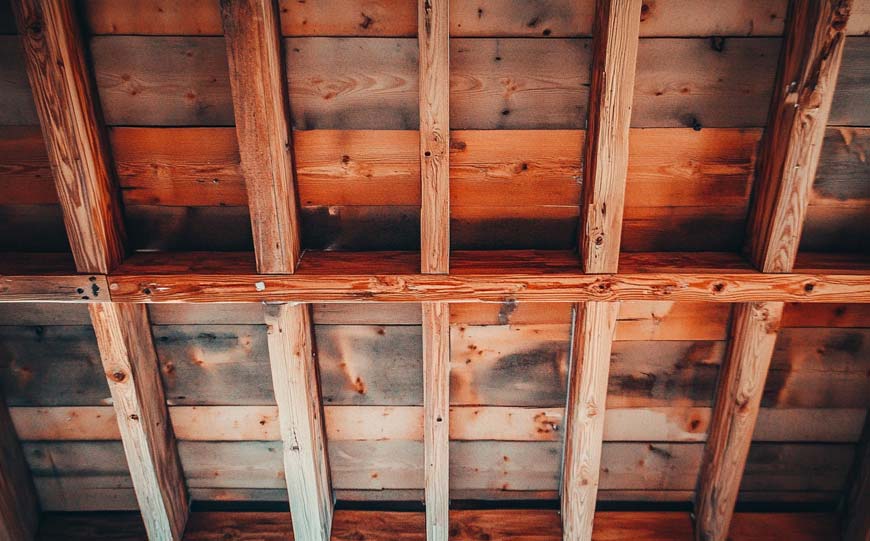
However, the following are common tools required for this type of project:

  • Measuring tape
  • Pencil
  • Straight Edge
  • Level
  • Electric Drill
  • Nail / Staple Gun
  • Electric Screwdriver
  • Caulk Gun
  • Utility Knife
  • Taping Knife

Materials Required

If you have absolutely no experience about soundproofing projects you may wish to consider hiring a professional.

Soundproofing and acoustic treatment are specialist skills and require a lot of technical expertise.

However if you are on a limited budget, you can soundproof your summer house yourself, just as long as you have the time and most appropriate soundproofing materials to hand.

It is not too difficult with a level of competency and this article should give you knowledge, some necessary thought processes, information and guidance to carry out such a DIY project successfully.

The final finish might not be to the highest grade, however considering that this is a summer house, the final aesthetic may not be your primary concern.

In this case, your main aim will be to apply effective soundproofing practices, whilst ensuring structural integrity and, since it is an outdoor structure, protection from all weathers!

The materials required to soundproof a summer house are relatively easy to acquire as well as to work with.

However, do bear in mind that over the counter DIY products will not be able to perform as well as professional grade soundproofing materials.

That said, you will need to factor in the costs involved and your budget.

To do this project you will need the following materials, with some variances depending on the method which you intend to apply when soundproofing your summer house:

Plywood

Plywood

Plywood helps to add additional mass and density and possible strength to the original structure.

Moreover, thanks to its stiffness, you would be applying the decoupling principle, which is important for effective soundproofing.

Plywood is an incredibly versatile material, so it can be used on the walls, ceiling and floors.

Open Cell Wall Cavity Insulation

Open Cell Wall Cavity Insulation

This material has a two-fold purpose – it allows for acoustic absorption as well as thermal resistance.

It can be installed into the existing space created by the frame of the summer house.

Hydrophobic versions are generally recommended for better results.

Acoustic Isolation Membrane

Acoustiblok 3mm Isolation Membrane

Acoustic isolation membrane is the ideal material to line the walls, floors and ceiling.

A high performance material offers the highest level of acoustic insulation and is ideal for such a project.

At just 3mm thick, Acoustiblok’s Sound Insulation Membrane is perfect for this application.

Breathable Membrane

Breathable Membrane

A layer of breathable membrane can be installed independently across the summer house’s frame or within finishing boards.

This material is ideal for helping to control moisture and humidity.

OSB, Plasterboard, Drywall & Particle Board

Plasterboard

These are essential construction materials for projects such as this.

By installing OSB, plasterboard, drywall and particle board, you would be adding an essential finishing board whilst putting into practice the principles of density and mass.

They work together to deflect sound which will contribute hugely towards successfully soundproofing the summer house.

You will find various thicknesses and densities to choose from, and there are also varieties that comprise a vapour control layer on the rear of the boards.

Screws, Adhesives, Caulks & Sealants

Acoustic Sound Sealant

These are materials that you cannot do without to soundproof your summer house.

You will be using them to fix the Acoustiblok’s Sound Insulation Membrane, drywall and other paneling to the existing frame.
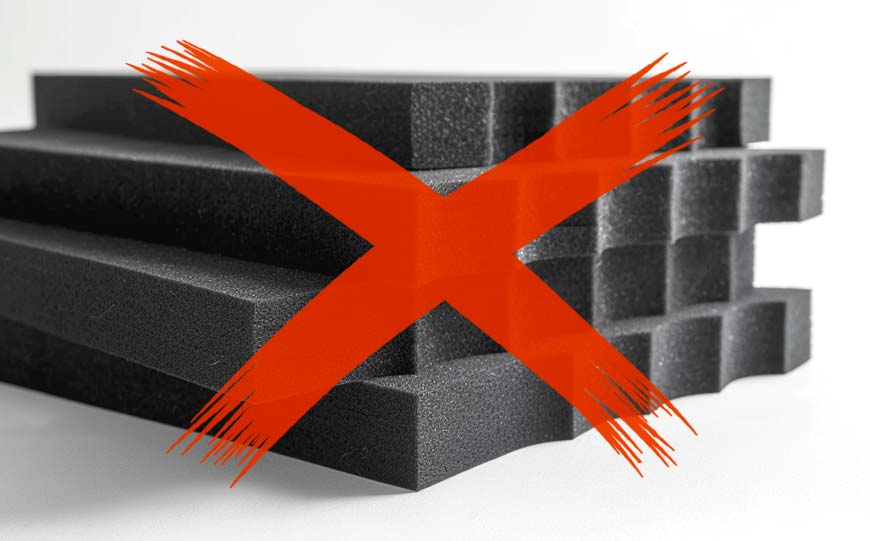
Acoustical sound sealant will not only help to affix items to the summer house structure, but also reduce sound resonance and vibrations.

Acoustical dampening adhesives and acoustical caulk are highly recommended for the same reason.

The latter will help to seal gaps in the summer house, especially along the door and window frames and in case of any small gaps and cracks.

Secondary Glazing

Secondary Glazing

Secondary glazing will add an extra layer to the summer house’s existing glazing, especially if you decide not to replace the existing windows with better performing glazing units.

Soundproofing a Summer House

Soundproofing a Summer House

Soundproofing the Floors

A very common misconception is that one only needs to treat the walls to effectively soundproof a space.

In reality, you will need to deal with the floors, along with the walls, ceilings/roof to improve the effectiveness of soundproofing.

You would also need to give special attention to windows, doors and any gaps or holes that might be present in the structure.

It’s crucial to bear in mind that sound will always find a means of escape and as a result any weak points need to be tackled.

We have said it before and we will say it again, ‘one is only as strong as the weakest point’.

Sound and acoustic energy will find a way through the floor of the summer house, and into the space below.

Sound and vibration may pass through anything connected to the floor in way of flanking transmissions leading to the connecting walls.

Hence, sound will escape through the floor, so it should usually be considered for effective treatment.

Ensure the existing floor structure and subfloor is in good condition.

If required, you can add an additional layer of dense board to the floor to strengthen.

This will help to increase the thickness and density of the base.

A good way to start is to install an Acoustiblok’s Sound Insulation Membrane prior to a floor finish onto the existing floor.

If you are on a limited budget, you could opt for an old carpet underlay or even some thick fabric that can be tacked down to the existing or new sub floor.

This will greatly help to reduce impact noise as well as any vibrations.

The thicker the carpet, the more effective it will be to minimise impact noise.

It would also help with the internal absorption of sound waves, reducing reverberation and therefore soften the internal acoustics leading to a better environment.

If you want to aim for a higher level of acoustic performance, you should invest in a high grade acoustic insulation membrane Acoustiblok’s Sound Insulation Membrane, which can be applied to any surface, including the floors, as well as the walls and ceilings.

This type of material can be applied directly to the floor substrate or subfloor.

If installed in conjunction with an underlay material, the final soundproofing performance will be even better.

Finally, you can lay your preferred choice of floor covering on top.

Considering that the summer house is an exterior building, it’s important to point out that dampness and moisture need to be considered to prevent becoming an issue.

A carpet could easily become damp and an unpleasant musty smell could develop.

Mould and mildew could also become an issue.

If left untreated, this could potentially become a serious health risk – so only fit carpets where you have determined damp will not be an issue.

Instead of a fabric carpet, it may be better to invest in interlocking rubber gym mats.

These are easy to install and will help to dampen the internal acoustics.

Soundproofing the Walls

The walls are of critical importance when it comes to soundproofing projects.

Most summer houses tend to be constructed of a simple wooden frame clad with timber.

As a result, the thickness of the frame offers rigidity and strength as well as a decoupling principle to the structure which is a very useful principle to mitigate passage of sound.

However this frame will also create a cavity which can house an acoustic absorptive membrane.

If left untreated / without cavity batt insulation it will most likely amplify rather than reduce noise.

So, this cavity is an ideal place to install open cell absorptive slab insulation.

This method is ideal to soundproof your summer house as you would have applied a basic principle of acoustic soundproofing, that is, absorption.

However it’s important to ensure that your construction is water tight to prevent water ingress to the absorbent core.

There are various types of insulation materials, thicknesses and densities which you can use as the cavity fill and some of these are also hydrophobic.

A mid density open cell mineral wool material like AcoustiFibre is sensible.

Although all these stages are important, now comes a critical part / process to achieving the highest levels of success in our opinion.

Lining the walls with an advanced high grade acoustic Acoustiblok 3mm Sound Insulation Membrane will increase acoustic mitigation greatly and to higher levels, whilst reducing the thickness of the overall depth of wall and therefore maximise gross internal area.

Usually quite an important factor in such projects.

Achieving higher levels of soundproofing performance may often be seen to increase construction depths.

Acoustiblok 3mm Sound Insulation Membrane can achieve increased acoustic levels and maintain optimum dimensions to the size of the room.

Following this it is also a good idea to consider installing a breather membrane or vapour control layer on the walls.

This material can be attached to the timber frame and taped thoroughly in order to control humidity from moving into the walls.

OSB or a dense board can now be affixed over the top to tie everything together.

This offers a finishing principle and increases the insulation, mass and density, further reducing sound emissions.

A standard application would see these boards being affixed through into the framework to tie everything together.

However where required and especially where defending proposed higher levels of ignition from within, a cross batten, sometimes known as a resilient bar, with acoustic mounts can be secured through into the frame, subsequently providing a platform into which the boards can then be affixed.

By doing this, vibrations through the structure can be further reduced.

Installing two layers of dense finishing boards on a staggered junction is also quite common and desired where possible.

A damping compound / silicone can also be used between them.

Gaps and cracks of all types should be prevented however, where the smallest gaps are in evidence, acoustic silicone and acoustic caulk can help to fill.

Soundproofing the Roof & Ceiling

Often when it comes to sound insulating roofs and ceilings, it is common to follow the same principles used to treat the walls.

Having said that, the final finish might look rather unsightly.

Hence, for the roof structure, it may be better to use osb or plywood due to the fact that it is considerably lighter, structurally stronger and additionally it is better able to hold into place.

Once again it is quite sensible to install a high grade material like an Acoustiblok 3mm Sound Insulation Membrane for better results – it is only as strong as the weakest point and ceilings can be a huge area of leakage and / or sound ingress.

Soundproofing the Windows

Needless to say, windows are responsible for a considerable amount of sound escaping from summer houses, as well as sound making its way in.

The problem is even bigger if the glass and frames are thin or poorly fitted.

In such cases, it is better to consider replacing such windows with new window units that have thicker glass or multiple glazing layers.

In some cases where appropriate one may consider simply removing them from design but this has to be considered carefully.

If you are not on a restricted budget, you may also consider investing in acoustic frames / glass windows which are very effective.

Such windows are made up of two thick sheets of glass, comprising a thinner sheet sandwiched between them.

Alternatively if you do not want to spend much, you could purchase thick plastic sheets from a DIY store however, these are quite obviously not going to perform anywhere near the same levels.

By affixing them to the windows you would be increasing the thickness of the glass while also reducing the sound that makes its way out.

Ideally, use rubber seals around the windows if none are present.

If the current ones are not in a good condition, it’s best to replace them or make sure that they reseal completely.

Another good alternative option is acrylic windows – they offer relatively better sound control than normal glass typically found in most windows.

You may also wish to consider hanging soundproofing blankets or curtains over the windows.

The heavier the drapes, the better the results.

Soundproofing the Doors

Any door inevitably allows for a lot of sound escaping or making its way in.

Chances are that the door of your summer house is full of gaps and does not have any rubber seals or gaskets.

Moreover, if it is not properly fitted or not flush to the surrounding frame, sound will easily escape.

While such gaps might seem insignificantly small, you need to bear in mind that sound easily makes its way through the tiniest gaps.

Therefore, you need to tackle this by making sure that there is proper sealing.

Increasing the depth of the timber bead / door stop can be sensible as this allows an increased surface contact area of door to frame.

Finish this off with rubber seals.

You may wish to consider installing an acoustic membrane to the door or to the door frame.

If there is a key lock, it should also have a cover.

Sealing and Finishing

While a small gap or crack may seem insignificant, it can actually compromise the effectiveness of a soundproofing project.

One cannot over-emphasise enough just how important it is to effectively seal all gaps, both internally and externally.

Even if a small crack or gap is present, sound will pass through it!

Sealing all gaps in your summer house should be a starting point, as well as a final step in your soundproofing project.

So make sure to check for any gaps that may have been overlooked.

As a general rule of thumb, you need to aim for a structure that is essentially airtight.

Check every surface from top to bottom, and examine each space for any possible cracks, holes or gaps.

It is also important to check the spaces around the door and window frames.

If there are any cables or pipes make sure to seal those areas too with acoustic sealant / caulk / acoustic putty pads.

Sealing gaps is best done by applying a professional grade flexible acoustic caulk.

Conclusion

Soundproofing a summer house can be a rather challenging project, especially if it has an old and rather flimsy construction.

Striking the right balance and planning ahead is important.

You should avoid using inferior materials, while also refrain from spending too much as at the end of the day this is an outdoor construction.

While hiring a professional that deals in acoustics may be your first thought, you should also give some thought to doing the project yourself, especially if you have a limited budget.

You should at least seek advice on the most suitable materials and applications to purchase as there are several options on the market.

Preferably opt for specialist soundproofing materials that can allow you to achieve the best possible results.

Flanking Noise
Blog

Flanking Noise – Sound Transmission Causes & Solutions

Soundwaves will find their way through the weakest points or links within a structure easily if present.

And if one were to carefully consider a structure, there are numerous weak points that need to be addressed if sound transmission is to be handled effectively.

Flanking noise is just one example of unwanted sound that can enter a building or a room if the structures allow it.

We explore what flanking noises are and how to tackle them in the chapters below.

What is Flanking Noise?

Flanking noise is a term used to describe the noise that reaches a room through an indirect path.

For example, noise can pass through ductwork, slabs, ceilings or floors.

Sound can manage to pass around, under or over the top of a partition that separates two spaces.

Flanking noise, as you can imagine, can be quite a problem as it can essentially reduce the effectiveness of a wall, floor or ceiling installation.

And, it can become bothersome in multi-family residential buildings if the structures produce large amounts of flanking noise.

Sources of Flanking Noise

Flanking can result from both airborne as well as impact sounds.

Any building element, structure or material which penetrates a separating element, structure or material can lead to flanking transmissions via the route created by the continuation.

Structural Steel & I-Beams

Structural Beams

Quite a common cause to increased flanking transmissions can be structural components within a building such as steels, beams and lintels.

Due to their positioning spanning over a considerable length and structural integrity, they can offer a perfect pathway or motorway for sound transmission.

Their material and natural resonant frequency can be seriously problematic with certain frequencies as the vibrations can in effect be amplified or resonated the full length of the steel.

Shared Structural Components

Floor Joists

Floor joists and boards, continuous drywall partitions and concrete floors are often shared structural components in buildings.

As a result sound can find a direct pathway through which to pass.

Ceilings

Apartment Ceiling

Ceilings act as common flanking sound transmission pathways, as sound can pass both above as well as through the ceiling.

Even though the ceiling can be soundproofed with a suitable acoustic isolation membrane, there may well still be residual sound that carries up or down the load bearing walls.

Floors

Hardwood Floors

Sound can pass through the floor and floor joist space.

The weakest point is where the walls meet the floor and this is where most flanking noise manages to pass, especially in multi-storey buildings.

Windows

WindowsWindows are weak points in any building when it comes to sound transmission.
If you look at a window and consider it in relation to sound, you soon realise that it is a large empty gap in the wall which ends up allowing noise to penetrate, as well as amplifying sound transmission.

Doors

Doors

Consider having a door connecting two rooms, and you need to stop sound from going from one room to the other.

The door is a weak link, as a considerable amount of sound can potentially pass through it.

Even in cases when a door does not directly connect two rooms, sound can still pass through a door, down a hall, and into a neighbouring room for example, bypassing any efforts of a high quality soundproof wall.

Electrical Sockets

Electrical Socket

Electrical outlets can be a problem when it comes to sound isolation.

Even if small, electrical socket outlets create holes in walls.

Often electrical outlets are poorly sealed as well, which means sound can pass through easily.

Air Ducts & Plumbing

Ducting

Ducts can be very problematic because they can provide a direct air path through which sound can travel easily from one area to another.

They can be a common cause of flanking noise in buildings with HVAC ducting installed.

Structure-borne Noise

Noise travels as mechanical vibrations through the structure of a building.

This includes walls, subfloors, joists and studs.

It will pass on to remote locations where the vibrations will stimulate the wall, floor and ceiling, and create noise.

Seals

Seals

Sealing is of great importance to reduce the amount of noise that manages to pass.

Even the smallest cracks left unsealed will make a difference.

It’s important to choose high quality acoustical sealants such as caulking and noise proofing compounds that can be as effective as possible for flanking noise.

Ways to Prevent Flanking Noise

Ideally, flanking transmission is given due consideration during the design and construction phases of a building.

This will improve the chances that it is reduced as much as possible before it even becomes a problem.

The quality of the workmanship is of great importance too to ensure that good noise control processes are employed and adhered to.

It is also best to ask the architect or builder regarding which steps were taken to ensure sound privacy from neighbouring houses or adjoining rooms as well as to deal with noise ingress from the outside.

Better still, having a professional acoustical consultant involved during the planning and construction stages will help prevent any potential flanking issues from evolving.

Nowadays there are also building codes that have minimum standards for noise control between residential units.

Upon completing construction works, there should be inspections to ensure that the building meets the minimum building regulations for sound isolation.

The following are some ways that can help to prevent flanking noise:

Acoustic Isolation Membranes

Acoustic Membrane

Adding acoustic isolation membranes into walls, floors and ceilings will help enormously to mitigate sound passage as well as also minimise vibration through the structure, thus reducing flanking transmissions.

Decoupling

Decoupling methods are a great way of reducing flanking noise considerably.

Where space and tolerances permit, creating a principle of a cell within a cell, or room within a room, by means of decoupled structure can divorce one from the other.

As an example, having two rows of studs used in combination with separate ceiling joists in order to create what is commonly referred to as ‘a room within a room’.

This is because in this case there will be practically no, or at least very little, mechanical connection between the room and the rest of the structure.

Other construction methods such as staggered studs can keep the sound vibrations away from the structure, thereby reducing flanking noise.

Open Cell Cavity Insulation

Acoustiblok QuietFiber

Installing an open cell cavity insulation (part fill or full fill) as appropriate into cavities is essential to assist with acoustic absorption.

This principle will also greatly reduce resonance, regeneration and amplification of acoustic energy, thus reducing the likely increase in energy and flanking transmissions.

Used extensively in the residential industrial and commercial fields QuietFibre is introduced where reverberant sound and increased resonance is a problem.

Resilient Channels

Decoupling Resilient Channels

Resilient decoupling such as resilient channels or cross battening on studs, is a commonly used decoupling method.

Specialist acoustic hangers or acoustic clip systems with rails are also popular.

Using resilient channels can significantly help to reduce the amount of vibrations that pass through the structure, thereby improving the soundproofing of a building.

Adding Mass and Density

Adding mass can help initially by adding bulk and weight to deflect sound.

However be aware that the rigidity of the mass material itself being physically attached to the substrate can also provide a pathway for vibration and flanking transmissions, usually by more problematic frequencies.

The use of resilient channels and acoustic hangers in walls and ceilings for example, can assist with reducing direct linkage as previously mentioned, although this of course is at a cost of the additional depth to the overall buildup.

Floating Floors

Floating floors can help considerably in minimising structural connections.

As a result, flanking noise will be reduced.

A floating floor is one which has a material and surface installed without mechanical linkage and therefore floating over a resilient layer.

The resilient layer can be in various forms, most commonly acoustic isolation membrane.

Ideally a mechanical break is left between the floating element and the structure.

Acoustic Floor Cradles

Acoustic Cradle

Used in floating floor systems where increased tolerances and thicker finishes are available.

Made from 100% recycled rubber crumb materials, these AcoustiCradles offer a cost- effective acoustic flooring solution by de-coupling the floating floor from the structural floor.

Suspended timber battens are installed into the AcoustiCradles to reduce direct linkage.

Upgraded Doors

Doors can be upgraded by adding mass in the form of a sheet of MDF or plywood in addition to an advanced acoustic isolation membrane.

This will act as a decoupler, thereby greatly reducing the sound that passes through to other areas.

Using heavy, solid-core doors is a good way to add mass.

It is very important that one avoids installing hollow core doors.

Ideally, the door frame and perimeter jamb will be increased in depth to increase closure contact – more door to jamb.

Adding additional gaskets and weatherstrips to the door jamb can create a better quality seal.

Specialist Acoustic Doors

Nowadays you will be able to find various manufacturers that offer specialised acoustic doors.

These will have enhanced seals and be effective even for lower frequency noise.

Duct & Plumbing Liner

Insulated ductwork contains sound absorbing material, which helps to deal with sound as it travels through the duct.

This plumbing liner, or insulation will be within the duct, making it very effective in reducing flanking noise.

Having long and complex paths is also a good way of making the noise diminish, since with more bends and length, the sound will lose its energy while interacting with the duct liner even more.

Duct & Plumbing Soffits

Where feasible it may also be beneficial to wrap or insulate any ductwork with an acoustic isolation membrane to contain noise breakout.

An effective way to do this is by framing out the soffit and then wrapping with the aforementioned acoustic isolation membrane and open cell cavity insulation followed by a single or double layer of finishing board of choice – plasterboard or drywall.

Soffits can be made from acoustic isolation membrane, open cell cavity insulation, drywall, MDF or other commonly used building materials.

If the ductwork has to be exposed to sound, then a cylindrical duct is better than a rectangular or square duct.

Moreover, it would help if the duct is coated with a viscoelastic material in way of a lagging principle.

Acoustic Putty

Acoustic Putty

Acoustic Putty Pads are flexible acoustic and intumescent firestop pads designed to maintain a building separation and a wall partition’s structural integrity and acoustic properties.

Acoustic Sealants & Caulks

Acoustic Sealant

The quality of your seals is also greatly important.

It’s crucial to bear in mind that even the smallest seal failure can translate into the weakest point allowing direct passage of sounds and flanking transmissions.

Even the most expensive partition will end up performing ineffectively if there is poor seal quality.

Remember, one is only as strong and effective as its weakest point.

It is best to apply multiple beads or layers of acoustic sealant on partitions to be super critical at these obvious potential weak points.

By doing so, a quality seal can be achieved, as you would effectively be doubling up on seals.

Hence, should one layer be compromised it would be backed up by the other.

Acoustic Hoods

Acoustic Hood

AcoustiHoody fire & acoustic hoods are flexible fire and acoustic shields designed to retain fire line protection and conformity for fire and acoustic integrity of ceilings.

They can significantly reduce acoustic transmission through penetration.

Conclusion

By taking a look at key aspects relating to flanking noise, you can be in a better position to deal with it and reduce its negative impacts.

The success of any sound isolation project relies on various aspects, and while there are diverse methods and options to use, care needs to be taken to choose the most ideal soundproofing materials and applications depending on the situation, structure and type of noise.

Airborne Sound
Blog

What is Airborne Sound?

Sound is all around us.

It varies in type and loudness, and is measured in decibels and hertz.

Yet, besides these technicalities, sound is essentially vibrations that are transmitted through a medium, until they reach the human ear or a device that detects sound.

Airborne sound is just one type of noise, which we explain in greater detail below.

Understanding Airborne Sound

Airborne Traffic Noise

Image credit: Unsplash

Airborne sound, as the name suggests, refers to the sound waves which travel through air and atmosphere to reach the ear.

Airborne sound travels through the air in longitudinal waves.

When a sound is produced it creates a disturbance in the air molecules which move back and forth transmitting the energy from the source to our ears.

Here they are transformed into electrical impulses, which are interpreted by the brain as sound.

The speed of sound in air is approximately 343 metres per second (at room temperature) however this can vary greatly at different altitudes.

Typical sources of airborne sound are traffic noise, crowds of people talking, a dog’s bark, music, or sound from a television or radio, which then travels through the air and into the inner ear.

Airborne Sound vs Structure-borne Sound – What’s the Difference?

The main difference between airborne and structure-borne sound is that in the case of the latter, it refers to the consequence of impact on a structure.

Some examples include a door slamming shut or footsteps on a floor.

Hence the sound waves travel through a solid structure prior to reaching the ear.

At times airborne sound and structure-borne sound can be linked or related to each other.

For instance, airborne sound could have an impact on a part of a building when it travels through the air.

Also, structure-borne sounds, such as footsteps could radiate in the air, thus resulting in airborne sound.

What Causes Airborne Sound to Become a Noise Nuisance?

Airborne Sound Travels Through Gaps

Image credit: Unsplash

Airborne sound can result in being a noise nuisance if it is able to penetrate a building for example due to any gaps or cracks in walls, around windows and doors, and any crevices, that will allow airborne sound to travel through the air and into the building.

Such weak points should ideally be addressed as soon as possible to prevent continued sound ingress and is also beneficial in minimizing poor thermal values lost via drafts and gaps.

Furthermore, a property exhibiting these issues may not be in compliance with building regulations with regards to noise levels.

So it’s recommended to speak with a specialist acoustic consultant in this regard.

Also remember that any doors and windows which open out onto spaces where there is a lot of source of noise will lead to airborne sound ingress.

The Importance of Sound Insulation

Airborne sound can be problematic between neighbouring households when sounds can travel between party walls where there is inadequate sound insulation or mass.

Another common problem is when a building is situated on a busy road, or within close proximity to a noisy area or building, such as schools, playgrounds or construction sites.

Traffic noise, kids playing and shouting and similar loud noises can easily penetrate poorly insulated buildings which are within close proximity.

Hence airborne noise can prove to be a considerably problematic and unpleasant nuisance over the longer term.

Over time it could also lead to health problems, as routinely having to endure unwanted loud noises is not ideal for one’s wellbeing or mental health.

In fact, there are many preoccupying studies and statistics which demonstrate that noise pollution is a very big problem for many people.

Sometimes one may prefer to leave the windows and curtains closed to try to lower the sound that makes its way into the building.

Consequently, this can lead to poor ventilation, which is also very unhealthy.

How to Reduce Airborne Sound

Soundproofing Materials

In order to reduce airborne sound, there are numerous factors that need to be considered.

First off, planning in this regard should be done prior to commencing the construction of a building.

This is the ideal way to minimising how much airborne sound waves will make its way into the structure.

Poor workmanship is one of the main reasons for airborne noise.

Weak points such as cracks, holes and gaps in walls or around windows and doors will allow sound waves to travel very easily.

Thus any such issues should be identified and addressed.

Whenever there are issues with noise levels in a building, it’s important to speak to a soundproofing insulation product supplier as they will be able to carry out professional testing and offer advice and possible solutions to reduce the noise.

The type of sound pollution and the sources will need to be identified, so as to evaluate the best possible ways to reduce the unwanted noise ingress.

One of the ways to reduce airborne sound is through acoustic absorption.

This method helps to reduce the amount of sound that is reflected back into the air when it hits a solid surface.

Acoustic treatments can be carried out on party walls, ceilings and floors.

It also seeks to eliminate any gaps which could lead to direct sound transmissions.

Another method that can be used to decrease airborne sound is sound insulation.

This is quite similar to acoustic absorption, but rather than absorbing sound, it focuses on blocking it from travelling to a connected space in a building.

Preventing Airborne Sounds During Construction

Contractors Installing Acoustiblok Membrane

During the design and construction phases of a building, it’s of paramount importance to place emphasis on preventing airborne sounds as much as possible.

If the walls, ceilings and floors of a building are built and treated to absorb sounds, airborne sound will be minimised greatly from the very start.

There are various ways through which airborne sound can be reduced, but it is not a single solution that will be suitable for all buildings and structures.

Hence it is recommended that a professional is sought to identify the types of sound, carry out specialised testing, and then proceed to choose the most effective techniques to minimise the emergence and transmission of airborne sound in that particular building.

Having said that, it’s better to address a possible problem such as airborne sound, prior to having it occur, rather than having to deal with and rectify it later.

Thus minimising airborne sound at the design and construction phase is recommended.

Conclusion

While planning a new building, converting or making any improvements or renovations to an existing structure, it’s important to give due importance to sound insulation.

Noise pollution is a very real problem nowadays.

Statistics show that a lot of homeowners suffer from this problem as it can result in a series of health related issues, from difficulty sleeping, to an ongoing disruption or nuisance, that ultimately impacts one’s well being negatively.

Colours of Noise
Blog

Different Colours of Noise – What They Are & What They Mean

Wherever you are in day-to-day life, there’s always some form of noise being generated from different sources all around us.

Of those noises, each produces what is referred to as a unique wave form or ‘colour’.

In fact, noise can be categorised in order to differentiate between one type of noise and another.

Different colours are used for this classification which we uncover in greater detail below.

What is Noise Colour?

The colour of noise, or noise spectrum, refers to the power spectrum of a noise signal.

Different types of noise colours have diverse properties and as a result they can be used in different circumstances and applications.

White noise for example, was the first to be named and subsequently noises with other spectral profiles were also given different colour references.

White Noise

White Noise

White Noise

White noise is generally regarded as the most commonly known type of noise colour.

This type of noise which has equal power across all frequencies.

It is low, and often masked by other noises.

It can be described as the static or hissing sound.

Good examples of this are sounds similar to those produced by an old fashioned analogue aerial-based television set, an untuned FM/AM radio or a fridge.

Pink Noise

Pink Noise. Image credit: Dvidby

Pink Noise

Pink noise has equal power per octave.

This means that it has more energy in the lower frequency ranges than white noise for example.

However it is lower than brown noise.

Types of pink noise sounds include the rain falling steadily or the sound of a waterfall or the ocean.

Pink noise is regarded as being very soothing.

Studies have shown that pink noise can help to improve memory, concentration and sleep quality.

Brownian Noise

Brownian Noise. Image credit: Dvidby0

Brownian Noise

Brownian noise is also sometimes referred to as brown noise or red noise.

This type of noise has a special distribution which decreases by 6 decibels per octave.

Thus it has more energy in the lower frequencies, and a lower energy at the higher end.

Brown noise is similar to a low rumbling sound, or a deep roar.

To better describe it we can imagine the sound of a thunderstorm in the distance, or the rumbling of waves.

Brown noise is often used for relaxation and meditation.

It is also ideal for masking other sounds which could be distracting.

Blue Noise

Blue noise or azure noise has more energy when it comes to higher frequencies.

It’s like a high-pitched hissing sound, such as the sound you hear when steam escapes from a pipe.

Blue noise is sometimes used in audio engineering in order to create a sense of depth or space.

At considerably high volumes blue noise can be quite harsh.

Violet Noise

Violet noise is basically a more extreme version of blue noise.

It has even more energy in the high frequencies.

Thus it can be described as being a very high-pitched sound.

A good example of this is the sound of a dentist’s drill.

Grey Noise

Grey noise is quite similar to pink noise because it sounds the same at every frequency.

Grey noise calibrates better with the human ear.

Grey noise is used to treat tinnitus or hyperacusis.

Velvet Noise

Velvet noise is characterised by the density in taps/second.

At very high densities it sounds very similar to white noise, but it is often described as being smoother, thus the reference to the velvet.

Velvet noise is useful in applications such as decorrelation filters and real-time reverberation algorithms.

Where Do Noise Colours Originate?

Colours of Noise

Colours of Noise. Image credit: AkanoToE

Different noise colours have their particular properties.

While we cannot hear or see a noise colour, our ears can hear multiple soundwaves infused in various frequencies.

This is mainly because noise is made up of infinite single-source frequencies.

You cannot measure the frequency amplitude of noise, and hence noise is typically divided into various bands, such as 0-1 kHz, 1-5kHz, 5-10kHz and so on and so forth.

These frequency bands are then measured with a spectral analyzer, and watt measurement is used to calculate the power of noise for each particular band, so as to assign a noise colour.

Can Noise Harm?

Regularly being subjected to excess noise can lead to stress, heightened anxiety, depression, elevated blood pressure, heart-related issues, and various other health concerns.

Certain individuals face an increased likelihood of experiencing hearing impairment, particularly those who encounter loud sounds within their household and community environments.

Hyperacusis for example, refers to a diminished tolerance to sound, where individuals often perceive ordinary noises as excessively loud, and exposure to loud sounds can evoke discomfort and pain.

The primary identified causes of hyperacusis include prolonged exposure to loud noise and the natural aging process.

In situations such as this, noise colour is neither relevant nor applicable since the type of noise inflicted is having a damaging effect.

Where these types of sounds are present in dwellings, buildings or structures, there are soundproofing solutions that can help to lessen or even fully eliminate noise ingress.

Whether it’s the constant hum of traffic outside, chatter or noise reproduced in the office, or machinery and equipment, all of them can have a detrimental effect on hearing and quality of life.

Can Noise Heal?

Woman Restfully Sleeping

Certain noise colours can aid restful sleep. Image credit: Unsplash

Where certain noises can cause hearing loss, other types of noise can have healing properties if used effectively.

Certain kinds of noises can offer a relaxing and comforting atmosphere.

Others can help to promote better sleep, alleviate anxiety and stress, and even reduce memory loss.

Using the best type of noise colour under the particular circumstances can help a great deal to ease your mind, improve mood and motivation, and we can thus safely conclude that noise can actually be one of the best types of healing.

Frequently Asked Questions

Do Colours Have Noise?

Different colours have diverse noise properties. The ‘sense of colour’ which comes from different noise signals is very similar to the tone colour or the musical timbre. Each noise is essentially a soundwave, which comprises the type of noise and the frequency. The latter refers to how quickly the waveform vibrates every second.

What Colour Helps Reduce Anxiety?

White noise can be one of the best types of noise to help with anxiety. White noise is commonly described as being a steady droning sound, and this helps a lot to reduce anxiety and treat insomnia too. Pink noise is also helpful.

Can White Noise Help You Sleep?

White noise has a flat spectral density and it can offer several positive benefits. Studies have shown that white noise can help people who suffer from sleeplessness to sleep better. It can also help to block background noise, which is also great to improve sleep.

What Colour Noise Helps Concentration?

Pink noise is considered to be ideal to improve concentration. Since it has the ability to mask various sounds and most unwanted background noise, pink noise helps you to concentrate and focus more.

What Colour Noise is Most Relaxing?

White and pink noise are considered to be ideal to set a relaxing atmosphere, which also helps you to fall asleep more easily and to sleep better too.

Conclusion

The colours of noise are a useful way to categorise different kinds of noise we encounter around us.

They can be used to utilise the varying characteristics of noise effectively in diverse contexts.

Some noises are ideal to drown out distracting noises, create a calming environment, or improve sleep.

In fact noise if fused correctly, is one of the best ways to reduce stress, ease your mind, and improve wellness if used effectively.

Other types of noise however, can harm, so it’s crucial to understand when to take action against nuisance noise by speaking to an acoustical consultant.

Soundproof Office
Blog

14 Ways to Soundproof an Office

In the hustle and bustle of office life, working amongst peace and quiet can be a rare commodity.

Whether you’re in a crowded call centre, a communal workspace or a busy boardroom, noise can be a constant unwanted distraction.

Thankfully, there’s several effective ways to turn down the volume and create a peaceful working environment by improving your office soundproofing.

In this article, we’ll explore the science of how to soundproof an office, delving into why it’s essential, areas that need attention, various soundproofing methods and even some tricks for improving sound problems without extensive efforts.

Why Does an Office Need Soundproofing?

An office serves as the bustling epicentre of countless activities, from focused individual tasks to collaborative brainstorming sessions.

In this dynamic environment, the need for soundproofing becomes paramount.

Excessive noise, whether it’s chatter from colleagues, ringing phones, or the constant hum of office equipment, can have far-reaching effects on both employees and the workplace itself.

Professionalism

A soundproof office significantly contributes to fostering a sense of professionalism within the workplace.

When clients visit, a quiet and composed atmosphere demonstrates that the company values not only its employees’ focus but also the professionalism of its interactions.

It sends a strong message that the organisation is dedicated to providing a conducive environment for meaningful discussions and client meetings, ensuring that business transactions are conducted with the utmost professionalism and attention to detail.

A noise-free environment sets the stage for confident and productive exchanges, enhancing the company’s reputation and reinforcing a culture of professionalism and excellence.

Privacy

Essential for keeping the sensitive information within the confines of the office or board room.

In this day and age of security breaches and leaks it is imperative to ensure that confidential information remains just that.

Distractions

Imagine trying to focus on a crucial report while overhearing a loud conversation from the adjacent cubicle.

Background noises like these create distractions, derailing concentration and impairing productivity.

Employees find it challenging to maintain focus and complete tasks efficiently, ultimately impacting the quality and speed of their work.

Increased Stress

Consistent exposure to high levels of noise can elevate stress levels among employees.

Constant disturbances create an atmosphere of tension, hindering the ability to relax and work with a clear mind.

Over time, this chronic stress can lead to burnout, decreased job satisfaction, and a decline in overall well-being, affecting not only individual employees but also the office as a whole.

Enhanced Concentration

On the flip side, a soundproofed office cultivates an environment where employees can concentrate without interruptions.

By minimising noise distractions, employees can immerse themselves in their tasks, leading to improved focus and heightened productivity.

Additionally, a quieter atmosphere promotes a sense of comfort and ease, allowing employees to work in a more relaxed state, enhancing creativity and problem-solving skills.

Effective Communication

Soundproofing not only blocks external noises but also ensures that internal discussions, meetings, and presentations remain confidential and effective.

Unwanted noise disruptions can hamper crucial communication, leading to misunderstandings and misinterpretations.

A soundproofed environment fosters clear and uninterrupted dialogue, enabling teams to collaborate efficiently and ensuring that important messages are communicated accurately.

Creating a Positive Work Environment

A soundproofed office contributes significantly to the overall ambiance of the workplace.

By providing a quieter, more focused atmosphere, employees are more likely to enjoy coming to work.

A positive work environment not only enhances job satisfaction but also promotes employee retention.

It becomes a space where creativity can flourish, where innovative ideas can be exchanged without interruptions, and where employees feel valued and appreciated.

What Areas of an Office Need Soundproofing?

Busy Open Plan Office

Open Plan Offices are Noisy Places to Work. Image credit: Unsplash

Meeting Rooms & Board Rooms

Meeting rooms can often echo with discussions and presentations.

Effective soundproofing ensures confidentiality and prevents disturbances, allowing fruitful conversations.

Call Centres

Call centres, where continuous conversations occur, require a serene atmosphere.

Soundproofing reduces background noise, aiding clear communication and improving customer service.

Communal Areas

Communal areas like break out areas, lounges or cafeterias can become noisy hubs.

Soundproofing these spaces creates pockets of tranquillity amid the office buzz.

Reception/Atriums

Entrances and lobbies that must always appear professional and provide a vital workable environment at all times and especially during periods which may have increased traffic.

Ways to Acoustically Treat or Soundproof an Office

1. Acoustic Absorber Wall Panels

Sound Absorber PanelsAcoustic panels, designed to absorb sound waves effectively, are pivotal in creating a soundproof office environment.

These panels are crafted with specialised materials that dampen sound vibrations upon impact.

When strategically placed on walls, especially in open office spaces or meeting rooms, they act as sound absorbers, reducing echoes and minimising noise levels.

Acoustic panels come in various designs, sizes and colours making them versatile for different office setups.

By absorbing sound, these panels create a quieter ambiance, enhancing focus and concentration among employees.

They are particularly useful in large conference rooms where discussions can become overwhelmingly loud without proper sound management.

Products like Acoustiblok AcoustiWall Absorber Panels are perfect for these settings.


2. Acoustic Absorber Ceiling Panels

Acoustic CeilingsAcoustic ceiling panels and tiles are specially designed to absorb sound, preventing it from reflecting, reverberating and echoing within a room.

These panels or tiles are installed either in contact with the ceiling or suspended from the ceiling, creating an absorptive barrier that absorbs reflection to dampen sound waves.

In busy office spaces, especially those with low ceilings, noise can bounce off surfaces, creating a cacophony of sounds.

Acoustic ceiling panels address this issue by absorbing these sounds, reducing reverberation and creating a more serene atmosphere.

They are commonly used in offices with high-density workstations, meeting rooms, or spaces where multiple conversations occur simultaneously.

They come in various textures and designs, allowing them to blend seamlessly with a corporate image in the office’s aesthetic while serving their soundproofing purpose effectively.

Products like Acoustiblok AcoustiClouds are perfect for these settings.


3. Acoustic Isolation Membrane

Acoustic MembraneAcoustic isolation membrane is a resilient layer that is placed into existing walls and floors in way of a complete lining material to contain and isolate acoustic breakout from one room to another or from one zone to another.

Acoustiblok 3mm Isolation Membrane stands alone for this application.

This method is particularly useful in all dry lining applications, partition walls or areas with high foot traffic, ensuring that the noise generated does not disrupt the workflow in neighbouring sections.

Effectively it is a material which can be used in all types of installation to arrest and isolate airborne sound such as voices and music through walls / ceilings, or impact sounds, such as footsteps or moving furniture, from travelling through floors for example.

By minimising vibrations and noise transmission, it ensures that sounds are contained within specific areas, preventing them from disturbing adjacent workspaces.

Acoustic isolation membranes are very effective and used extensively within boardrooms and bulkheads / frames, typically above MF drop ceilings and below floating floors to prevent common weaknesses and acoustic breakout.

They can also be used on and around HVAC ducting to reduce flanking transmissions through the natural pathway.


4. Acoustic Baffles

Acoustic Ceiling Baffles

Image credit: Insulation Superstore

Acoustic baffles (also referred to as sound baffles) are suspended sound-absorbing panels, often used in rooms with high ceilings.

These baffles can be all types, sizes, shapes and finishes to be invariably hung vertically like ‘fins’ to disturb, redirect and absorb sound waves from multiple directions.

By strategically placing baffles above workstations or communal areas, they capture and reduce noise levels effectively.

These baffles are especially useful in open-plan offices where noise can easily travel across the vast space.

The baffles trap sound, preventing it from bouncing off the walls and ceilings, thus creating a quieter atmosphere below.


5. Wall Panelling

Acoustic Wall CoveringTypically wall panels are a slotted, grooved or perforated surface to diffuse and redirect acoustic energy.

These can be made from varying materials depending on the aesthetic to be achieved.

Commonly a polished timber finish adds for a touch of luxury and helps to blend the wall panelling into its surroundings, making it barely noticeable.

Alternatives are wall coverings which act as an absorber and helps to reduce sounds from bouncing and reverberating around the office space.

Wall panelling tends to be fixed to the wall as opposed to hanging.


6. Acoustic Flooring

Acoustic FlooringThicker carpets may well act as natural sound absorbers but are rarely practical in a corporate environment.

However, their dense fibres trap sound waves, helping to reduce noise in an office space.

Carpets with thicker piles can be really effective against impact noises such as footsteps but are rarely a practical approach in the type of environment being discussed.

Where thicker pile carpets are not feasible and thinner harder wearing industrial carpet tiles are preferred, Acoustiblok 3mm or 6mm Isolation Membrane can be applied underneath the finish floor.

This helps to isolate and separate by converting impact noises and minimises vibrations, ensuring that sound doesn’t travel through the floor.

This type of underlay is commonly used in conjunction with AcoustiMat Acoustic Underlay under hardwood or laminate flooring as well.


7. Acoustic Underlay

Soundproof Floor UnderlayAcoustic underlay placed beneath the main flooring material, provides an additional layer of sound insulation.

AcoustiMat Acoustic Underlay is a natural choice for this. Available in both 3mm and 6mm depths.

It absorbs impact noises and minimises vibrations, ensuring that sound doesn’t travel through the floor.

This type of underlay is commonly used in conjunction with Acoustiblok 3mm or 6mm Isolation Membrane under hardwood or laminate flooring.

It is particularly beneficial in office spaces with heavy foot traffic, ensuring that footsteps are muffled and do not disrupt adjacent work areas.


8. Desk Dividers

Desk DividerDesk dividers, also known as cubicle partitions, offer privacy and sound reduction for individual workstations.

These dividers are made from sound-absorbing materials and can be customised to different heights.

By installing desk dividers between workstations, conversations and noise are contained within specific areas, minimising distractions for neighbouring employees.

Desk dividers also create a sense of personal space, enhancing concentration and productivity for individual workers.

Desk dividers however do create sense of ‘boxing in’ and can cause some employees to have feelings of claustrophobia.

In such circumstances, businesses need to consider a suitably balanced office workspace arrangement to counteract this effect.


9. Furniture

Fabric SofaInvesting in soundproof office furniture, such as soundproofed cabinets or desks, can significantly reduce noise levels.

These specialised pieces of furniture (such as meeting booths and office pods) are designed with Acoustiblok 3mm or 6mm Isolation Membrane and other sound-absorbing materials, creating a barrier against external noise.

Additionally, furniture arrangements can be strategically planned to create natural partitions, helping in noise reduction.

Choosing sofas and chairs that have a softer fabric can also contribute to reducing noise reverberating around the office and communal areas.


10. Furnishings

Soundproof CurtainsSoft furnishings, cushions, seat pads and drapes can all play a part in increasing acoustic absorption.

This in turn reduces reflections and resonance which would otherwise lead to increased reverberation levels.

A good example of this is acoustic curtains, also sometimes referred to as soundproofing curtains or blackout curtains.

They are commonly used to reduce noise transference when creating as a temporary partition or privacy space, such as office meeting rooms or breakout areas.

When hung strategically, the thick absorbent fabric greatly reduces the distribution and movement of sound waves within the office area which decreases unwanted sounds from travelling from space to space.

They can also act as part of the overall decorative look of the space and help to improve the overall aesthetics, thus softening what is normally a clinical and utilitarian area.


11. Sound Absorbing Paint

Soundproof PaintSurprisingly, there are paints available that help to reduce unwanted sound.

Sound dampening paint, sometimes also referred to as sound deadening paint, does is precisely what it says on the can!

It can be applied using a roller or specialist paint sprayer, and contains sound-absorbing additives that dampen sound waves upon impact.

When applied to walls and ceilings, this paint can help to reduce some acoustic reflection levels within the office space.

The golden rule of thumb is, the thicker the paint layer, the better the results.

Spraying will naturally lead to a thinner paint layer, therefore applying using a roller is recommended.

Sound absorbing paint can be used in combination with other specific absorbing strategies within meeting rooms or private offices where confidential discussions occur.


12. Open Cell Absorbing Cavity Insulation

Acoustic Mineral WoolInstalling open cell cavity insulation within wall and ceiling cavities provides an absorptive capability to further enhance acoustic performance.

Soundproof insulation materials, such as mineral wool or foam boards, absorb sound waves, preventing them from travelling between rooms.

Acoustiblok’s own QuietFibre is a very high grade product that produces excellent results.

This method effectively reduces both airborne and impact noises, creating a peaceful and quiet work environment.

Soundproof insulation is a long-term solution that offers substantial noise reduction benefits, enhancing the overall office atmosphere.

It also offers the added benefit of insulating walls, thus making your office space more energy efficient, reducing heating bills.


13. Upgraded Windows & Glass Partitioning

Soundproof Windows

Image credit: Residential Acoustics

Upgrading to double or triple-glazed windows will help to significantly reduces external noise ingress.

The multiple layers of glass, along with insulating gas fills, create a barrier that blocks sound waves.

New windows not only provide better soundproofing but also enhance energy efficiency, making them a valuable long-term investment.

Any installation of new windows however is only as good as its weakest points.

Suitably flush fitting along with acoustic caulk, sealant and fillers in all gaps is essential to ensuring sound is not given a route through the path of least resistance.

By installing quality frames that incorporate air or inert gas should significantly reduce unwanted external noises form entering your office environment.

By minimising external disturbances, employees can work in a quieter environment, boosting productivity and focus.


14. Plants, Foliage & Living Walls

Office Living WallIndoor plants, apart from their aesthetic appeal, may also contribute to soundproofing although typically to a small degree.

Plants with dense foliage, such as rubber plants or fiddle leaf figs, absorb and diffract sound waves.

The recent trend on installing living walls in offices is also a great way to create a sound barrier, whilst improving the overall ambience of the space.

Not only will the natural foliage help reduce unwanted sound reverberations, it will also improve internal air quality and employee wellbeing.

When strategically placed in office corners or near areas with hard surfaces, plants help reduce echoes and minimise noise levels.

Additionally, the presence of greenery creates a calming atmosphere, enhancing the overall well-being of employees.

Plants serve as natural, eco-friendly soundproofing elements, enhancing the office’s acoustic comfort.


Challenges of SoundProofing an Office

Setting up a soundproof office comes with its fair share of challenges, each requiring careful consideration and strategic planning.

Initial Costs

One of the primary challenges in establishing a soundproof office is the initial investment required.

High-quality soundproofing materials, such as acoustic panels, specialised insulation, and soundproofed furniture, often come at a higher price point.

Whatever the strategy, ensure it is fit for purpose and can effectively treat the likely causes of concern.

Businesses need to assess their budgetary constraints and prioritise areas that require immediate soundproofing.

While the initial costs might seem substantial, they are an essential investment in creating a productive and peaceful work environment, ultimately benefiting the organisation in the long run.

Finding the Right Materials

Choosing the appropriate soundproofing materials tailored to the office’s specific needs is crucial.

With a plethora of options available, ranging from acoustic panels to soundproof paints, businesses need to conduct thorough research to identify materials that effectively address their noise-related concerns based upon a working environment, not an empty and unpopulated space.

Factors such as the source of noise nuisance, type of noise (airborne or impact), points of source ignition, how many members of staff, the office layout, and the desired aesthetic appeal all play a role in selecting the right materials.

Consulting with acoustical experts or interior designers can aid in making informed decisions, ensuring that the chosen materials align with the office’s requirements.

Proper Installation

Even the most advanced soundproofing materials may not deliver optimal results if not installed correctly or positioned wisely.

Improper installation of isolation membranes can lead to gaps, seams, or weak points where sound can leak through, negating the intended benefits.

When applying Acoustiblok AcoustiWall Absorber Panels into a given space to provide acoustic calibration it can well be the best approach to spread them evenly to create a balanced effect, whilst being sympathetically positioned within the overall space to please the interior design eye. Obtain a professional opinion on this is required.

Ensuring proper installation involves employing experienced professionals who understand the nuances of soundproofing techniques.

These experts can assess the office space, identify potential weak points, and meticulously install soundproofing materials, to provide maximum effectiveness.

Regular inspections post-installation are also essential to confirm that the soundproofing measures remain intact and functional over time.

Balancing Aesthetics with Functionality

Achieving a soundproof office that is both functional and visually appealing poses another challenge.

Businesses often aim to create an office environment that reflects their brand identity and fosters a positive work atmosphere.

Soundproofing solutions need to seamlessly integrate into the office’s interior design without compromising their functionality.

This requires a careful balance between aesthetics and acoustic effectiveness.

Opting for surface mounted Acoustiblok AcoustiWall Absorber Panels available in various designs, colours, and textures enables businesses to customise their office space while ensuring it remains acoustically balanced and calibrated.

Collaboration between interior designers and acoustics experts is essential to strike the right balance between aesthetics and functionality, creating a soundproof office that is both visually pleasing and efficient.

Ways to Improve Noise Problems without Soundproofing an Office

Sometimes making an office soundproof is not always completely viable.

This could be due to budgetary constraints or the terms of your office leasing agreement.

However, there are alternatives to making an office soundproof that can benefit your work environment.

Noise-Cancelling Headphones

Equipping employees with noise-cancelling headphones where feasible may be a practical solution to combat office noise.

These advanced headphones use active noise control technology to detect ambient sounds and generate sound waves that cancel out the unwanted noise.

By providing noise-cancelling headphones, employees can create their quiet oasis amidst the bustling office environment, enhancing their focus and productivity even in noisy surroundings.

Quiet Spaces

Designating specific areas within the office as quiet spaces provides employees with retreats where they can work without interruptions.

These designated zones are carefully designed to minimise noise infiltration, offering employees a peaceful environment for focused work.

Quiet spaces can be furnished with comfortable seating, adequate lighting, and soundproofing elements, ensuring that employees have a serene space to concentrate on tasks that require deep focus and concentration.

Change the Layout

Rearranging the office layout strategically can significantly reduce noise flow.

By placing noisy equipment or communal areas away from workstations, businesses can minimise disruptions for employees.

A well thought out office layout takes into account the flow of noise, ensuring that quieter zones are shielded from the hustle and bustle of high-traffic areas.

Increasing Cubicle Distance

Increasing the distance between cubicles is a simple yet effective way to minimise direct sound transmission.

By spacing workstations further apart, the sound waves have a longer distance to travel, reducing their impact on neighbouring workstations.

Increasing Cubicle Height

Taller cubicle walls act as natural sound barriers, impeding the travel of sound waves between workstations.

By raising the height of cubicle dividers, businesses create a physical barrier that absorbs and deflects sound.

This height increase not only provides visual privacy but also serves as a formidable defence against noise pollution.

Conclusion

Creating a soundproof office is an investment in productivity and employee well-being.

By understanding the specific needs of your workspace and implementing the right soundproofing solutions, you can transform a noisy office into an enjoyable work environment, ensuring that employees can work with focus, creativity, and peace of mind.

Even if a fully soundproofed office isn’t immediately feasible, employing smaller solutions can still significantly improve the work environment, fostering a more harmonious atmosphere for everyone.

If you’re planning to soundproof your office space or even in the process of moving to a new office, contact our acoustical consultants who can help you achieve the very best results, for a serene and productive working environment.